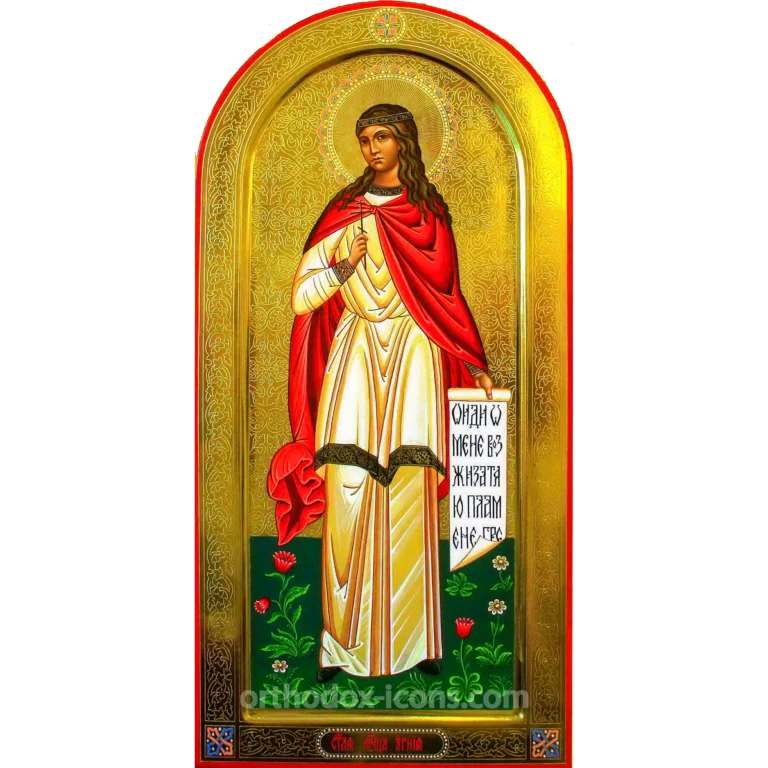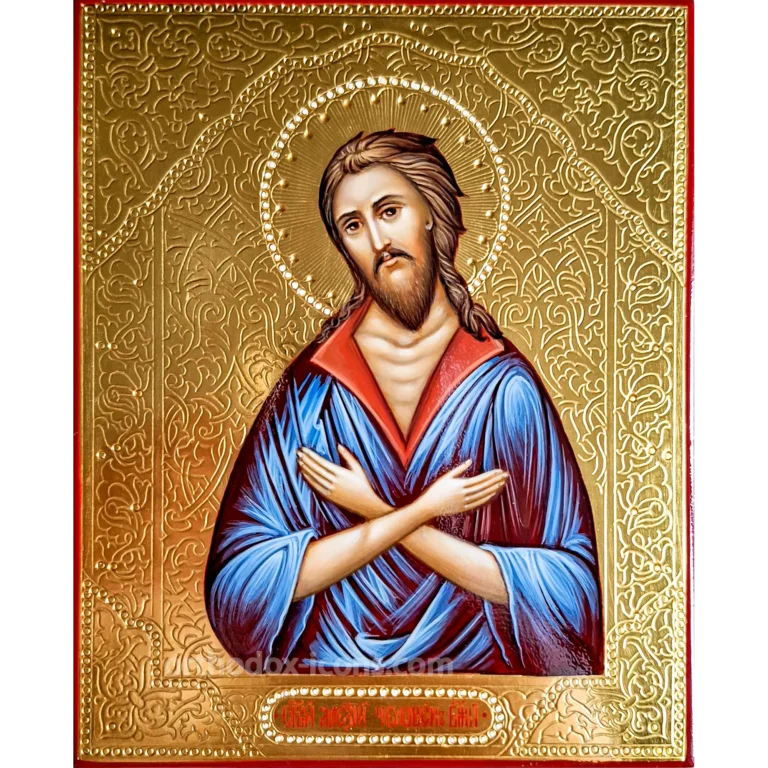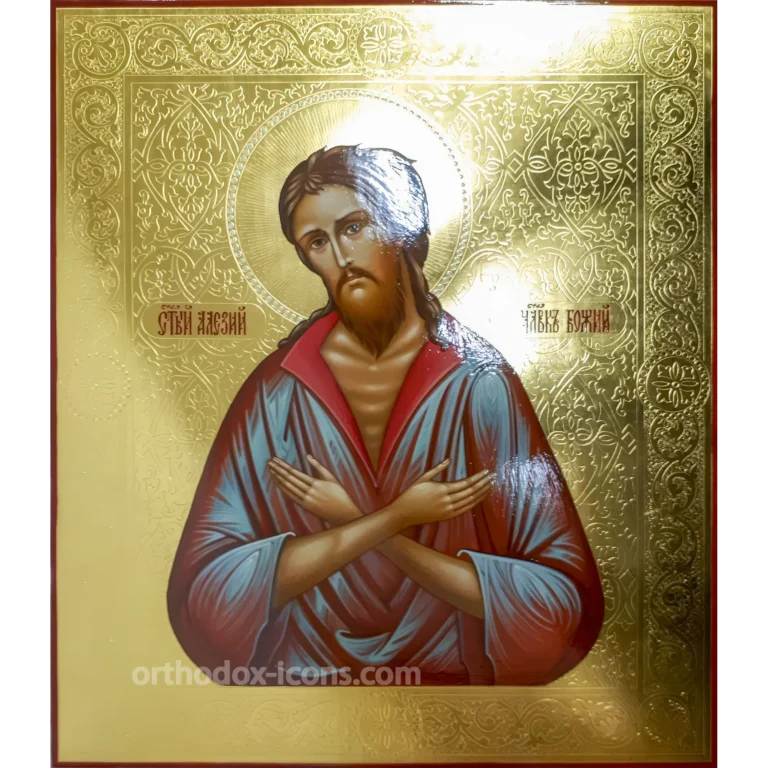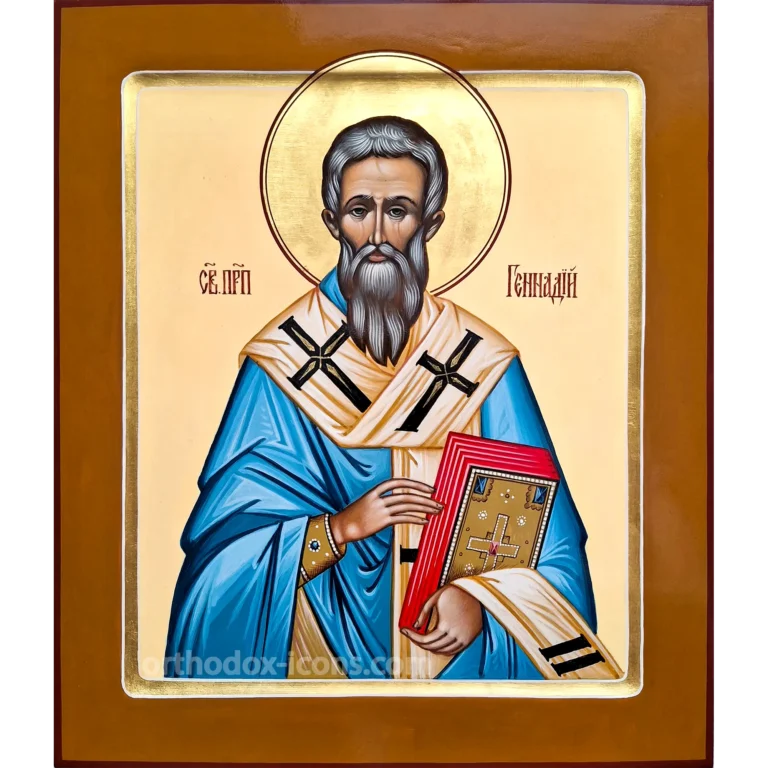
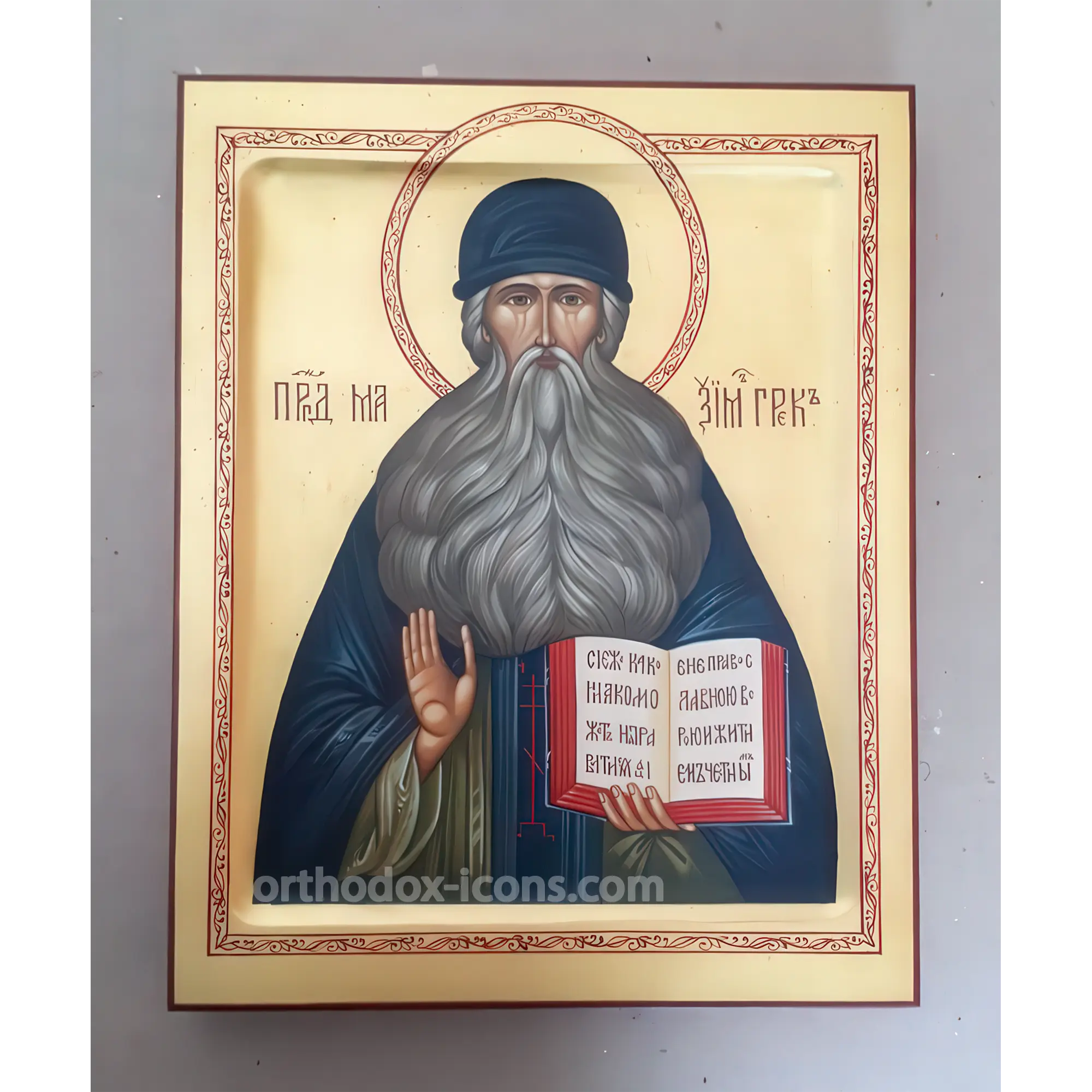
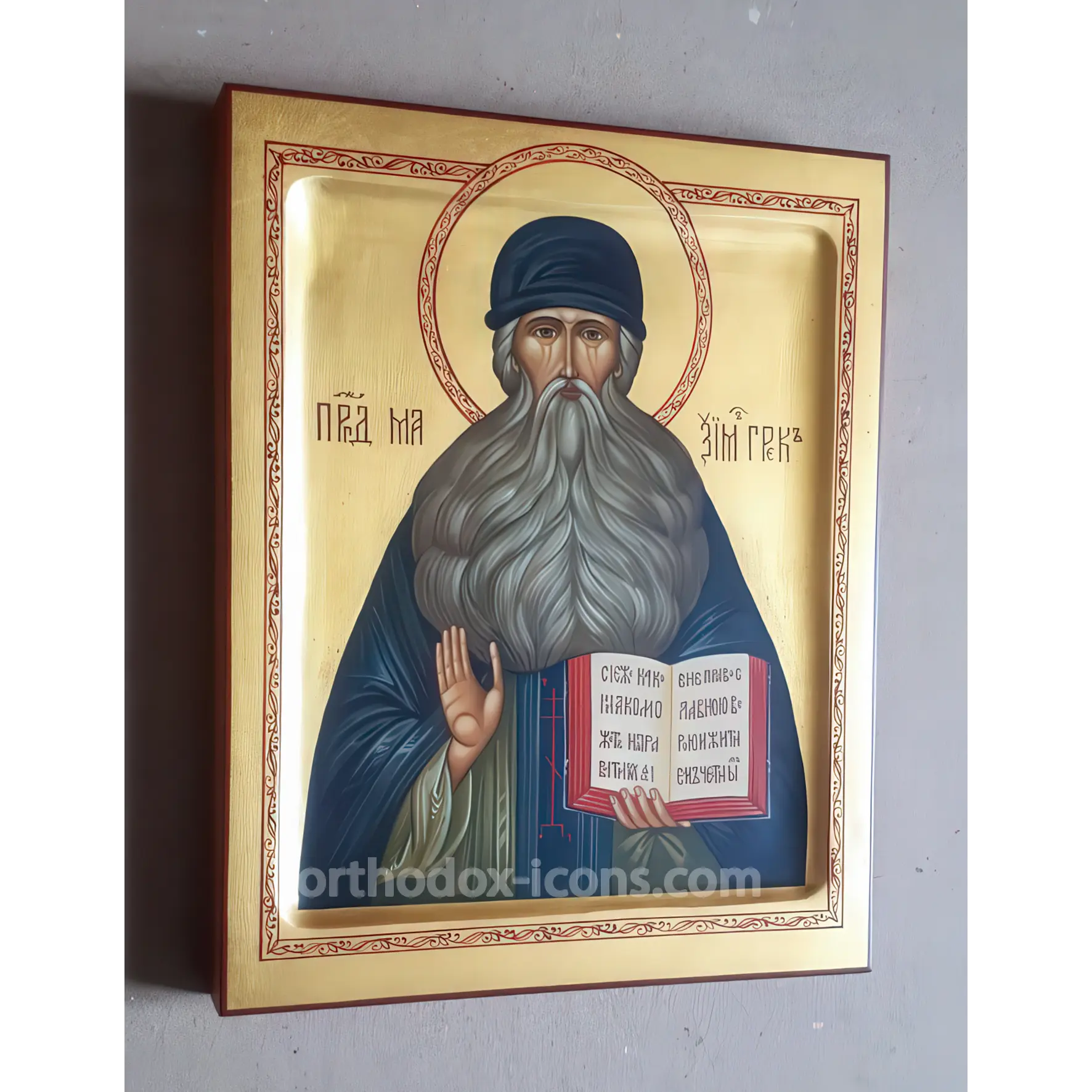
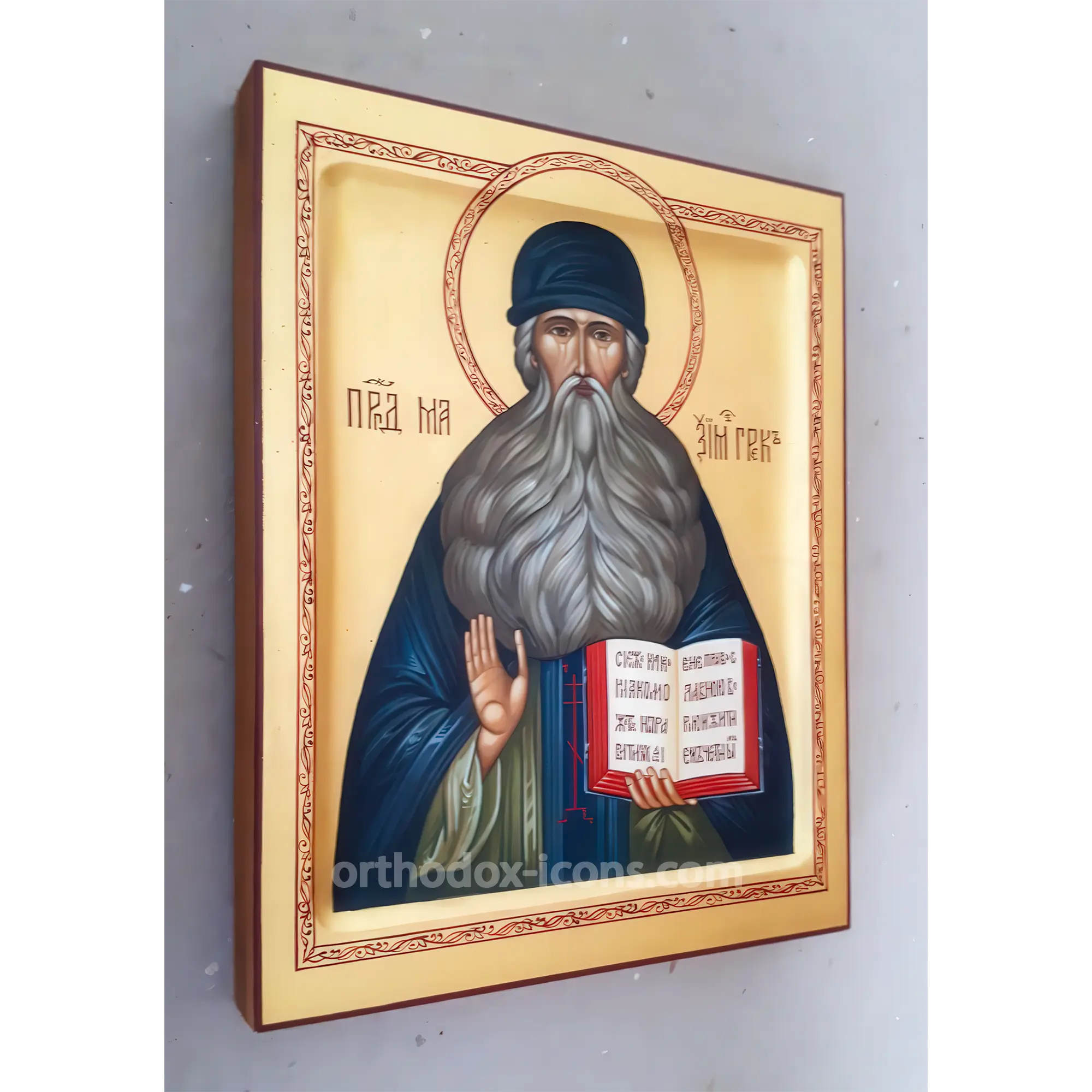
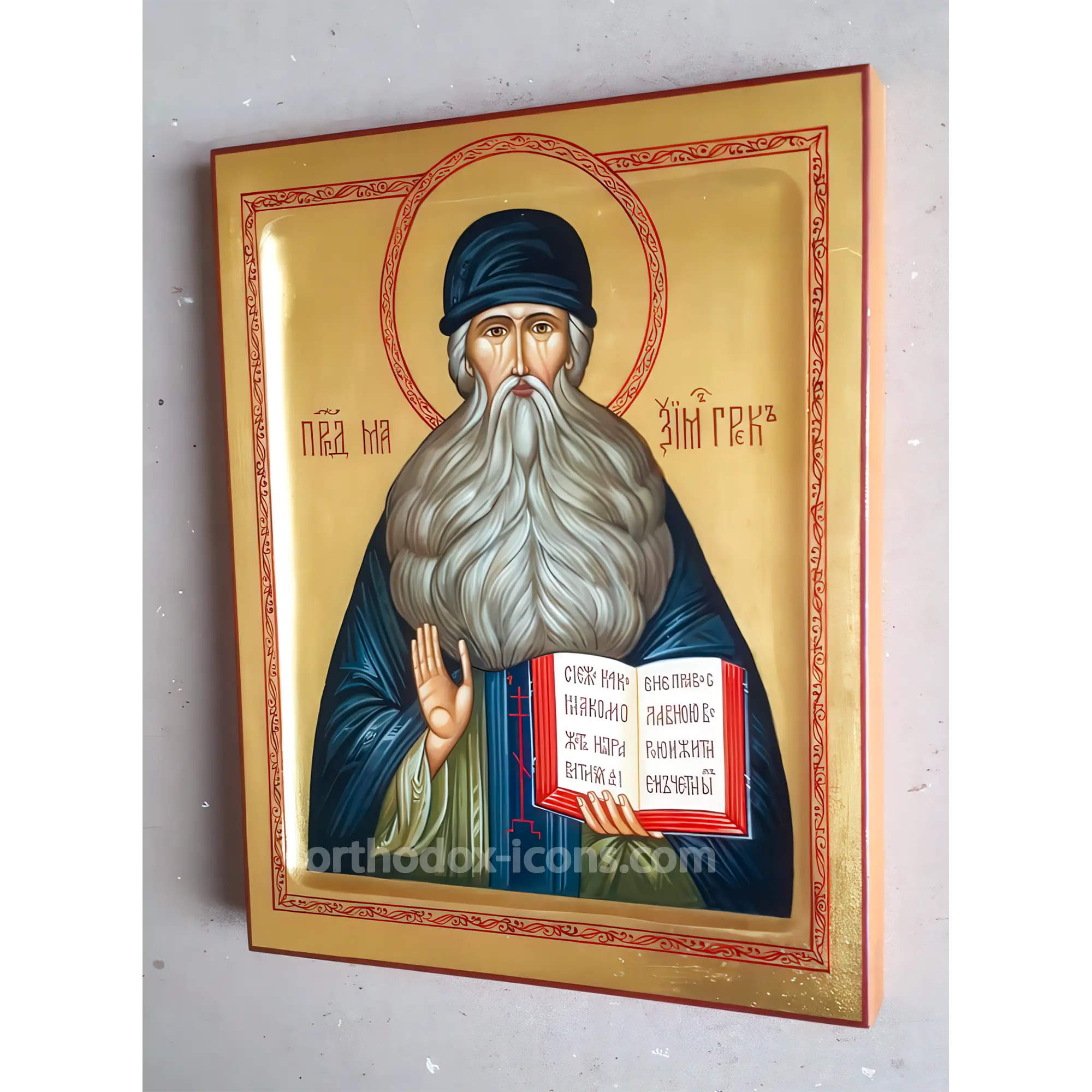
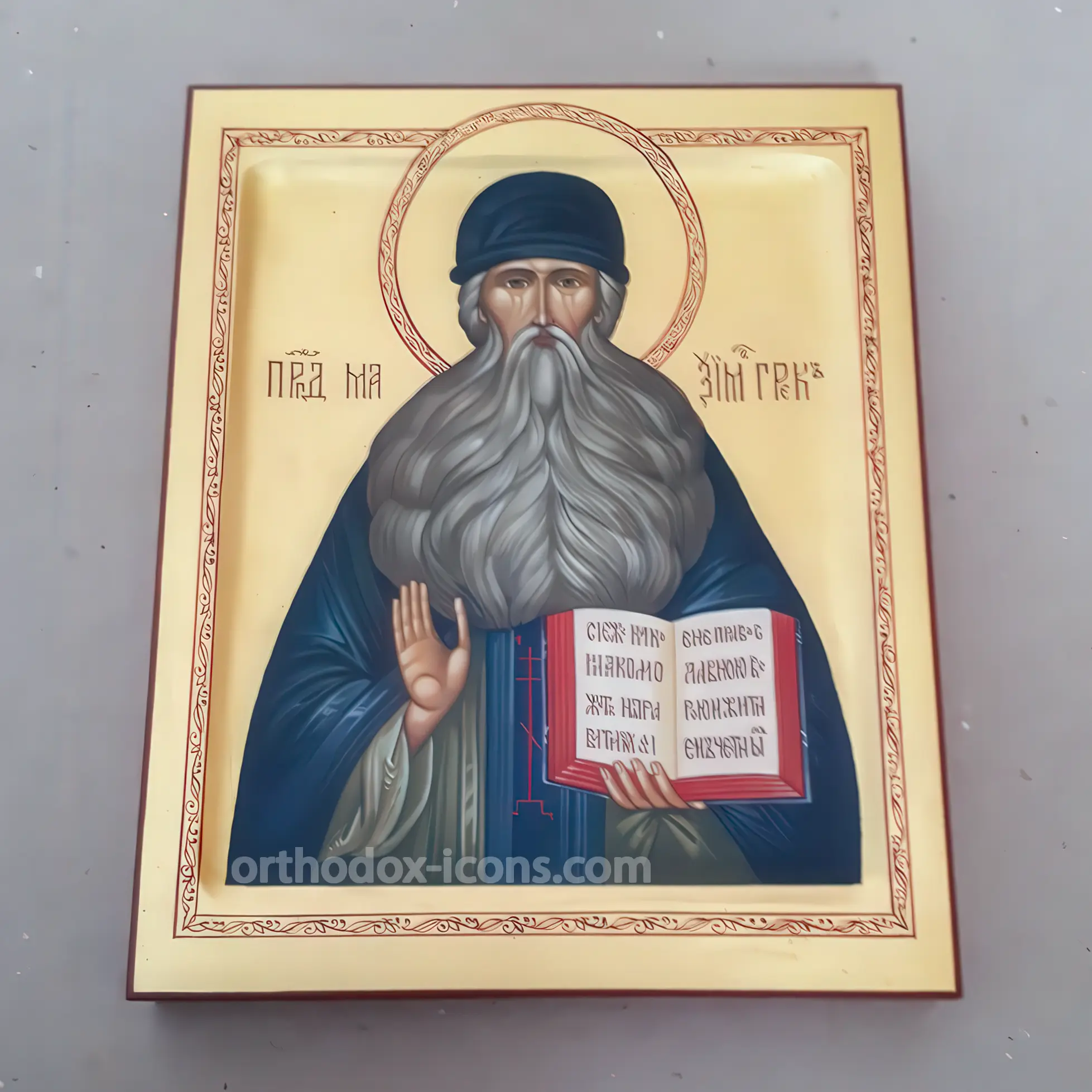
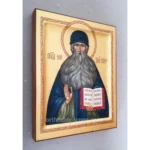
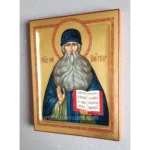
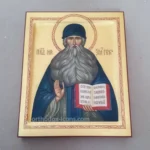
Maximus the Greek Orthodox Icon
Price range: $700 through $2250
Available sizes: 17×21 cm (6.7×8.3 in), 20×24 cm (7.9×9.4 in), 27×31 cm (10.6×12.2 in), 30×40 cm (11.8×15.7 in). Larger church and iconostasis sizes can be made by individual commission.
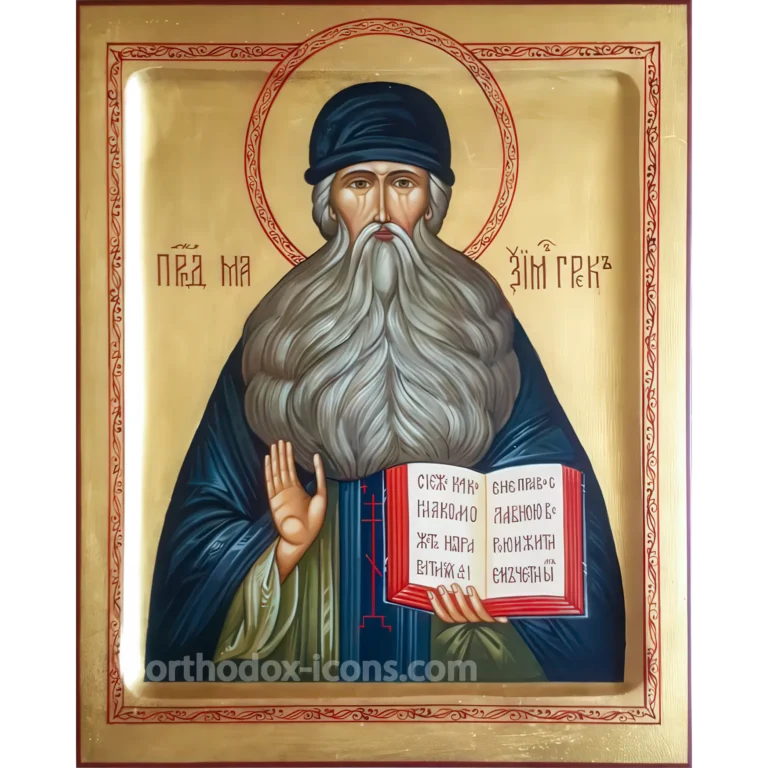
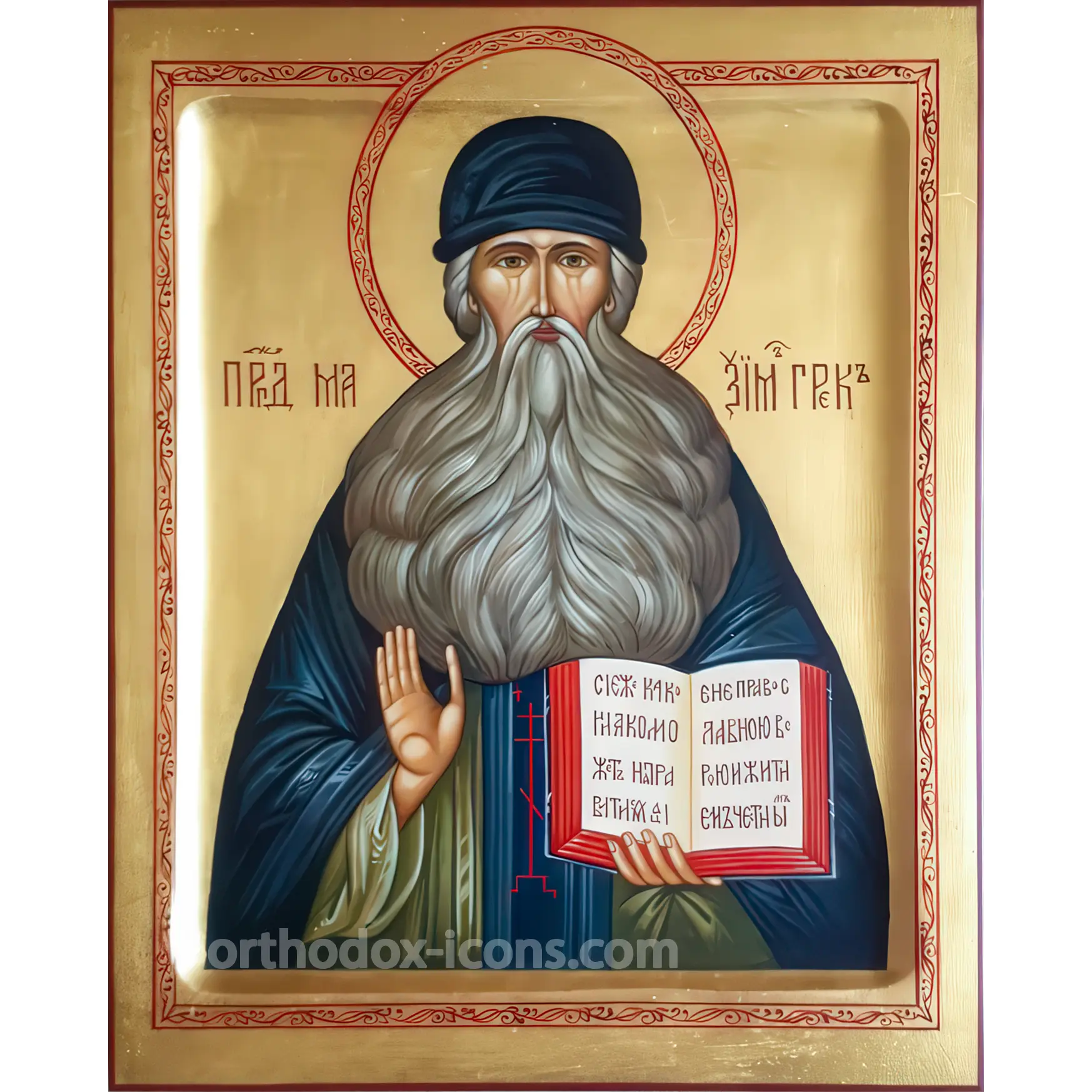
Maximus the Greek Orthodox Icon is a hand-painted icon of Saint Maximus the Greek, a venerable monk, theologian, translator, enlightener, and confessor of the Orthodox faith. Orthodox Christians pray before his icon for spiritual understanding, help in study and translation, theological work, wise decisions, and protection from false teaching.
The icon is made on a linden wood board with oak splines, kovcheg, pavoloka, chalk gesso, egg tempera on egg yolk, 23K gold leaf (960 purity), and protective lacquer. Free international shipping is included. Payment is made after you receive and approve the icon.
It is possible to paint an image in any size to order
Free shipping worldwide
Maximus the Greek Orthodox Icon is a hand-painted icon of Saint Maximus the Greek, a venerable monk, theologian, translator, enlightener, and confessor of the Orthodox faith. His image reminds the faithful of spiritual learning, sobriety of mind, fidelity to truth, and endurance when a person is judged unfairly for defending what is right.
Saint Maximus is especially close to those whose life is connected with study, teaching, theology, translation, writing, and intellectual labor. Before his icon Orthodox Christians pray for wisdom, clarity, patience in trials, protection from false teaching, and the courage to remain faithful to the Church even when truth is costly.
Maximus the Greek Orthodox Icon – Monk, Theologian, and Confessor
Saint Maximus the Greek was born in the Greek city of Arta around 1470. He received a brilliant education in Europe, but later left worldly ambition behind and became a monk on Mount Athos. His learning was not merely academic. It became a form of service to the Church, especially through translation, correction of sacred texts, and defense of Orthodox teaching.
In 1518 he came to Moscow at the invitation of Grand Prince Vasily III to work on liturgical books. His learning, precision, and faithfulness to truth brought both fruit and suffering. Because of unjust accusations connected with the correction of books, he spent more than twenty years in confinement. Even there he continued to write works that defended the purity of Orthodoxy and called people to repentance, discernment, and spiritual seriousness.
For this reason, Saint Maximus is venerated not only as a scholar, but as a confessor. His life shows that real spiritual enlightenment is not cleverness alone. It requires humility, courage, ascetic struggle, love for truth, and patience when truth is misunderstood.
Iconography and Symbolism
In Orthodox iconography, Saint Maximus the Greek is usually shown in monastic clothing, with a gray beard and a deep, attentive gaze. His expression reflects wisdom, humility, and the inner concentration of a man who lived by prayer and careful thought.
He may be depicted holding a cross, a scroll, a book, or sometimes a writing instrument. These details express different aspects of his life and ministry:
- The cross points to his suffering for the faith and his endurance during unjust confinement.
- The scroll or book recalls his work as a translator, theologian, writer, and defender of Orthodox teaching.
- The writing instrument signifies his literary and theological labor, through which he served the Church.
- Monastic clothing shows that his learning was rooted in repentance, prayer, and ascetic life.
Some iconographic settings may suggest a prison cell, remembering his years of confinement, or include a ray of light as a sign of divine truth. Whether the composition is simple or more detailed, the meaning remains the same: Saint Maximus teaches the faithful to love truth with humility and to preserve the purity of faith.
Prayer Before the Icon of Saint Maximus the Greek
Before the icon of Saint Maximus, Orthodox Christians pray for spiritual understanding, clarity of mind, and strengthening of faith. Students, teachers, theologians, translators, writers, editors, clergy, and researchers may ask his intercession for careful thought, truthful speech, and freedom from pride.
People also pray to Saint Maximus when they face injustice, misunderstanding, false accusation, or pressure to compromise the truth. His own life gives special comfort to those who suffer because they try to remain honest, faithful, and spiritually sober.
Common prayers before this icon include requests:
- for wisdom in study, teaching, and theological work;
- for help in translation, writing, editing, and careful use of words;
- for protection from false teaching and spiritual confusion;
- for patience in unfair treatment or misunderstanding;
- for strength to defend truth without pride or anger;
- for men named Maximus or Maxim and for their spiritual path.
Spiritual Meaning of the Icon
The icon of Saint Maximus the Greek reminds the faithful that words matter. Translation, teaching, and writing can serve either truth or confusion. Saint Maximus gave his gifts to the Church, and he suffered because he did not treat sacred texts carelessly. His icon therefore speaks to everyone who works with language, knowledge, teaching, and responsibility.
At the same time, the icon is not only for scholars. It is also for anyone who needs discernment. In a world filled with noise, half-truths, and spiritual distraction, Saint Maximus points to a sober Orthodox mind: one that seeks truth, submits learning to humility, and remains faithful under pressure.
Veneration and Feast Day
Saint Maximus the Greek was canonized in 1988 and is honored for his writings, confession of faith, and posthumous miracles. His memory is especially connected with help in study, theological work, complicated life situations, and healing of eye illnesses, recalling his own blindness in his final years.
His feast day is celebrated on February 3 according to the civil calendar. This date may be considered when choosing an icon for a name day, baptismal gift, graduation, beginning of study, seminary education, or a serious scholarly or literary undertaking.
Materials and Technique
This icon is made by hand in the traditional technique of Orthodox icon painting. The wooden base is a linden board strengthened with oak splines. The preparation includes kovcheg, pavoloka, and natural chalk gesso, creating a stable and smooth surface for the sacred image.
The painting is done with tempera colors on egg yolk. This method allows the icon painter to build the face, monastic garments, inscriptions, background, and sacred details gradually. A hand-painted icon has living brushwork and individual attention to the spiritual expression of the saint.
The icon uses 23K gold leaf (960 purity), which in Orthodox iconography signifies divine light and the heavenly glory of the saints. The surface is protected with lacquer. The result is a durable, prayerful icon intended for long-term use in a home, study, church school, chapel, or parish space.
Icon Characteristics
| Icon name | Maximus the Greek Orthodox Icon |
| Saint depicted | Venerable Maximus the Greek |
| Main meaning | Spiritual wisdom, Orthodox enlightenment, translation, theology, confession of faith, endurance under injustice |
| Suitable for | Students, teachers, theologians, translators, writers, clergy, researchers, and men named Maximus or Maxim |
| Materials | Linden wood board, oak splines, kovcheg, pavoloka, chalk gesso, egg tempera, 23K gold leaf (960 purity), lacquer |
| Available sizes | 17×21 cm (6.7×8.3 in), 20×24 cm (7.9×9.4 in), 27×31 cm (10.6×12.2 in), 30×40 cm (11.8×15.7 in) |
| Feast day | February 3 |
Who This Icon Is Suitable For
This icon is suitable for students, teachers, theologians, translators, writers, editors, clergy, seminarians, researchers, and all who seek spiritual sobriety, wisdom, and faithfulness to Orthodox truth. It is also appropriate as a name icon for a man named Maximus or Maxim.
The icon may be given for a name day, birthday, baptism, entrance into a school or university, graduation, ordination-related occasion, beginning of theological study, or the start of an important intellectual or literary work. It is also suitable for a home icon corner, study, library, seminary, church school, or place where a person works with books and prayer.
Available sizes are 17×21 cm (6.7×8.3 in), 20×24 cm (7.9×9.4 in), 27×31 cm (10.6×12.2 in), and 30×40 cm (11.8×15.7 in). Larger church and iconostasis sizes can be made by individual commission. Free international shipping is included. Payment is made after you receive and approve the icon.
Care and Blessing of the Icon
If the icon has not already been blessed, it may be brought to an Orthodox church for blessing. This is a traditional practice for a home prayer image and helps place the icon within the life of the Church.
A hand-painted icon should be kept away from direct sunlight, high humidity, radiators, and household chemicals. Dust should be removed gently with a soft dry cloth or brush, without water, alcohol, or abrasive materials.
Questions and Answers
Who was Saint Maximus the Greek?
Saint Maximus the Greek was an Orthodox monk, theologian, translator, and confessor of the faith, honored for his love of truth, spiritual wisdom, and service to Orthodox enlightenment.
What do Orthodox Christians pray for before his icon?
They pray for spiritual understanding, strengthening of faith, help in study, theology, translation, teaching, writing, wise decisions, and protection from error.
Who is this icon especially suitable for?
The icon is suitable for students, teachers, theologians, translators, writers, clergy, researchers, and anyone seeking sobriety of mind and faithfulness to Orthodox truth.
Can this icon be given as a name-day gift?
Yes. It is especially suitable for a man named Maximus or Maxim, and also as a gift for study, graduation, teaching, or the beginning of serious intellectual work.
Why is Maximus the Greek called an enlightener?
He worked on translations and corrections of church books, wrote spiritual and theological works, and defended the purity of Orthodox teaching.
How is Saint Maximus usually shown in icons?
He is often shown in monastic clothing, with a scroll or book, emphasizing his theological, translation, and teaching ministry.
Is this icon suitable for a home icon corner?
Yes. It is suitable for a home icon corner, study, library, church school, seminary, or any place where a person works with study, writing, and prayer.
Can the icon be ordered in another size?
Yes. Available sizes are 17×21 cm, 20×24 cm, 27×31 cm, and 30×40 cm, and larger church or iconostasis sizes can be discussed individually.
What materials are used for this hand-painted icon?
The icon is made on a linden wood board with oak splines, kovcheg, pavoloka, chalk gesso, egg tempera on egg yolk, 23K gold leaf (960 purity), and lacquer.
Should the icon be blessed after receiving it?
If the icon has not already been blessed, it may be brought to an Orthodox church for blessing. This is a traditional practice for a home prayer icon.
| Dimensions | 17x21cm (6.7×8.3 in), 20x24cm (7.9×9.4 in), 27x31cm (10.6×12.2 in), 30x40cm (11.8×15.7 in) |
|---|---|
| Name | Maximus |