Luke the New Stylite of Chalcedon Orthodox Icon
Price range: $500 through $1500
Available sizes: 17×21 cm (6.7×8.3 in), 20×24 cm (7.9×9.4 in), 27×31 cm (10.6×12.2 in), 30×40 cm (11.8×15.7 in). Larger iconostasis sizes can be made by agreement.
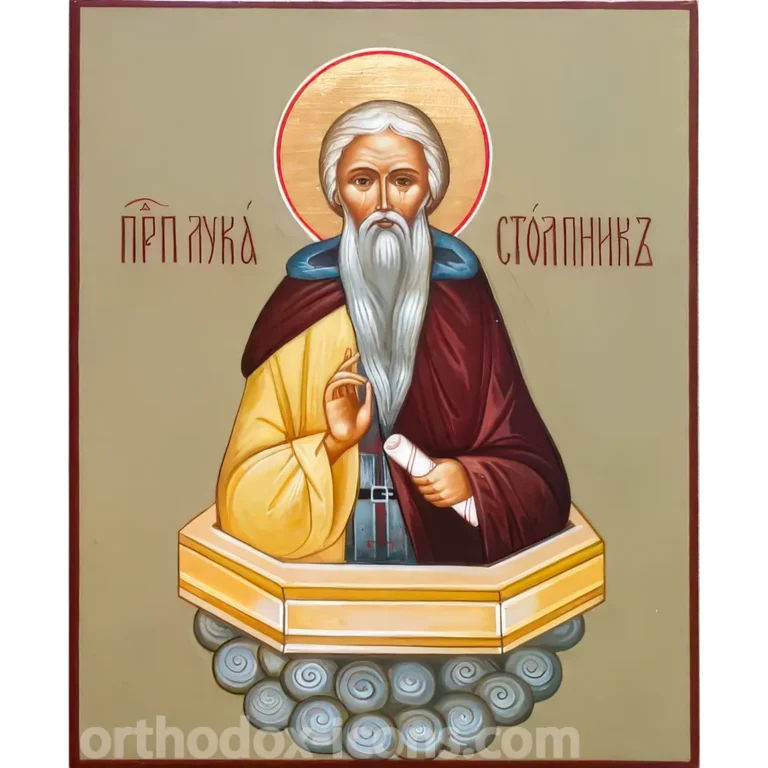
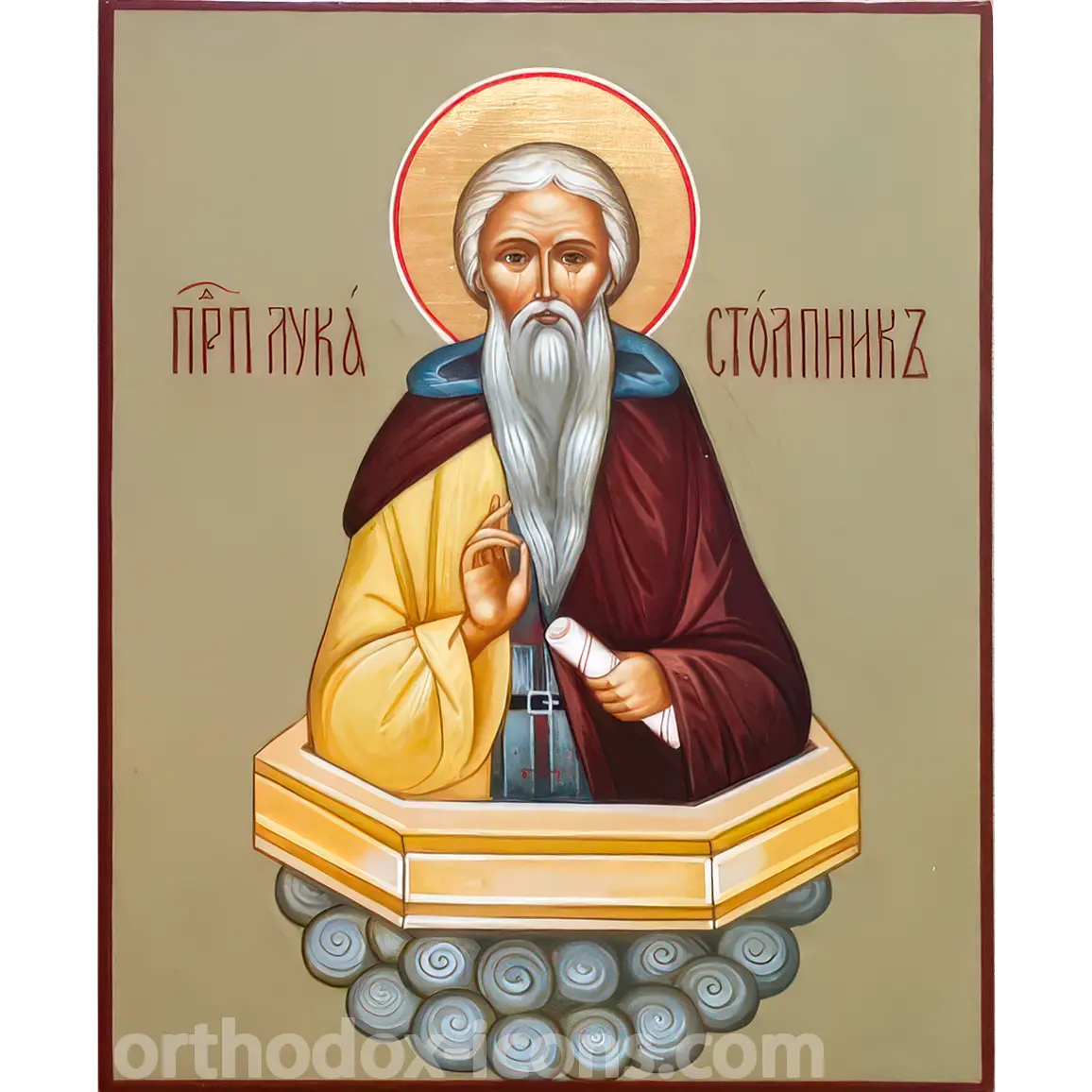
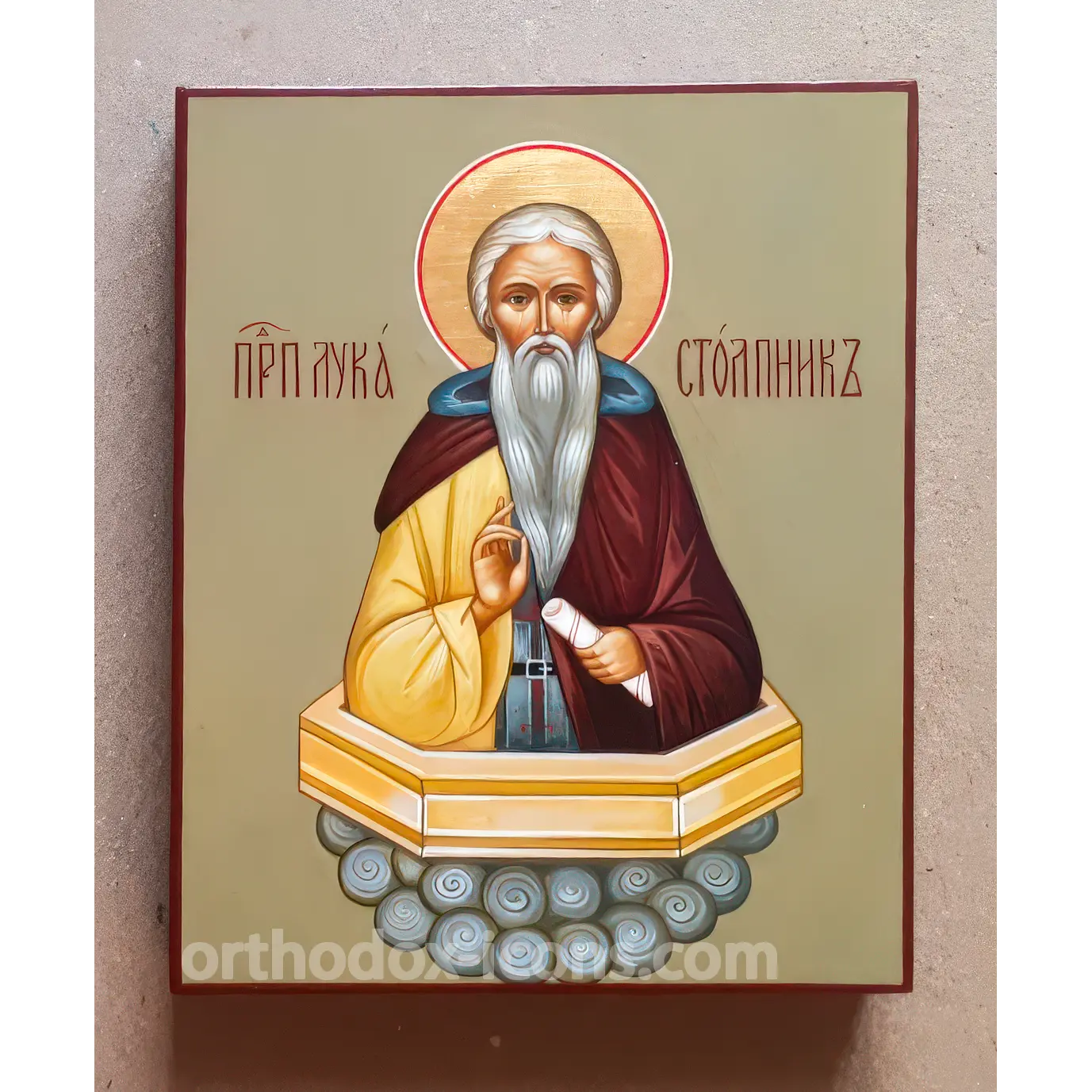
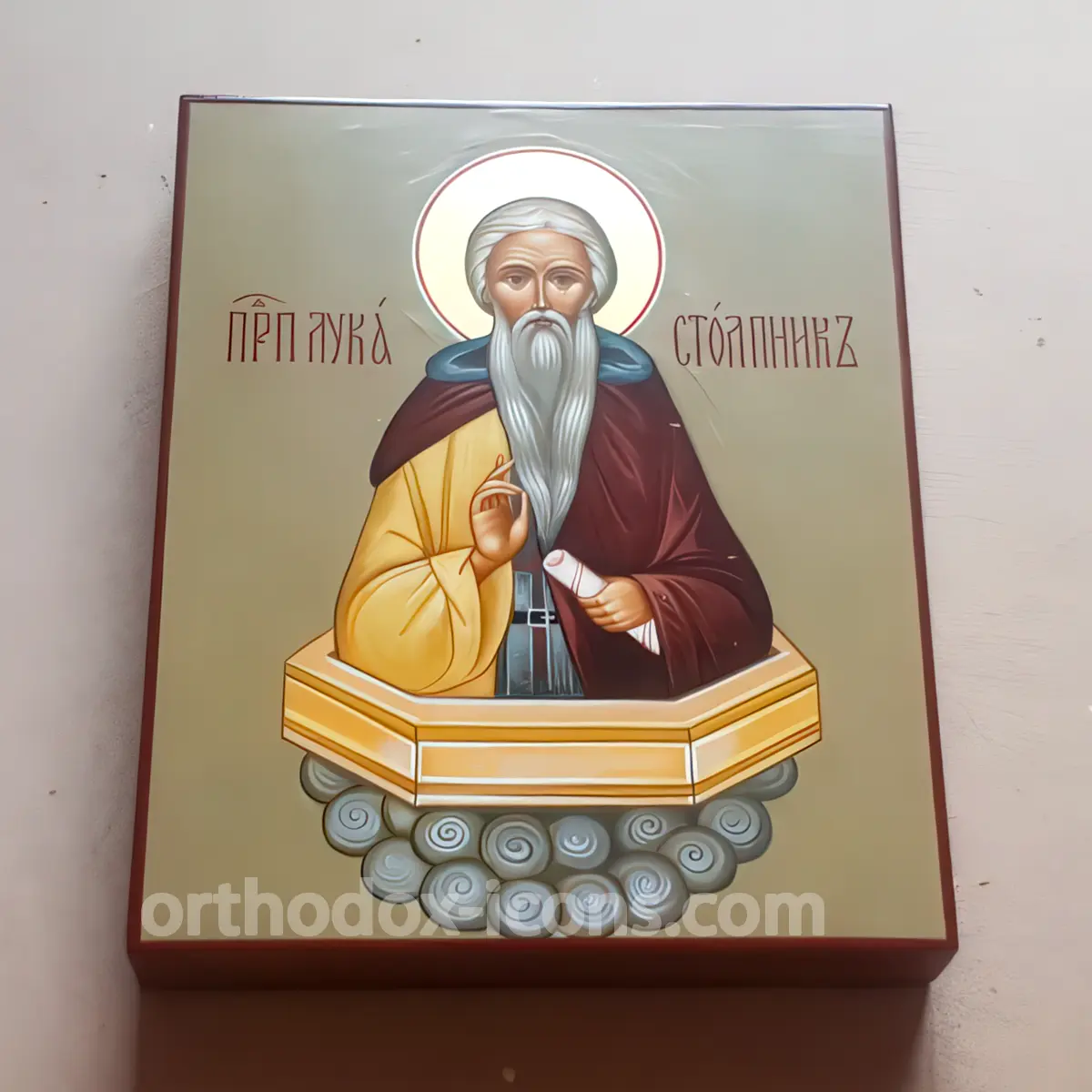
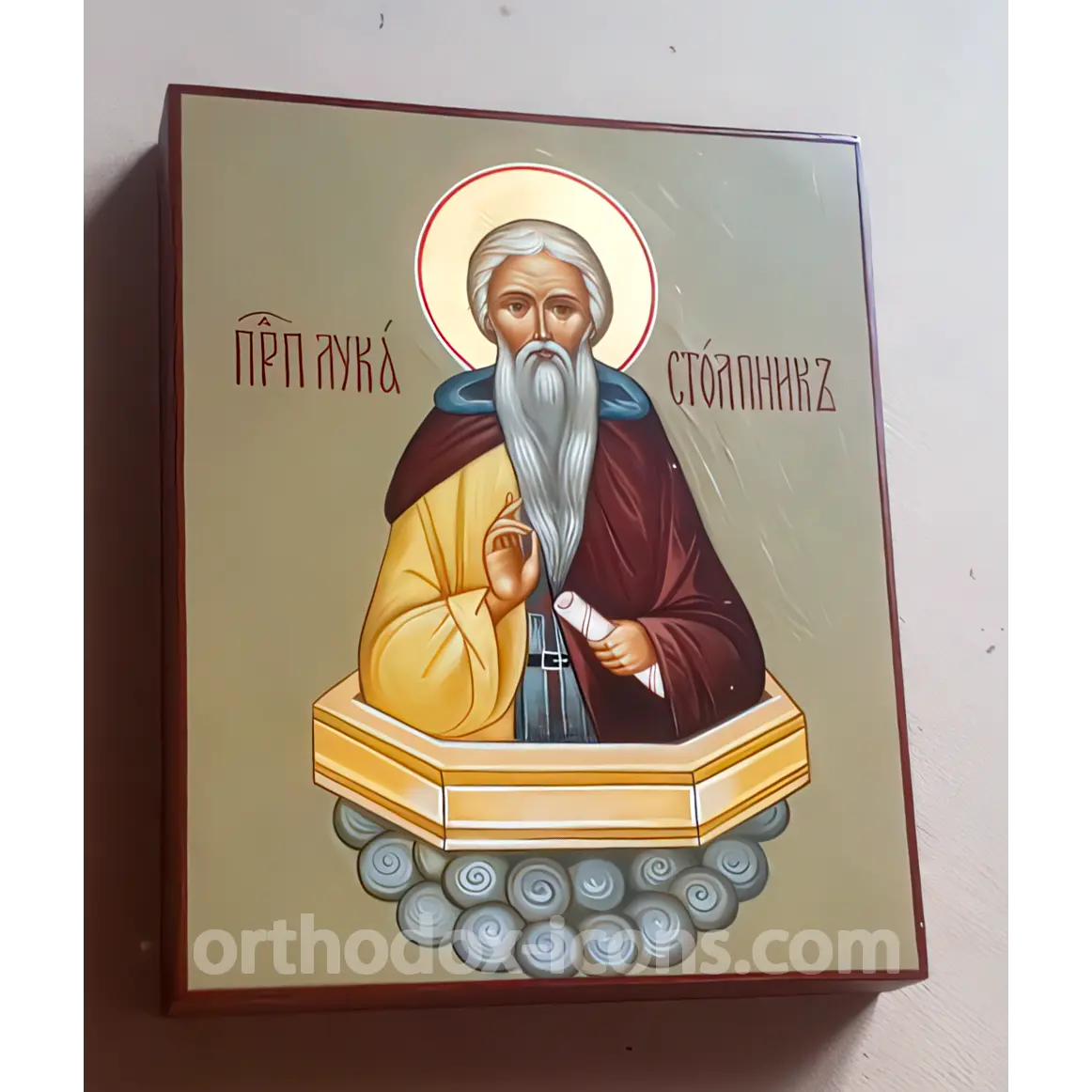
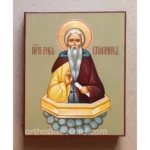
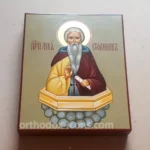
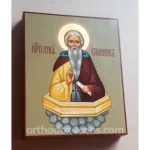
This hand-painted Luke the New Stylite of Chalcedon Orthodox Icon shows the venerable ascetic, hieromonk, and stylite known for strict prayer, patience, and spiritual steadfastness. Saint Luke is shown standing on a pillar, with his right hand raised in blessing and a scroll in his left hand; the golden halo, monastic garments, quiet background, and cloud-like base emphasize his ascetic witness.
The icon is painted on a linden wood board with oak braces, gesso, egg tempera, mineral pigments, gold leaf on the halo, and a protective finish. It is suitable for a home iconostasis, church, chapel, monastic cell, personal prayer place, or as a patron saint gift for someone named Luke. Free international shipping is included. Payment is made after you receive and approve the icon.
It is possible to paint an image in any size to order
Free shipping worldwide
This hand-painted Luke the New Stylite of Chalcedon Orthodox Icon is a prayerful image of a holy ascetic whose life became an example of patience, spiritual concentration, and complete dedication to God. Venerable Luke is honored as a hieromonk, ascetic, and stylite. He chose one of the strictest forms of monastic labor: standing on a pillar, joined with prayer, fasting, attention to the soul, and detachment from worldly distraction.
Before his icon, Orthodox Christians may pray for strength of faith, humility, help in spiritual struggle, patience in illness and trials, and heavenly protection for people named Luke. The icon speaks quietly but firmly about endurance, prayer, and spiritual ascent.
In this icon Saint Luke is shown in the recognizable stylite type. He stands on a pillar rising above a cloud-like base. His right hand is raised in blessing, and in his left hand he holds a scroll. His long gray beard, attentive gaze, monastic garments, and golden halo create an image that is austere but not cold. It conveys the silence of ascetic labor: a person withdraws from worldly noise not out of contempt for people, but for unceasing prayer, purification of the heart, and service to God.
Available sizes are 17×21 cm (6.7×8.3 in), 20×24 cm (7.9×9.4 in), 27×31 cm (10.6×12.2 in), and 30×40 cm (11.8×15.7 in). Larger iconostasis sizes can be made by agreement. Smaller formats are suitable for a home iconostasis, personal prayer place, or patron saint gift. The 27×31 cm and 30×40 cm sizes reveal the face, blessing hand, scroll, monastic garments, golden halo, pillar, and cloud-like base more fully.
Features of This Icon
The main feature of this icon is the image of Venerable Luke specifically as a stylite. He is not shown in an ordinary full-length monastic composition, but on an elevated pillar that symbolizes his ascetic labor. In Orthodox tradition, stylite life is understood as an extreme form of ascetic struggle: a person voluntarily limits bodily comfort in order to direct the whole strength of the soul toward God.
The pillar has a firm architectural base and raises the figure of the saint above the lower part of the composition. Clouds are shown beneath it, giving the image special spiritual expressiveness. This detail does not turn the saint into an abstract symbol; rather, it helps reveal the meaning of his witness. Venerable Luke lived on earth, among trials and bodily hardship, but his prayer was turned toward heaven.
The face of the saint is calm and concentrated. The high forehead, gray hair, long beard, and attentive gaze present an experienced ascetic who passed from military service to monastic life and strict spiritual labor. There is no harshness in the face. It is serious, but it also carries the inward gentleness of a man who learned to pray, endure, and trust God.
The right hand of Venerable Luke is raised in blessing. For this icon, that detail is especially important: the saint appears not only as an ascetic withdrawn from the world, but also as an intercessor who spiritually supports those who turn to him. The left hand holds a scroll, a sign of monastic instruction, spiritual wisdom, and a word addressed to the human person. The scroll reminds us that the ascetic labor of Saint Luke was not a silent withdrawal into himself, but a path through which he became a guide for those seeking salvation.
The monastic garments are painted in a warm and restrained color range. Yellowish clothing, a dark inner garment, a burgundy-brown mantle, and a blue collar create a calm earthly palette. The golden halo sets apart the face and shows the heavenly glory of the saint. A red outline around the halo and a red border around the icon make the image more collected and expressive without disturbing its strict prayerful character.
The background is free from unnecessary decorative overload. Because of this, attention does not scatter. The eye naturally moves from the inscriptions to the face, hands, scroll, and pillar. The composition is well suited to personal prayer because it has no outward noise. It speaks quietly and deeply about ascetic labor, patience, prayer, and spiritual ascent.
Iconography of Saint Luke the Stylite
The iconography of Venerable Luke reveals him as a holy stylite. In Orthodox art, the pillar is not merely a historical detail from his life. It is an image of spiritual height, constancy, and voluntary ascetic labor. Standing on a pillar required immense patience, bodily self-restraint, and continual prayer. For this reason, Saint Luke is shown not in motion, but in a state of prayerful presence before God.
The scroll in the hand of the saint is connected with the theme of guidance. Stylite ascetics often became spiritual counselors for people who came to them from far away. Their words were valued not for rhetorical beauty, but for prayerful experience and discernment. In the icon, this idea is expressed simply: Venerable Luke holds a scroll as a sign of spiritual knowledge born not merely from books, but from personal struggle and faithfulness to God.
The blessing hand shows that the saint is not closed within his own ascetic labor. He stands before God and at the same time turns toward those who pray. In Orthodox tradition, the saints are not independent fulfillers of requests; they are intercessors before the Lord. Prayer before an icon of Venerable Luke helps the believer ask not only for outward relief, but also for inward strength: patience, humility, wisdom, purification of the heart, and readiness to live according to conscience.
The cloud-like base beneath the pillar strengthens the vertical movement of the image. Below are earthly labor, limitation, the pillar, and bodily endurance. Above are the face of the saint, the halo, and prayer. This iconography is especially meaningful for people passing through a long difficult period, because it reminds them that spiritual life often requires not quick solutions, but fidelity, endurance, and quiet constancy.
Prayer Before the Icon of Saint Luke the Stylite
Before an icon of Venerable Luke the New Stylite of Chalcedon, Orthodox Christians pray for patience, strengthening of faith, and help in spiritual struggle. His ascetic labor is connected with constancy, self-limitation, and prayerful concentration. For this reason, people turn to him when they need not only an external solution to a problem, but also the inner strength not to despair, not to become irritated, not to abandon what is good, and not to lose trust in God.
People may pray to Venerable Luke for patience in illness, sorrow, and long trials; strengthening of faith and prayerful concentration; help against despondency, irritation, and spiritual fatigue; humility and attention to the soul; guidance in difficult choices; firmness in monastic, priestly, or church service; protection from distraction and inner instability; repentance and amendment of life; peaceful ordering of home and personal circumstances; and heavenly protection for people named Luke.
The icon is especially fitting for a person who values ascetic labor, prayer, and inward discipline. It may be placed in a home iconostasis, study, monastic cell, church, or chapel. Such an image helps dispose the soul toward serious prayer without outward distraction and reminds the believer that spiritual strength is born gradually through faithfulness, patience, and trust in God.
Brief Life of Saint Luke
Venerable Luke, the New Stylite of Chalcedon, lived in the tenth century. According to his life, before becoming a monk he was a soldier under the Byzantine emperor Constantine Porphyrogenitus. During a war with Bulgaria, he remained unharmed, and this became an important spiritual turning point for him. After this, Luke left his former life, entered monasticism, and began a path of strict ascetic struggle.
In time, Venerable Luke was ordained to the priesthood. Yet his desire for spiritual perfection did not stop with ordinary monastic life. He took upon himself chains and stood on a pillar, choosing a special path of ascetic standing. This labor required not only physical endurance, but deep humility. A stylite was exposed daily to cold, heat, wind, solitude, and the attention of people, which itself could become a trial.
Later, Venerable Luke labored in Chalcedon, where he continued the stylite life and became known for spiritual help. People came to him for counsel, prayer, and consolation. His ascetic witness continued for many years and became a testimony that Christian strength is shown not only in outward deeds, but also in patient standing before God.
Venerable Luke reposed around the year 980. His commemoration is celebrated on December 24 according to the civil calendar. For a person named Luke, this date can be an important name day, and the icon of Venerable Luke the Stylite can become a personal image of his heavenly patron.
Materials and Technique
The icon is hand-painted on a linden wood board strengthened with oak braces. The surface is prepared with gesso, and the image is painted in egg tempera with mineral pigments. Gold leaf is used on the halo, and a protective finish is applied after painting.
Because this is a hand-painted icon, small differences in color tone, inscriptions, gold work, facial painting, and fine details are natural. They do not change the iconographic meaning of the image. They show that the icon is a painted devotional work rather than a printed reproduction.
Choosing the Size
The 17×21 cm size is compact and suitable for a small home icon corner or personal patron saint icon. The 20×24 cm size remains easy to place while giving the image more presence. The 27×31 cm and 30×40 cm sizes reveal the face, blessing hand, scroll, pillar, monastic garments, and cloud-like base more fully. Iconostasis sizes can be discussed individually for a church, chapel, monastery space, prayer room, or dedicated icon case.
Placement and Care
The icon should be placed in a clean and dignified area, away from moisture, direct sunlight, overheating, soot, and mechanical damage. Dust should be removed only with a soft dry brush, without pressure. For additional protection of the painting and gilding, an icon case is recommended.
Free international shipping is included. Payment is made after you receive and approve the icon.
Questions and Answers
Who is shown in the Luke the New Stylite of Chalcedon Icon?
The icon shows Venerable Luke the New Stylite of Chalcedon, a holy ascetic, hieromonk, and stylite known for strict prayer and spiritual endurance.
Why is Saint Luke shown on a pillar?
The pillar points to his special ascetic labor. Saint Luke chose stylite life as a path of continual prayer, patience, and detachment from worldly distraction.
What does the scroll in Saint Luke’s hand mean?
The scroll symbolizes spiritual instruction, wisdom, and the word of an ascetic addressed to those who seek guidance on the path to Christ.
What do people pray for before an icon of Saint Luke the Stylite?
People may pray for patience, strengthening of faith, humility, help in spiritual struggle, protection from despondency, guidance, and steadfastness in trials.
Who is this icon suitable for as a gift?
It is suitable for someone named Luke, monastics, clergy, a person passing through a difficult period, or anyone who values prayer, patience, and spiritual concentration.
What sizes are available for this icon?
The available sizes are 17×21 cm, 20×24 cm, 27×31 cm, and 30×40 cm. Larger iconostasis sizes can also be discussed before painting.
When is Saint Luke the Stylite commemorated?
Venerable Luke the Stylite of Chalcedon is commemorated on December 24 according to the civil calendar.
Can this icon be placed in a home iconostasis?
Yes. The icon of Saint Luke can be placed in a home iconostasis near icons of Christ, the Mother of God, the Guardian Angel, and family patron saints.
Can the icon be ordered in a church size?
Yes. The icon can be painted in a larger or iconostasis size for a church, chapel, monastic cell, prayer room, or dedicated icon case.
How should a hand-painted icon be cared for?
Keep the icon away from moisture, direct sunlight, overheating, soot, and mechanical damage. Dust it only with a soft dry brush; an icon case is recommended to protect the painting and gilding.
| Dimensions | 17x21cm (6.7×8.3 in), 20x24cm (7.9×9.4 in), 27x31cm (10.6×12.2 in), 30x40cm (11.8×15.7 in) |
|---|---|
| Name | Luke |