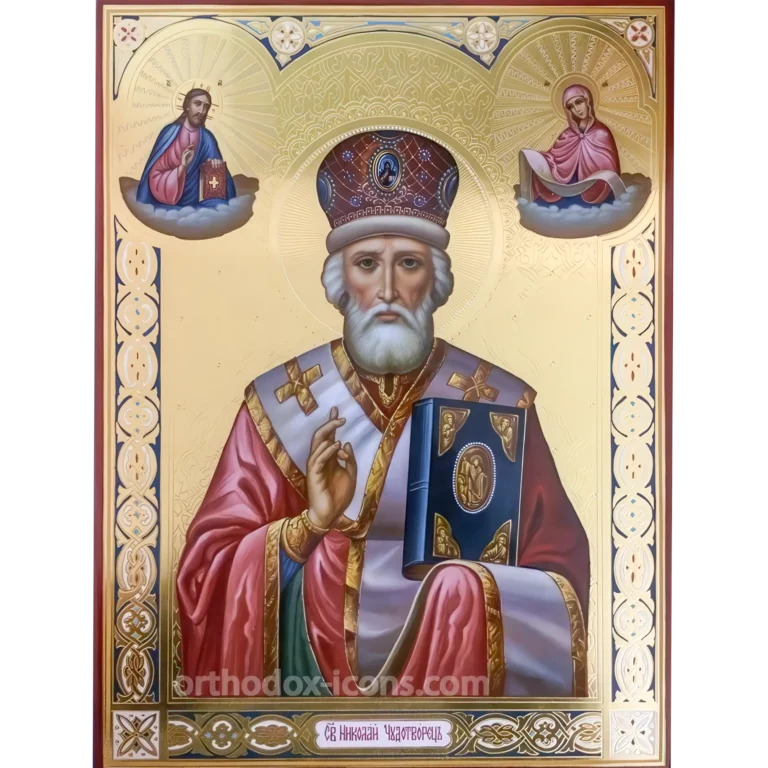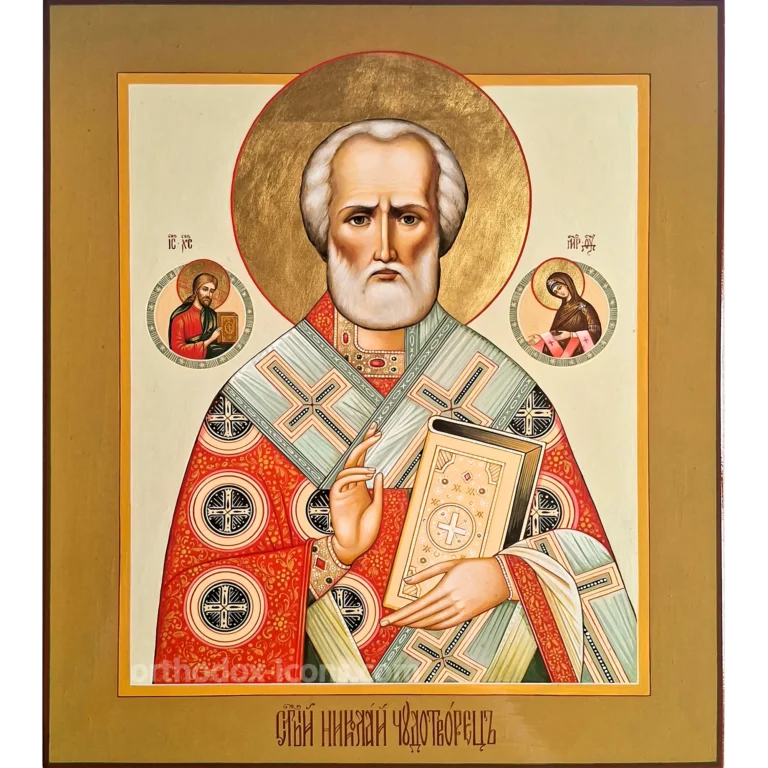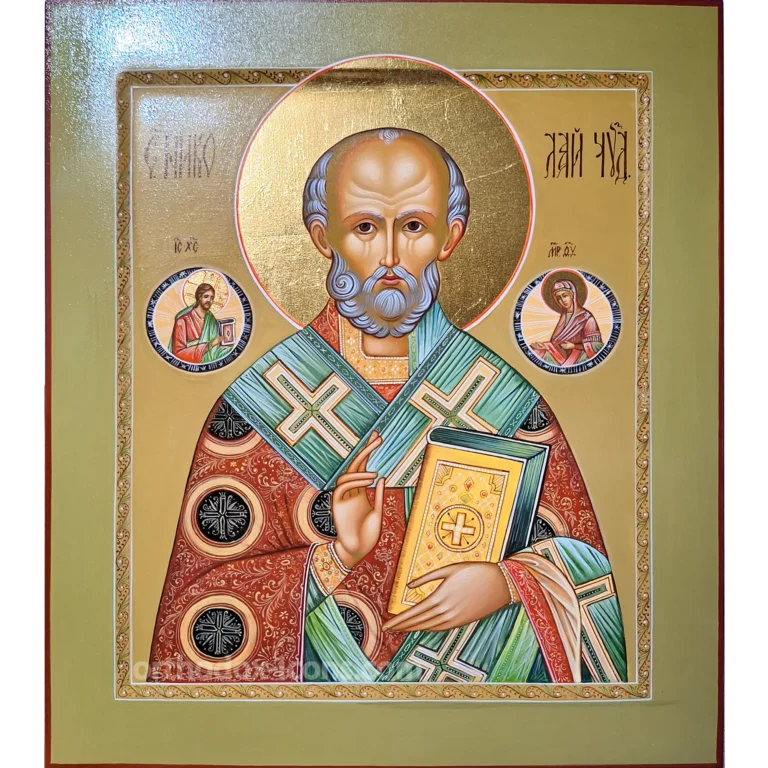
Icon of Nicholas the Wonderworker
$950
Available size: 17×21 cm (6.7×8.3 in). Other sizes may be discussed individually.
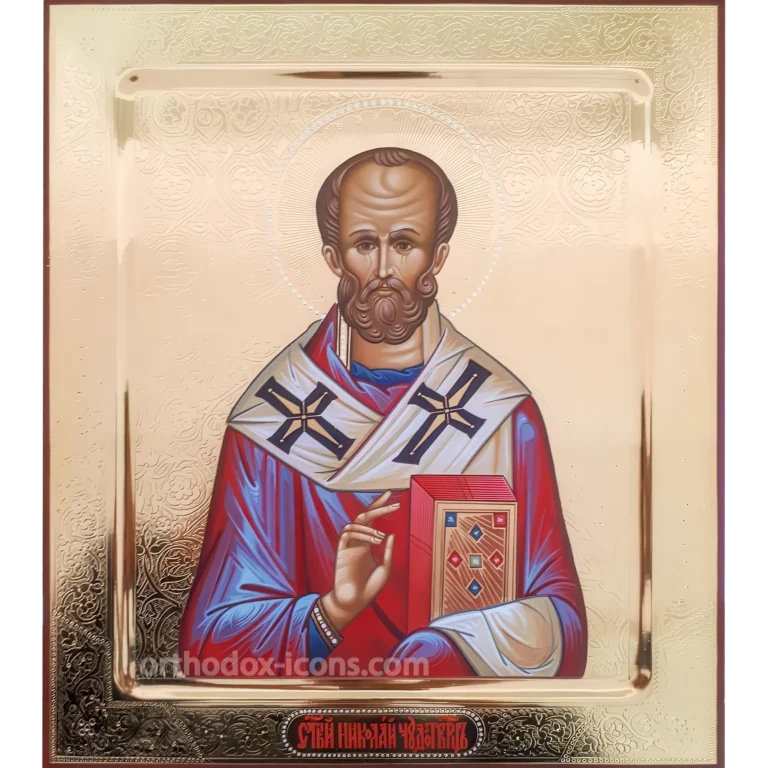
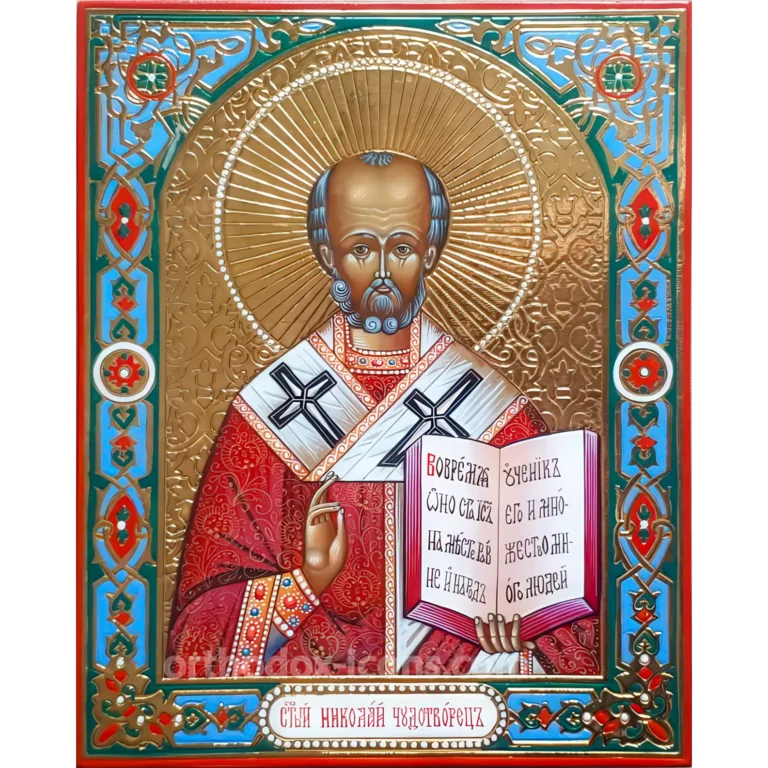
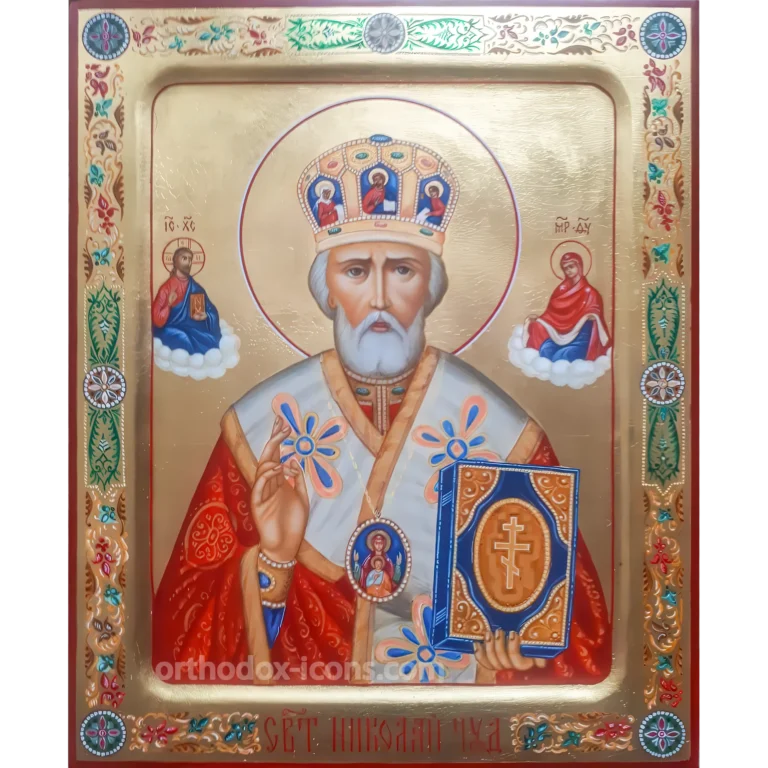
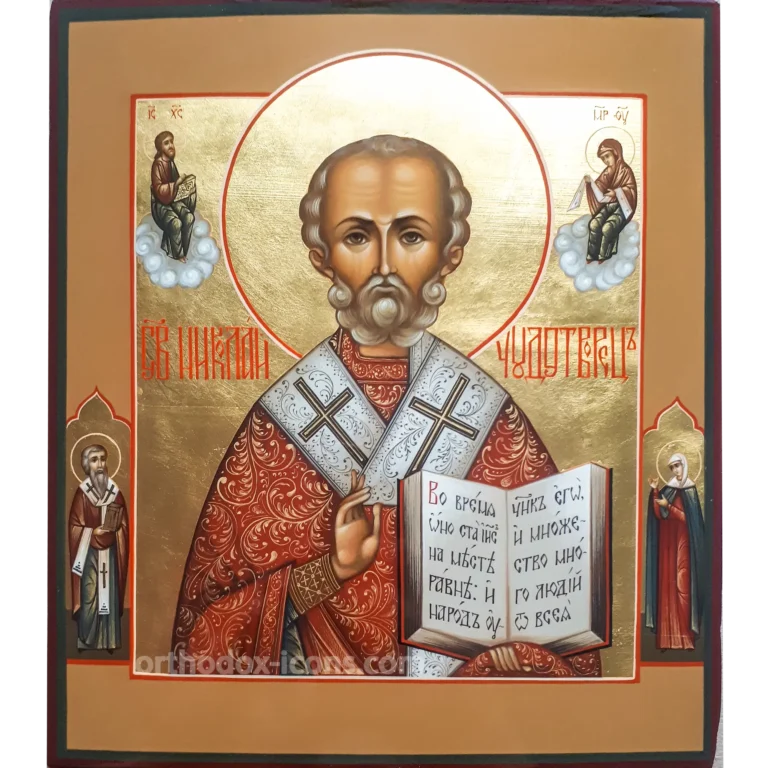
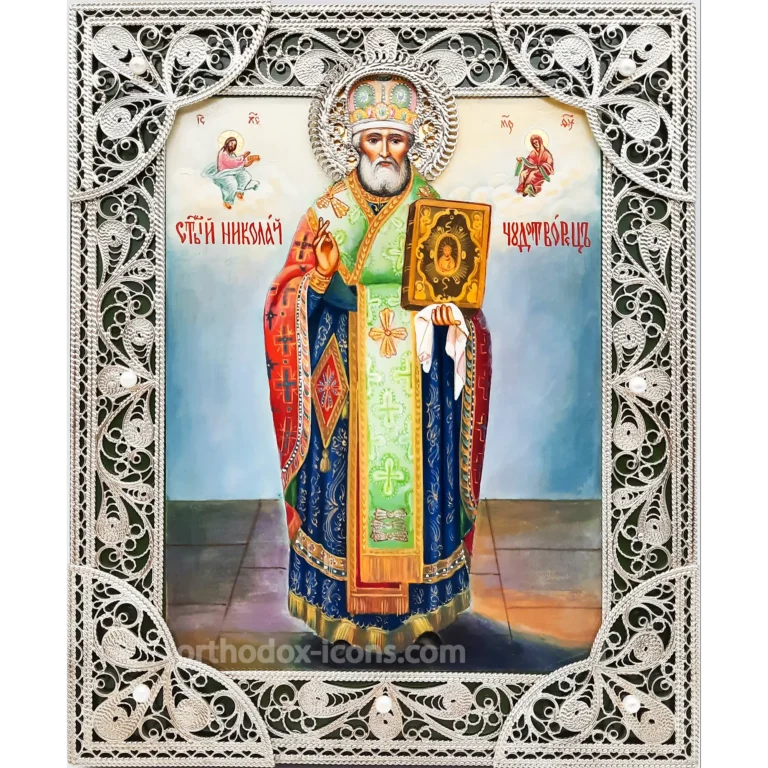
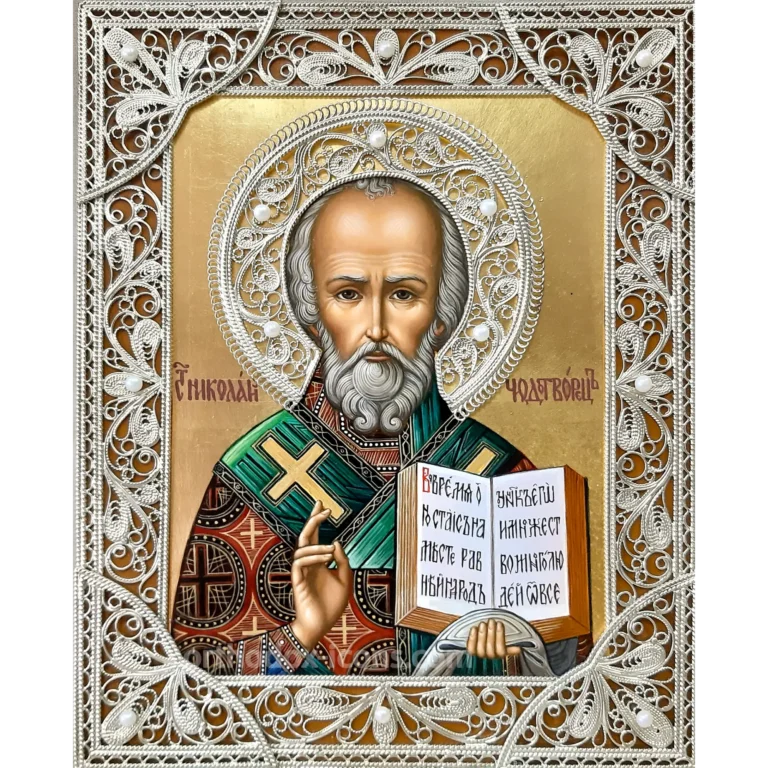
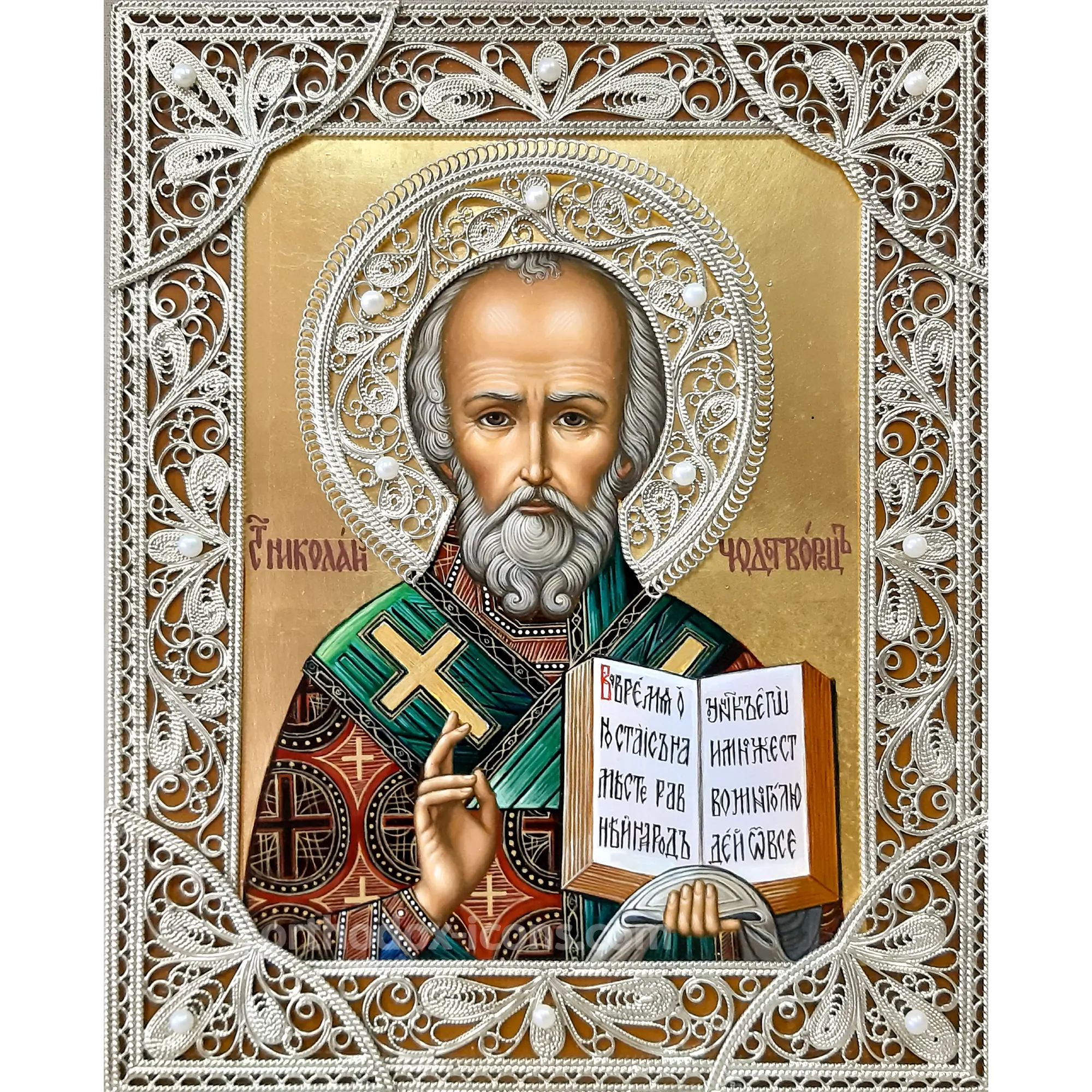
Icon of Nicholas the Wonderworker is a hand-painted filigree icon of Saint Nicholas, combining Mstyora icon painting with fine jewelry-style ornament. The icon is painted on a linden wood board with a 23K gold leaf (960 purity) background. The borders and halo are decorated with raised silver-toned filigree made from metal thread, with white pearl-like inserts.
Saint Nicholas is shown in a soft academic manner, blessing with his right hand and holding the open Gospel in his left. This icon is chosen for prayer for travelers, help in poverty and difficult circumstances, healing, family blessing, and intercession for those unjustly condemned. It is a solemn gift for a home iconostasis, wedding, priest, spiritual mentor, or respected person.
It is possible to paint an image in any size to order
Free shipping worldwide
Icon of Nicholas the Wonderworker is a hand-painted filigree icon that unites the strict dignity of Orthodox iconography, the warmth of academic painting, and the festive richness of traditional jewelry-style decoration. Saint Nicholas of Myra, also called Nicholas the Wonderworker, is one of the most beloved saints in the Orthodox world. A richly decorated hand-painted icon of him can become not only a prayer image for the home, but also a family shrine preserved for many years.
This icon is painted on a linden wood board with a smooth 23K gold leaf (960 purity) background. The wide borders and the halo of Saint Nicholas are covered with raised silver-toned filigree, with white pearl-like beads placed into the openwork ornament. The result is a solemn image where icon painting and fine decorative craft work together without hiding the prayerful face of the saint.
Icon at a Glance
- Name: Icon of Nicholas the Wonderworker
- Saint: Saint Nicholas of Myra, Nicholas the Wonderworker
- Icon type: waist-length bishop icon with blessing hand and open Gospel
- Decoration: silver-toned filigree on the borders and halo, pearl-like inserts
- Available size: 17×21 cm (6.7×8.3 in)
- Approximate production time for a filigree icon: about two months
Composition and Filigree Decoration
The main distinctive feature of this icon is its rich openwork decoration made in the traditional technique of filigree. Thin silver-toned metal wire is shaped into curls, floral forms, small spirals, and continuous ornamental patterns. This raised metal lace covers the wide borders around the icon and also decorates the halo above the saint’s head, emphasizing his heavenly glory.
White artificial pearl beads are harmoniously set into the filigree ornament on the borders and within the halo. The cool shine of the silver-toned filigree and the clean pearly accents create a strong contrast with the smooth gold background of the central field. The icon therefore has a festive and noble appearance, while remaining centered on the figure and face of Saint Nicholas.
Face, Vestments, and Gospel
The face of Saint Nicholas is painted in a soft academic manner. The iconographer does not use harsh graphic lines; instead, the face is modeled with gentle transitions of light and shade. Saint Nicholas appears as an elderly bishop with a high forehead, gray hair, and a short full beard. His eyes are directed toward the person praying before the icon with fatherly warmth, mercy, and readiness to help.
The saint wears traditional episcopal vestments. His phelonion is a deep burgundy-brown tone and is decorated with gold equal-armed crosses. Over his shoulders lies the omophorion, the broad episcopal band that recalls the lost sheep carried by the Good Shepherd. In his right hand Saint Nicholas gives the traditional blessing, with the fingers forming the monogram IC XC, the name of Jesus Christ.
In his left hand he holds the open Gospel. The open book points to his pastoral ministry, his confession of the Word of God, and his service as a bishop. On icons of Saint Nicholas, the Gospel also recalls his defense of Orthodox faith and his teaching role within the Church.
Life and Veneration of Saint Nicholas
Saint Nicholas was born in the second half of the third century in Patara of Lycia, in the territory of modern Turkey, into a devout Christian family. From childhood he was known for piety and love for the Church. After the death of his parents, he used his inheritance not for himself, but to help those in need.
One of the best-known episodes from his early life is the rescue of three poor sisters. Their father, having lost his means, was in despair. Saint Nicholas secretly gave gold for their dowries, preserving them from disgrace and making honorable marriage possible. This act of hidden mercy became one of the reasons he is loved as a helper in family needs and difficult circumstances.
Later Saint Nicholas became Archbishop of Myra in Lycia. During persecutions against Christians he endured imprisonment and hardship, and after the peace of the Church he returned to pastoral service. Orthodox tradition also remembers his zeal for the true faith at the First Ecumenical Council in Nicaea. Many miracles are connected with his name: help for sailors, rescue of the innocent from execution, care for the poor, and intercession for children and families. Saint Nicholas reposed in the Lord in the fourth century, and his holy relics are venerated in Bari.
What People Pray for Before Saint Nicholas
In Orthodox prayer Saint Nicholas is often called a quick helper, because the faithful have long experienced his intercession in urgent and difficult circumstances. Before this icon people may pray for travelers, sailors, drivers, pilots, children, families, those in poverty, those seeking work, and those suffering from injustice.
- for protection during travel and a safe return home;
- for help in poverty, debt, and difficult life circumstances;
- for family blessing and the well-being of children;
- for daughters and families preparing for marriage;
- for people unjustly accused or condemned;
- for healing, comfort, and spiritual strength;
- for mercy, wisdom, and timely help.
Mstyora Icon Painting and Jewelry Work
A hand-painted filigree icon is made in several complex stages, joining the work of a woodworker, iconographer, and jeweler. The base is a dried linden wood board strengthened with oak splines. The painting surface is prepared with traditional gesso, polished smooth, and then covered in places with 23K gold leaf (960 purity).
The iconographer paints the image in mineral egg tempera, a durable traditional technique valued for depth, clarity, and longevity. Separately, the jeweler twists and forms the metal wire, joins the filigree elements into a single openwork pattern, places the pearl-like beads, and mounts the finished decorative border and halo onto the painted board. This requires precision, patience, and careful coordination between the painting and the metal ornament.
Who This Icon Is For
This richly decorated icon of Saint Nicholas is a solemn Orthodox gift and a strong family shrine. It may be given to newlyweds for a wedding blessing, to parents for an anniversary, to a priest or spiritual mentor, to a respected elder, to a traveler, sailor, or person whose life is connected with journeys. It is also suitable for a home iconostasis where a noble, carefully made image of Saint Nicholas is desired.
Icon Characteristics
| Full name | Filigree Icon of Saint Nicholas the Wonderworker |
| Iconographic type | Waist-length bishop icon with open Gospel |
| Painting style | Academic, painterly realism |
| Board materials | Linden wood board, oak splines, cloth, gesso |
| Painting materials | Mineral egg tempera, protective varnish |
| Gilding | Smooth 23K gold leaf (960 purity) background |
| Filigree decoration | Handmade nickel silver filigree, artificial pearl beads |
| Available size | 17×21 cm (6.7×8.3 in); other sizes by agreement |
Because the filigree ornament is made by hand, every pattern is unique. Small differences in the openwork curves, pearl placement, and metal ornament are natural and confirm the individual handmade character of the icon.
Blessing and Care
A kiot, or wooden icon case with glass, is strongly recommended for an icon with filigree. The raised metal ornament is difficult to clean from household dust without risk, and the kiot protects the filigree, pearl-like inserts, gilding, and painted surface from dust, smoke, scratches, humidity, and sudden temperature changes.
At the customer’s request, the icon may be blessed by an Orthodox priest before shipping, or it may be blessed later in the customer’s own parish. Free international shipping is included. Payment is made after you receive and approve the icon.
Questions and Answers
What is filigree on an Orthodox icon?
Filigree is a traditional jewelry technique in which thin metal wire is twisted, shaped, and joined into an openwork pattern. On this icon, the borders and halo are decorated with silver-toned filigree.
Are real pearls used in the ornament?
This icon uses high-quality artificial pearl beads. They give a clean pearly shine, regular round form, and durable decorative effect without greatly increasing the cost of the icon.
What does Saint Nicholas’ right-hand gesture mean?
His fingers are arranged in the traditional episcopal blessing, forming the letters IC XC, the monogram of the name of Jesus Christ.
Why does Saint Nicholas hold an open Gospel?
The open Gospel points to his pastoral ministry, his preaching of the Word of God, and his service as a bishop of the Church.
Will the silver-toned filigree darken over time?
Nickel silver may develop a light noble patina over time, especially in the recessed parts of the relief. Keeping the icon in a kiot helps preserve its brightness.
What is the difference between academic and strict Byzantine painting?
Academic icon painting uses softer light and shade, smoother tonal transitions, and a more painterly modeling of the face, while remaining within an Orthodox devotional image.
Why are oak splines used on the back of the board?
Oak splines help stabilize the linden board and reduce warping caused by changes in humidity and temperature.
Why does this icon take about two months to make?
The icon requires several stages: board preparation, gesso drying, tempera painting, gilding, hand-made filigree work, mounting of the ornament, and final finishing.
Is a kiot recommended for a filigree icon?
Yes. A wooden icon case with glass is strongly recommended because filigree is difficult to clean from dust without risk, and the kiot protects both painting and metal ornament.
Can the icon be blessed?
At the customer’s request, the icon may be blessed by an Orthodox priest before shipping, or it may be blessed later in the customer’s own parish.
| Dimensions | 17x21cm (6.7×8.3 in) |
|---|---|
| Name | Nicholas |