The Vladimir Mother of God Icon
Price range: $700 through $2250
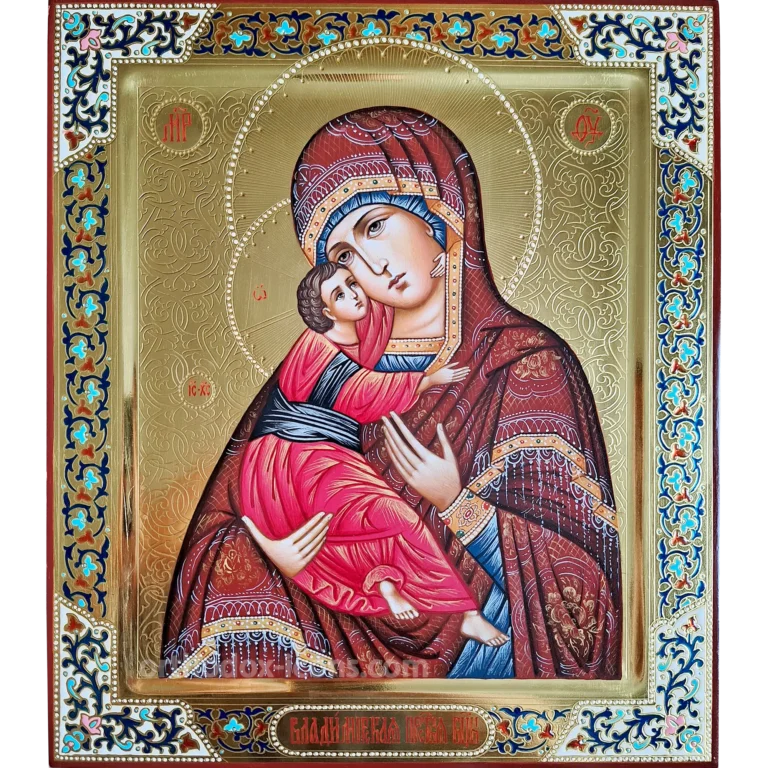
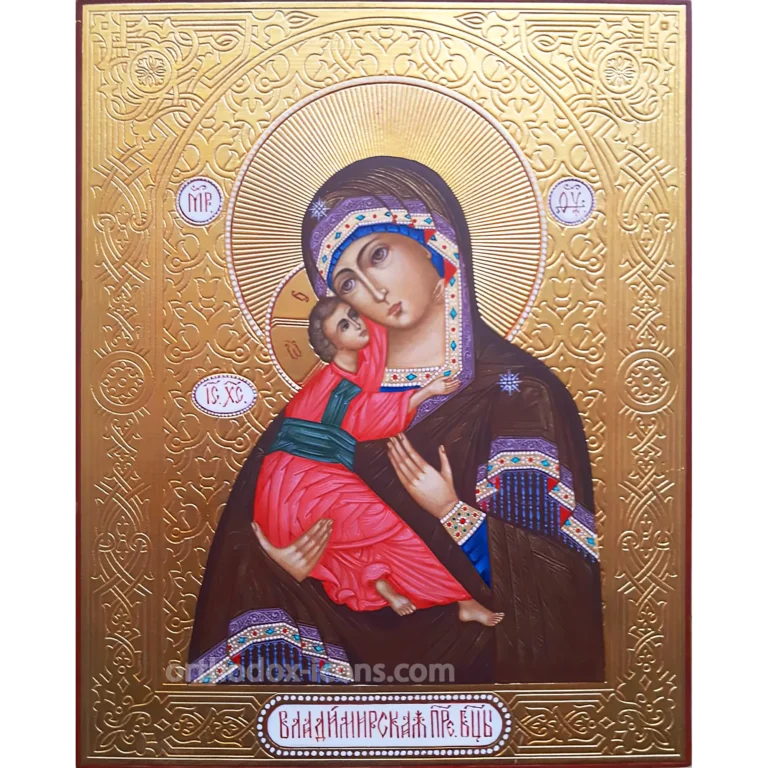
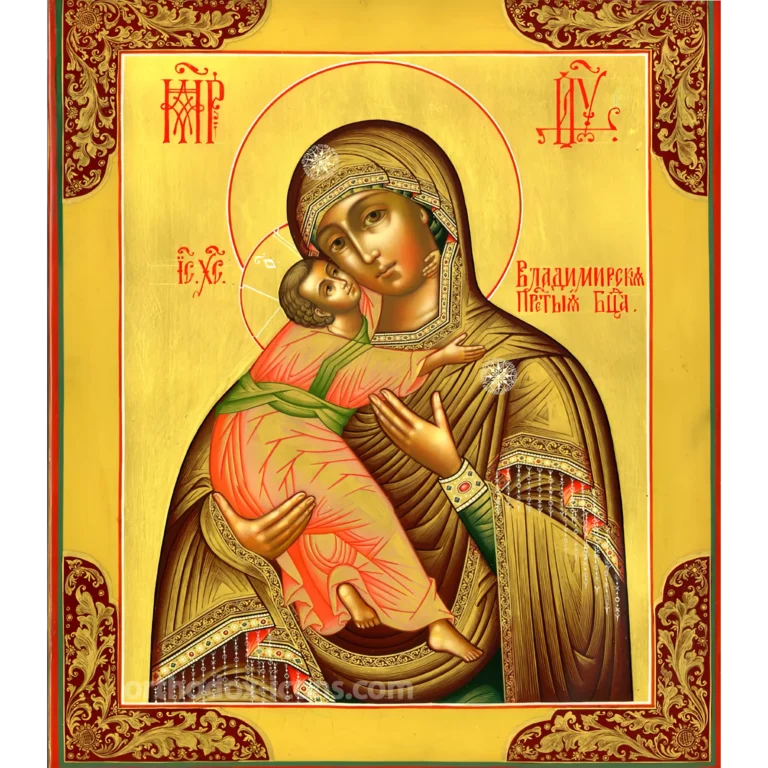
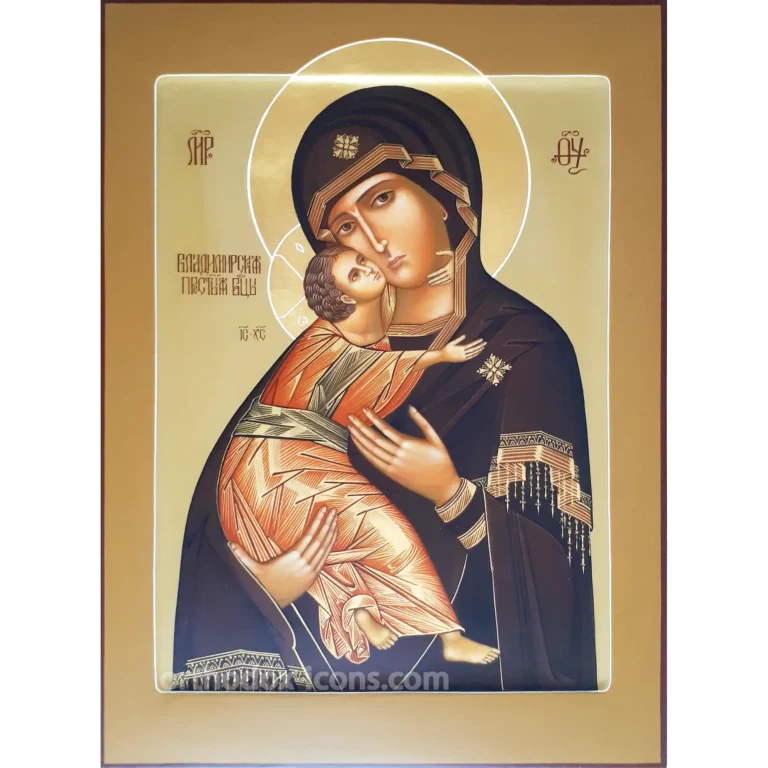
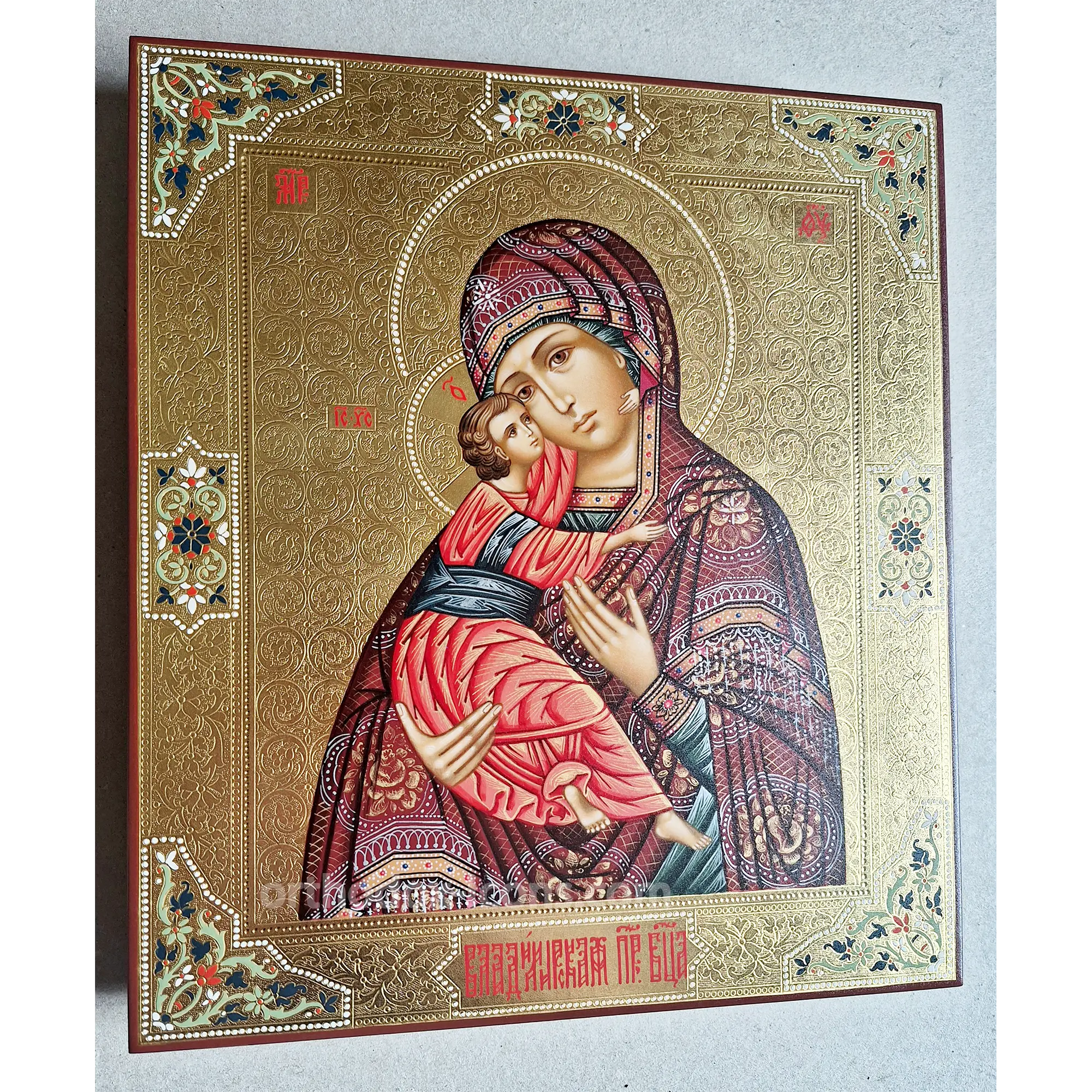
The Vladimir Mother of God Icon is a hand-painted Orthodox icon of the Theotokos in the Eleusa, or Tenderness, type, one of the most revered Mother of God images.
Available sizes: 17×21 cm (6.7×8.3 in), 20×24 cm (7.9×9.4 in), 27×31 cm (10.6×12.2 in), 30×40 cm (11.8×15.7 in). Larger church and iconostasis sizes may be discussed before painting.
Materials: linden board with oak braces, pavoloka, chalk levkas, 960 gold leaf, mineral egg tempera, colored enamel ornament, protective lacquer.
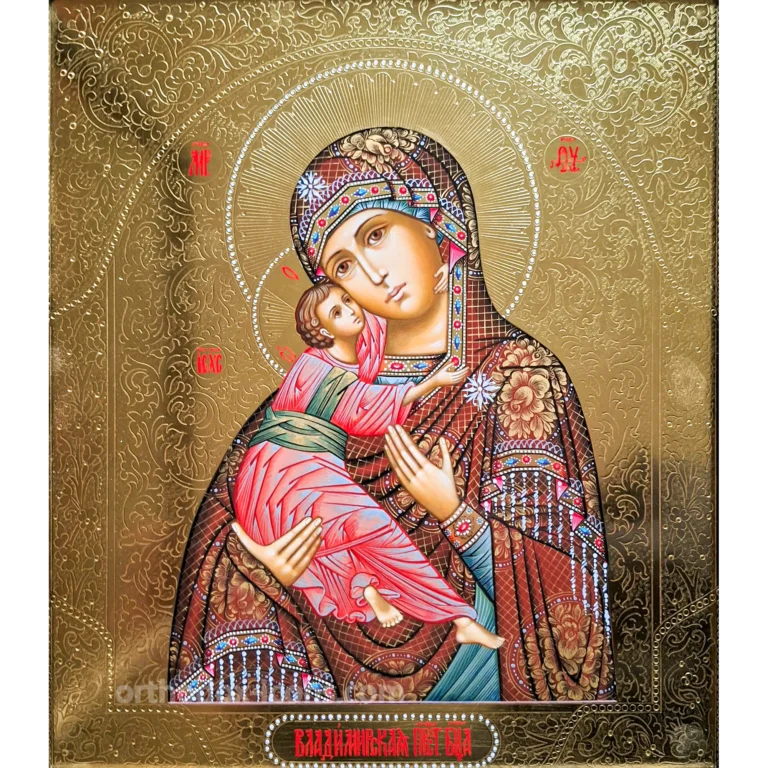
Technique: fully hand-painted icon on wood with gold assist, tooled gold background, floral ornament, enamel rosettes, and Mstyora-style face painting.
It is possible to paint an image in any size to order
Free shipping worldwide
The Vladimir Mother of God Icon is a hand-painted Orthodox icon of the Theotokos in the Eleusa, or Tenderness, type. Among the many holy images of the Mother of God, the Vladimir icon holds a special place as a sign of maternal mercy, spiritual protection, and deep union between Christ and His Most Pure Mother.
For nearly nine centuries this image has been venerated as one of the great holy treasures of Orthodox tradition. It is remembered in connection with the protection of Moscow and Russia, the crowning of rulers, the election of patriarchs, and countless personal prayers in times of danger, sorrow, and difficult decision.
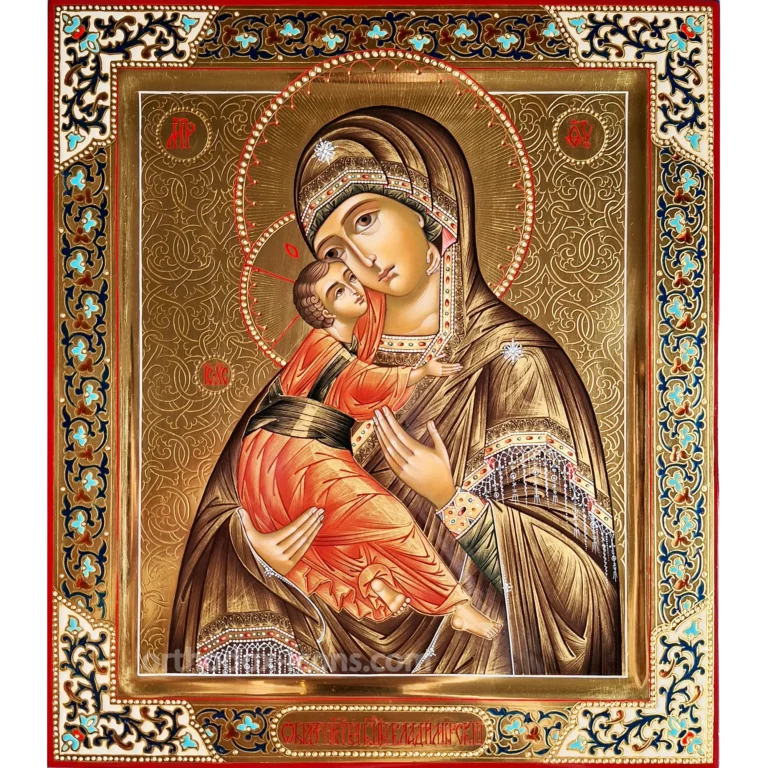
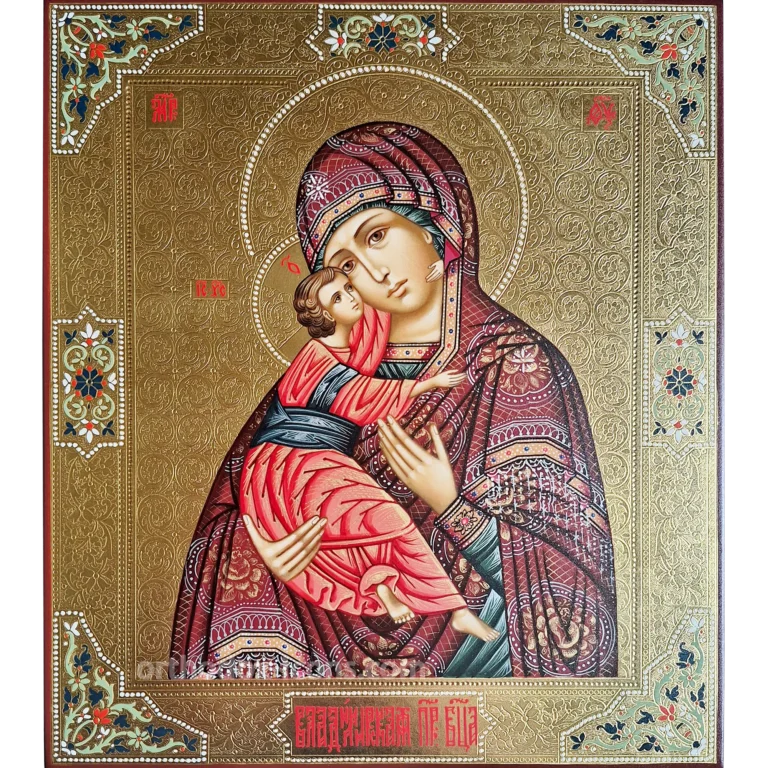
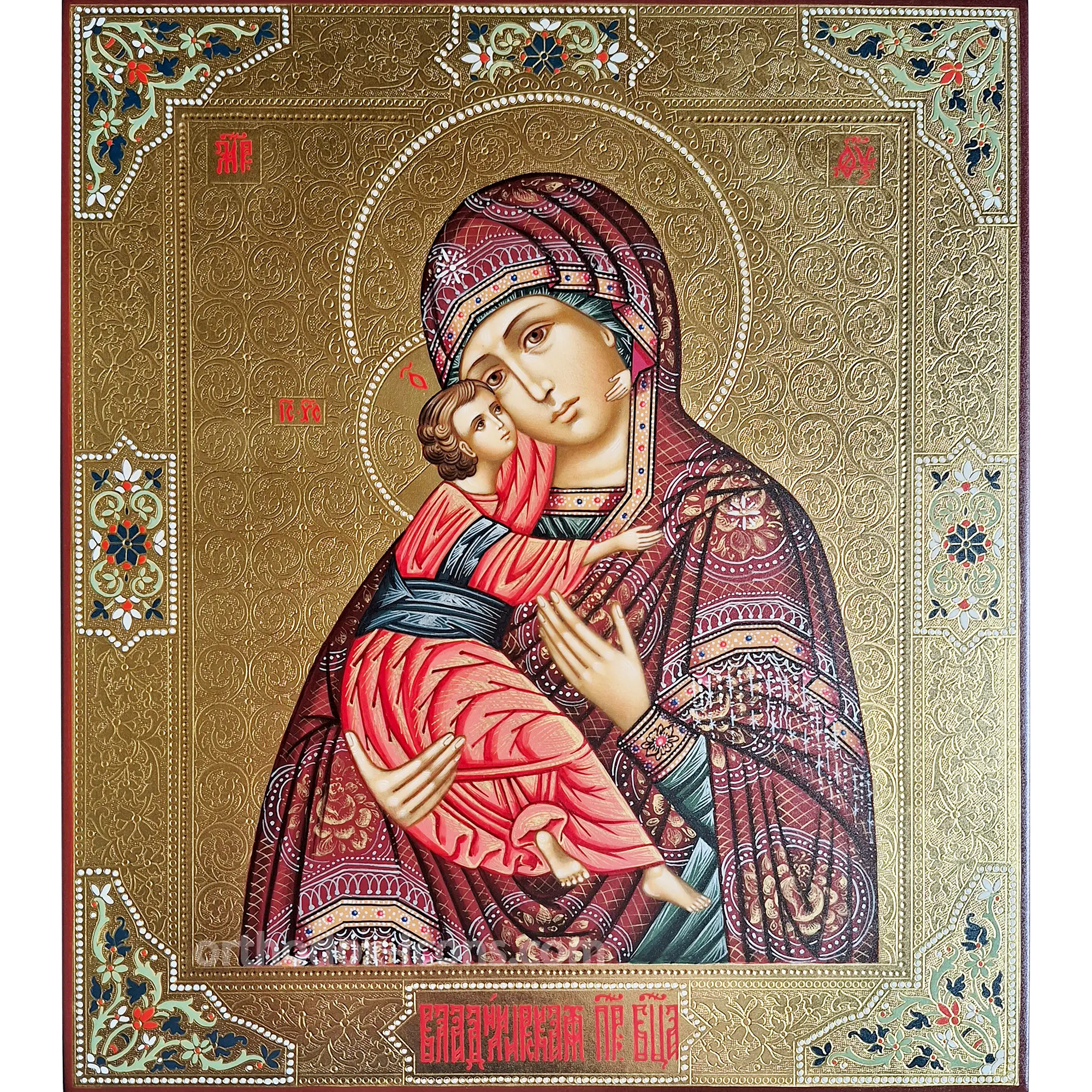
This hand-painted version is made in the Mstyora tradition with a fully gilded background of 960 gold leaf, fine hand-tooled floral ornament, colored enamel rosettes, and careful mineral egg-tempera painting. The richness of the decoration is not meant to overwhelm the image, but to emphasize the dignity and prayerful majesty of the Vladimir Mother of God.
History of the Holy Image: From Byzantium to Moscow
According to ancient church tradition, the first image of the Mother of God was painted by the holy Apostle and Evangelist Luke during the lifetime of the Theotokos. The tradition of the Vladimir Icon is connected with this apostolic memory, while the historically preserved icon itself belongs to the Byzantine world of the early twelfth century.
Historical evidence places the original Vladimir Icon in Constantinople in the first third of the twelfth century. Around 1131, it was sent as a gift to the holy prince Mstislav of Kiev, son of Vladimir Monomakh, from Patriarch Luke Chrysoberges of Constantinople. The icon was first kept in the region of Kiev and later became bound to the history of Vladimir and Moscow.
A decisive moment came in 1155, when the holy right-believing Prince Andrei Bogolyubsky took the icon from Vyshgorod toward the northeast. According to tradition, the horses carrying the holy image stopped near Vladimir and would not move farther. This was understood as a sign that the Mother of God wished her icon to remain there, and the image became known as the Vladimir Icon.
The Three Historical Deliverances
In church memory, the Vladimir Mother of God is especially connected with three great deliverances. These events are remembered liturgically, and each feast shows the icon not only as a family holy image, but also as a sign of intercession in the life of an entire people.
- September 8: the meeting of the icon in Moscow in 1395. As Tamerlane approached Moscow with a vast army, the icon was brought from Vladimir to the capital. Tradition remembers that the conqueror turned back after a vision of the Mother of God.
- July 6: deliverance from Khan Akhmat in 1480 at the famous standing on the Ugra River, an event associated with the end of the Tatar-Mongol yoke. The Vladimir Icon stood before the Russian forces as they prayed for protection.
- June 3: deliverance from the Crimean Khan Mahmet-Girey in 1521. As Moscow was threatened, the people prayed before the Vladimir Icon, and the invading forces withdrew in sudden fear.
Iconography of Eleusa: Tenderness and Theological Depth
The Vladimir Icon belongs to the Byzantine iconographic type Eleusa, translated as Merciful and known in Russian tradition as Tenderness. The main feature of this type is the close touching of the faces of the Mother of God and the Christ Child, cheek to cheek.
This is not merely a sentimental image of maternal affection. In Orthodox theology, the touching faces express the union of divine and human life in the mystery of the Incarnation. Christ is true God and true man, and the Mother of God stands at the center of this mystery as the one who bore Him in the flesh.
The eyes of the Virgin Mary do not look only at her Son. They look outward, toward the soul of the person standing before the icon. In this gaze there is hidden sorrow, because she foresees the suffering and Cross of Christ, and at the same time limitless maternal love for the world He has come to save.
The Christ Child sits on the right arm of His Mother and gently embraces her neck with His left hand, as if comforting her in the grief that is to come. A distinctive feature of the Vladimir iconographic type is the outward-turned left foot of the Child, with the bare sole or heel visible beneath the garments.
Garments, Gold Assist, and Symbolism
In this icon, the Mother of God is clothed in a dark burgundy-cherry maphorion, richly marked with gold assist. These fine gold lines are not ordinary garment decoration. In Orthodox iconography, assist signifies divine grace and uncreated light shining through the holy figure.
The Christ Child is clothed in a light himation, and an olive-green clavus is visible on His shoulder. The colors are balanced so that the tenderness of the faces remains central, while the gold, enamel, and ornament create a solemn liturgical setting.
Prayer Before the Vladimir Mother of God
For centuries, the Vladimir Icon has been approached in both public danger and private sorrow. The faithful pray before it when the heart needs wisdom, courage, reconciliation, and protection. It is also a deeply meaningful image for marriage and family life.
- For serious decisions: rulers once prayed before this icon at decisive moments, and the faithful still ask the Mother of God for clarity of mind and the right path in complex circumstances.
- For peace and reconciliation: people pray before the Vladimir Icon for the softening of anger, the end of hostility, and peace among relatives, neighbors, and those in conflict.
- For healing: Orthodox tradition preserves many accounts of healing connected with this image, including prayers for grave illness, heart trouble, and eye diseases.
- For marriage and motherhood: the Vladimir Icon is a classic wedding image. Before it people pray for a good spouse, a strong marriage, help in childbirth, and the health of children.
Mstyora Technique: Gold Leaf and Hand-Tooled Ornament
This hand-painted icon is created according to the strict canon of the Mstyora school, with complex decorative techniques that require both iconographic knowledge and fine manual skill. The work begins with a solid linden board. Oak braces are set into the back of the board to help prevent bending and deformation during changes of season and humidity.
The board is covered with pavoloka and chalk levkas, forming a strong, smooth ground for painting and gilding. The background and halos are then covered with genuine 960 gold leaf. After the gold is secured on the prepared levkas, the master works the surface by hand with small metal punches, creating a delicate floral pattern in the gilded field.
This technique is often called punching or tooling over gold. It gives the background a refined relief-like life without turning the icon into secular ornament. The gold remains part of the sacred language of the icon, a sign of the heavenly realm and divine light.
The painted image itself is made in natural mineral egg tempera. Pigments such as ocher, cinnabar, and blue mineral tones are worked into the levkas and preserve their noble depth for generations. The garments of the Mother of God are enriched with gold assist, while the faces are painted with the softness and inner concentration characteristic of Mstyora work.
Colored Enamel Rosettes
The corners of the recessed field and the outer borders are decorated with refined rosettes using colored enamel accents. Blue, red, and green tones create a jewel-like impression, as if the icon were inlaid with precious stones. These details support the solemnity of the image while keeping the faces of the Mother of God and Christ at the center.
Icon Characteristics
| Name | The Vladimir Mother of God Icon |
|---|---|
| Traditional title | Icon of the Most Holy Theotokos of Vladimir |
| Iconographic type | Eleusa, or Tenderness |
| Main feature | The faces of the Mother of God and Christ touch cheek to cheek |
| Distinctive detail | The outward-turned bare foot, or Vladimir heel, of the Christ Child |
| Gilding | Full gold background and halos in genuine 960 gold leaf |
| Gold ornament | Fine hand-tooled floral pattern over the gilded levkas |
| Border decoration | Colored enamel rosettes in the corners and fields |
| Board | Solid linden board with oak braces, pavoloka, and chalk levkas |
| Painting | Natural mineral egg tempera on egg yolk |
| Available sizes | 17×21 cm (6.7×8.3 in), 20×24 cm (7.9×9.4 in), 27×31 cm (10.6×12.2 in), 30×40 cm (11.8×15.7 in) |
| Larger formats | Church and iconostasis sizes may be discussed before painting |
| Shipping | Free international shipping is included; payment is due upon delivery. |
Why This Icon Is Chosen
The Vladimir Mother of God Icon is often chosen for a home icon corner, a wedding blessing, a church gift, or a solemn family shrine. Its meaning is both tender and majestic: the Mother of God holds Christ close, yet her sorrowful gaze reaches every person who stands before the icon in prayer.
This version is especially suitable when a richly decorated hand-painted icon is desired. The gold leaf, tooled ornament, enamel rosettes, and careful tempera painting create a festive image while preserving the spiritual seriousness of the Vladimir iconographic type.
Questions and Answers
Why is the Vladimir Mother of God Icon so important?
The Vladimir Icon is one of the most revered Orthodox images of the Mother of God. In Russian church memory it is connected with the protection of Moscow and Russia in 1395, 1480, and 1521, and with major moments of church and state history.
What iconographic type is the Vladimir Icon?
The Vladimir Icon belongs to the Eleusa type, called Tenderness in Russian tradition. The faces of the Mother of God and Christ touch cheek to cheek, expressing both maternal love and deep theological meaning.
What is the distinctive Vladimir heel?
In the Vladimir iconographic type, the Christ Child sits on the right arm of the Mother of God, and His left foot turns outward so that the bare sole or heel is visible. This detail helps distinguish the Vladimir image.
For what needs do people pray before the Vladimir Icon?
The faithful pray before the Vladimir Mother of God for wisdom in serious decisions, reconciliation of enemies, strengthening of family life, protection in danger, healing, and help in sorrow.
When are the feast days of the Vladimir Icon?
The Russian Orthodox Church commemorates the Vladimir Icon on June 3, July 6, and September 8 according to the civil calendar, recalling deliverance from Mahmet-Girey, Khan Akhmat, and Tamerlane.
How is the gold background made?
The background and halos are covered with genuine 960 gold leaf. After gilding, the ornament is worked by hand with small metal punches, creating a fine floral pattern in the gilded surface.
What are the colored details in the corners?
The corners and fields include decorative rosettes with colored enamel accents. Blue, red, and green tones create the impression of jewel-like inlay while remaining part of the painted and gilded icon surface.
What is gold assist on the garments?
Gold assist is the fine gold line work on the garments. In Orthodox iconography it symbolizes divine light and grace shining through the holy figure rather than ordinary textile decoration.
What sizes are available?
The available sizes are 17×21 cm, 20×24 cm, 27×31 cm, and 30×40 cm. Larger church and iconostasis formats may be discussed before painting.
Is free international shipping included?
Yes. Free international shipping is included; payment is due upon delivery. The icon is painted to order and packed carefully to protect the gold leaf, enamel ornament, and painted surface.
| Dimensions | 17x21cm (6.7×8.3 in), 20x24cm (7.9×9.4 in), 27x31cm (10.6×12.2 in), 30x40cm (11.8×15.7 in) |
|---|---|
| Name | Mary |