Holy Trinity Orthodox Icon
Price range: $850 through $1750
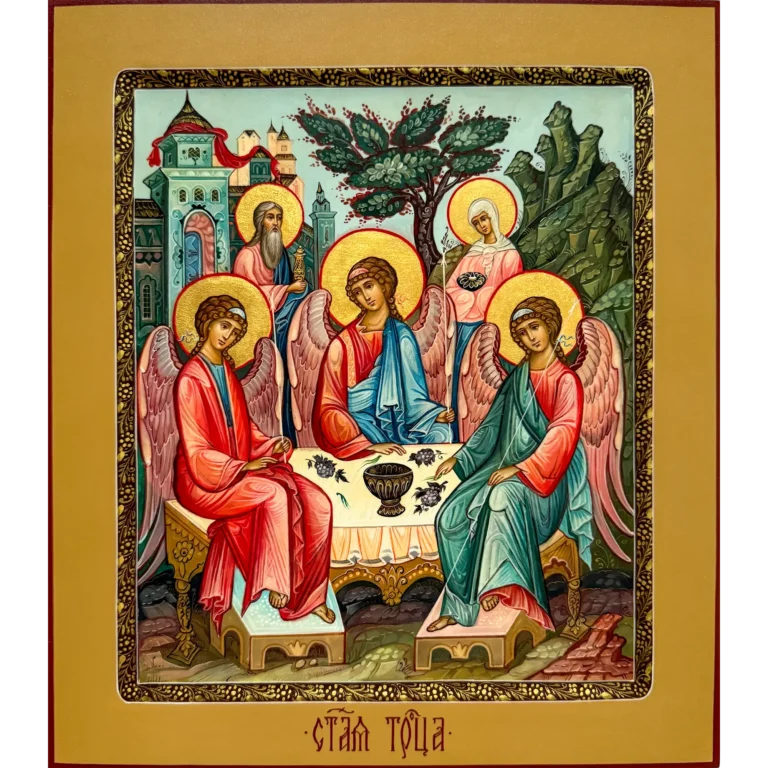
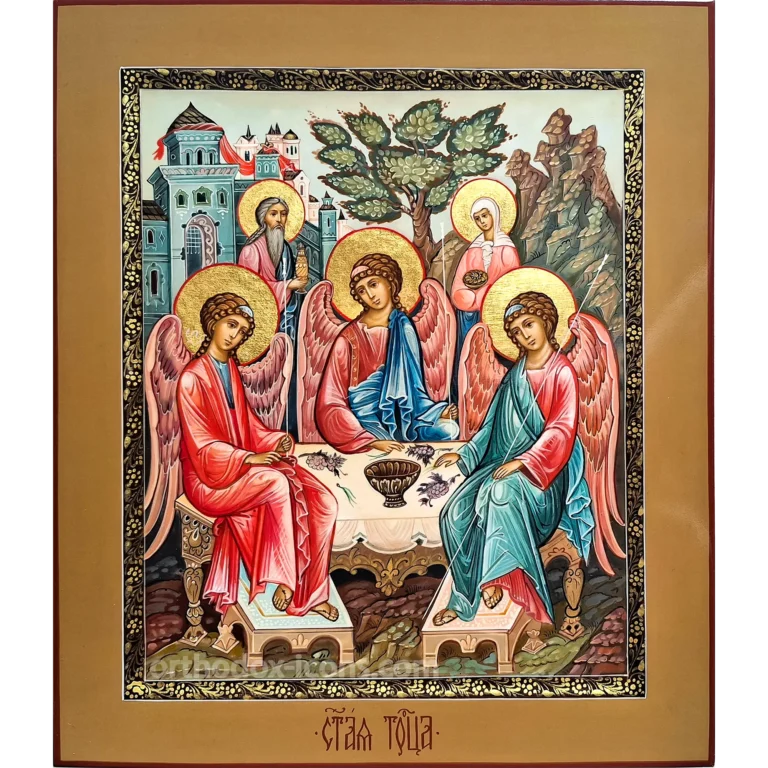
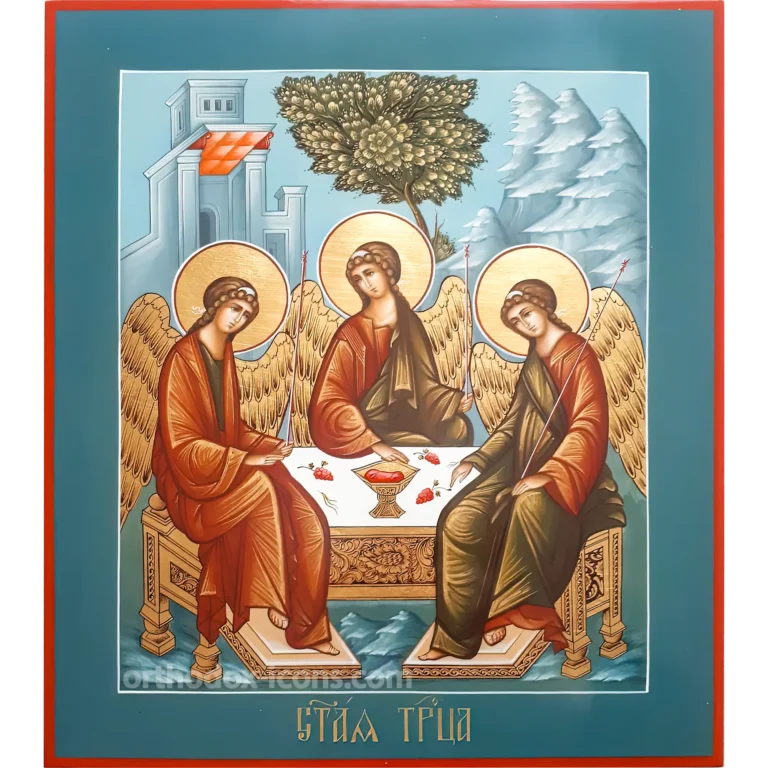
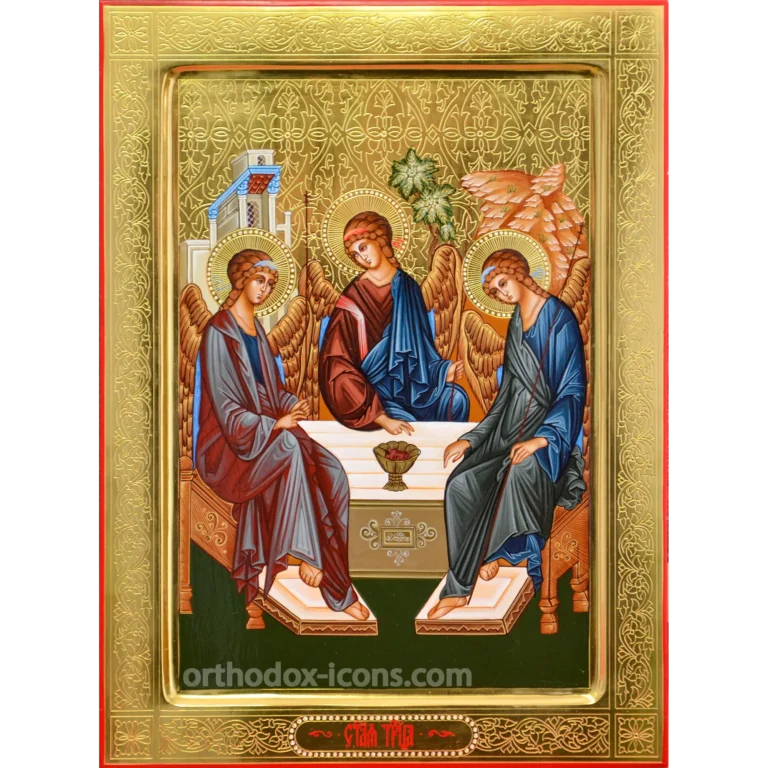
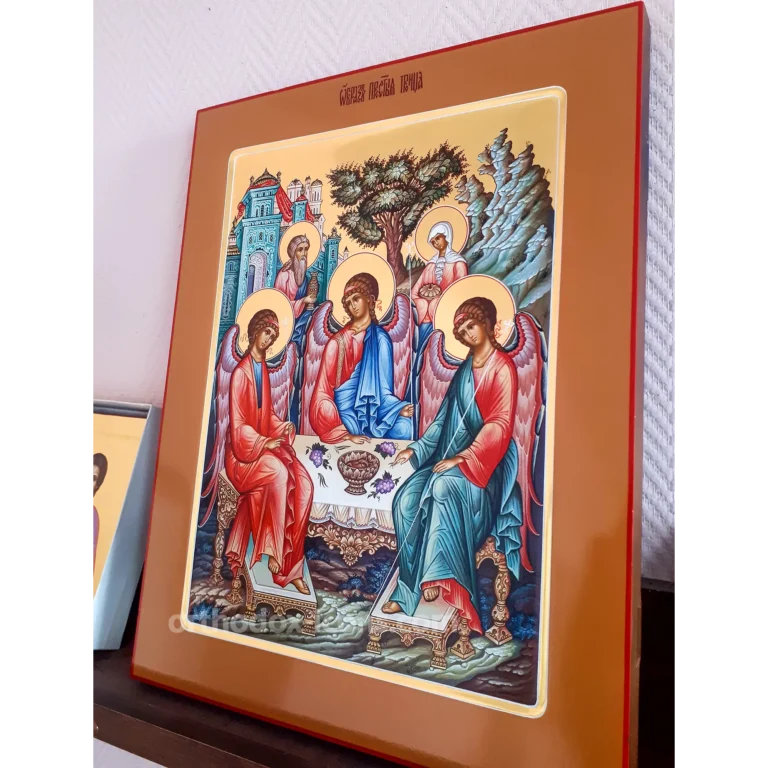
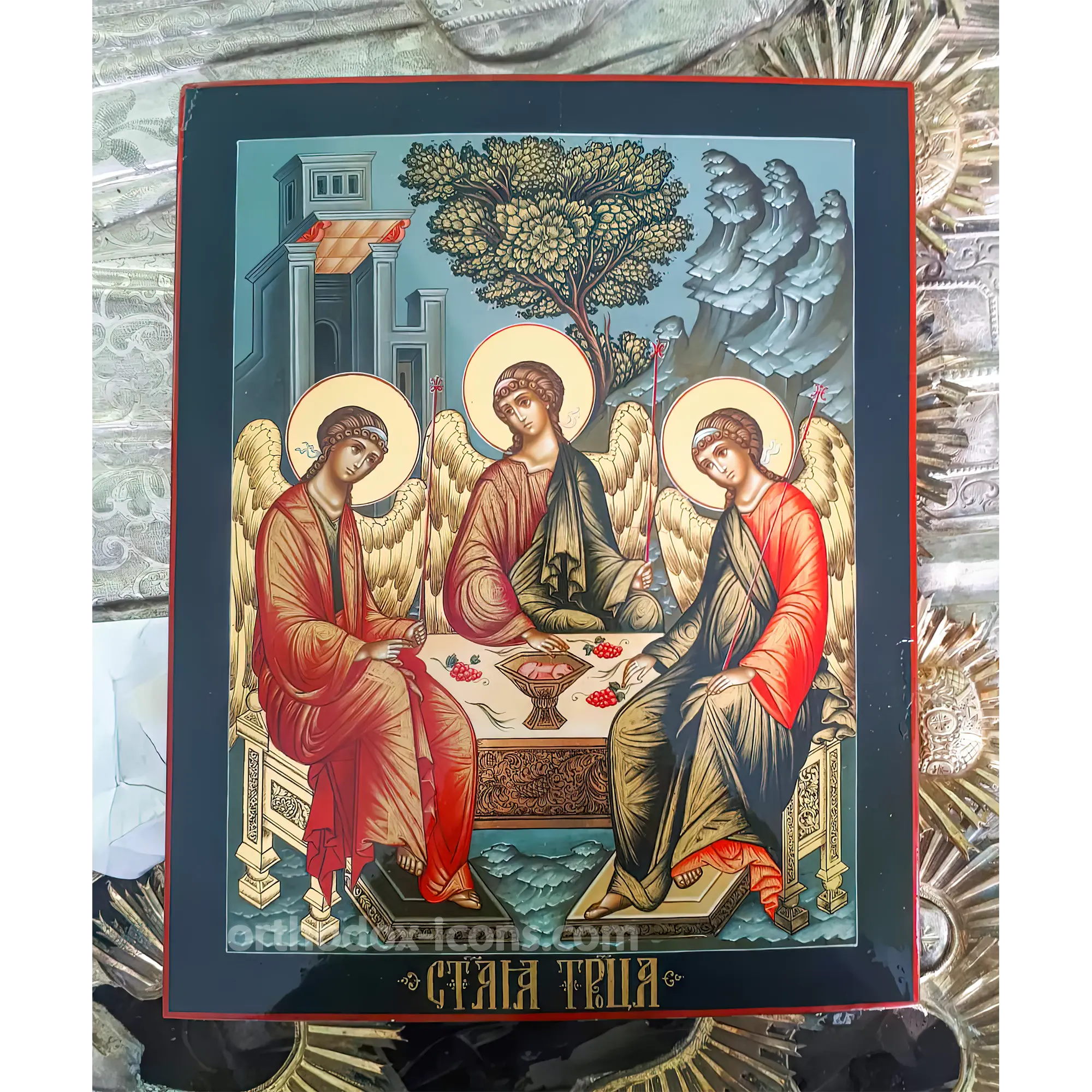
Holy Trinity Orthodox Icon is a hand-painted Old Testament Trinity icon in the Rublev tradition, with three angels, the Eucharistic cup, symbolic landscape, and gold leaf halos.
Available sizes: 20×24 cm (7.9×9.4 in), 27×31 cm (10.6×12.2 in), 30×40 cm (11.8×15.7 in). Free international shipping. Payment after receiving.
It is possible to paint an image in any size to order
Free shipping worldwide
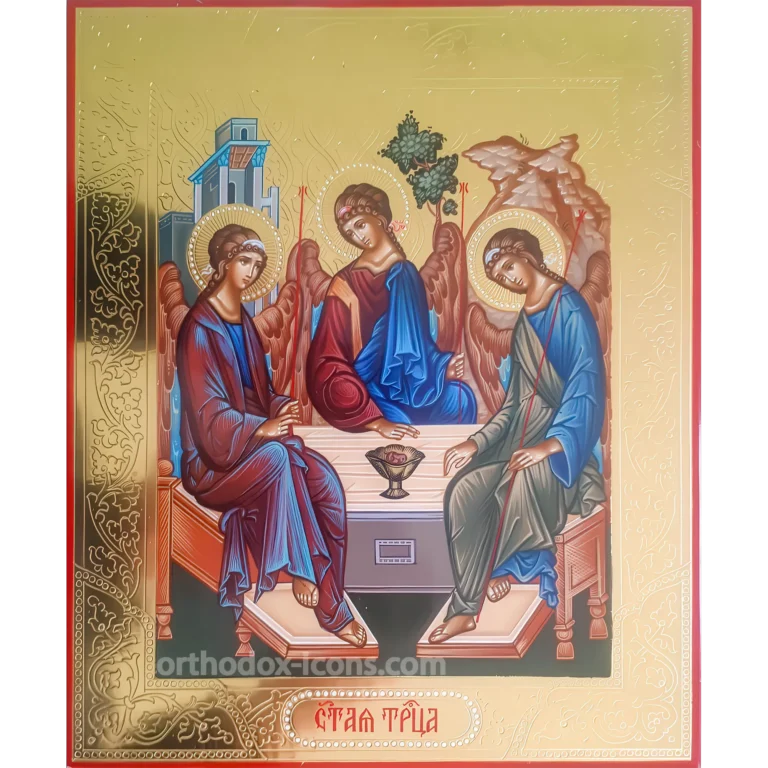
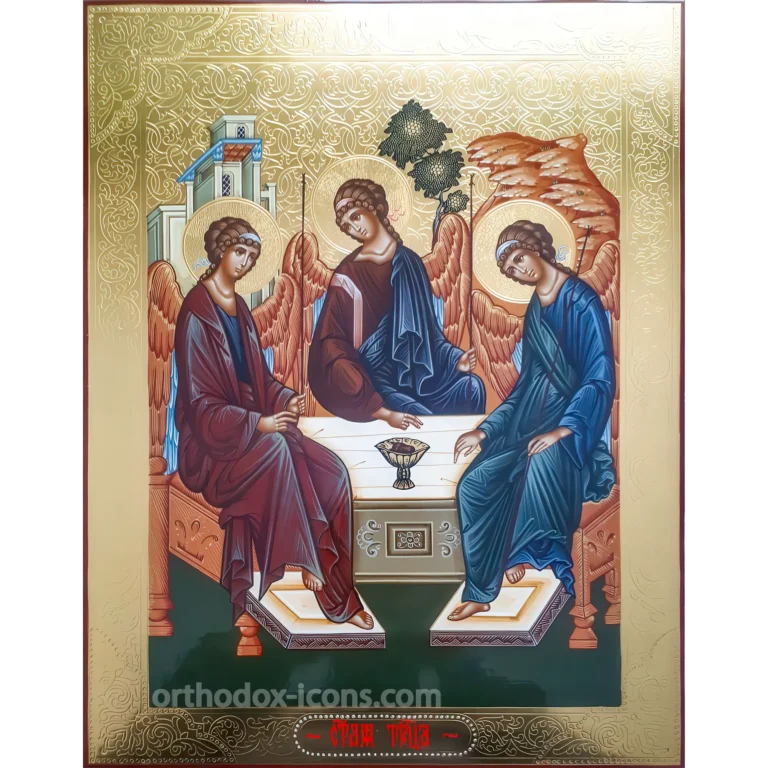
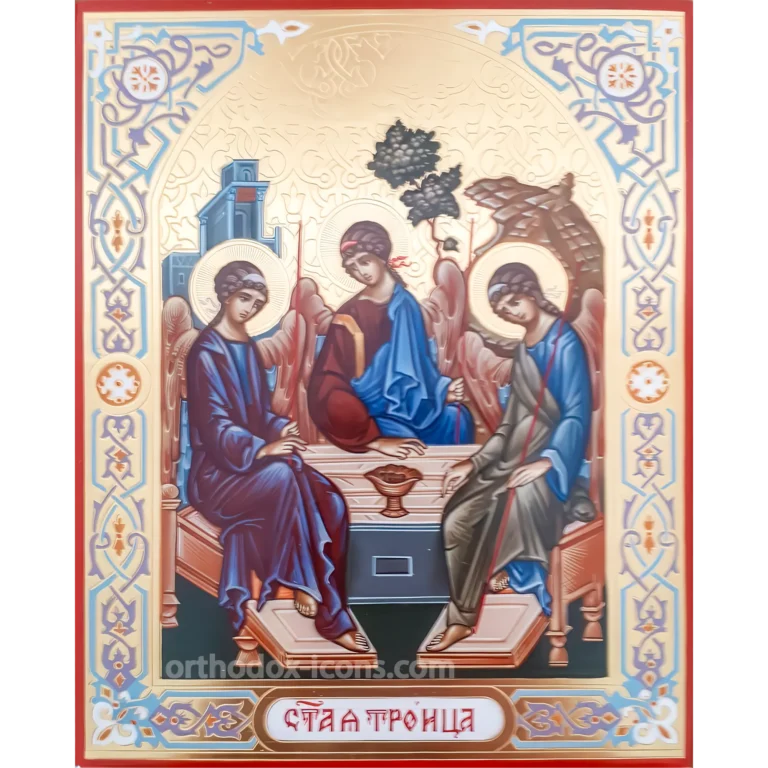
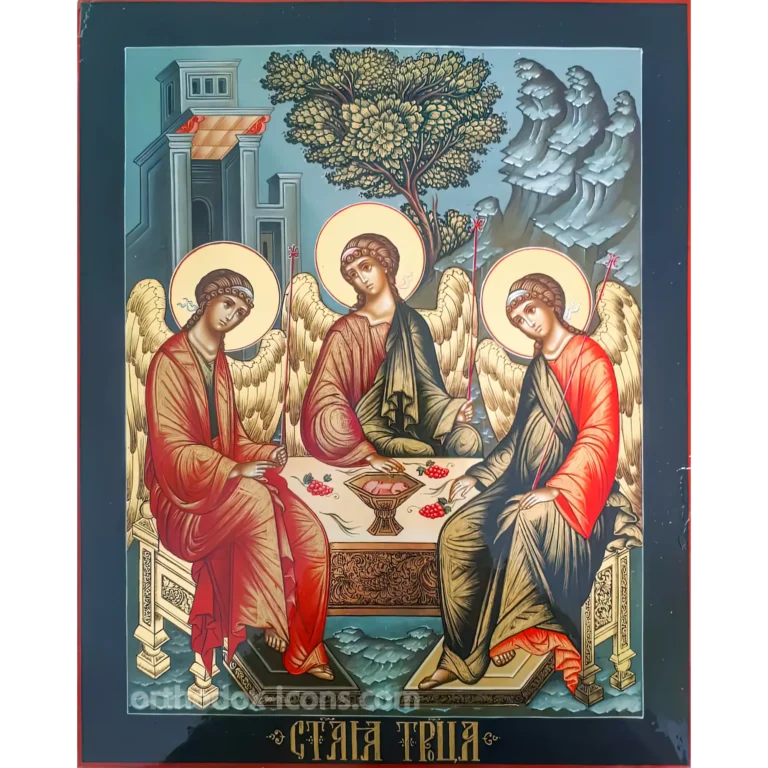
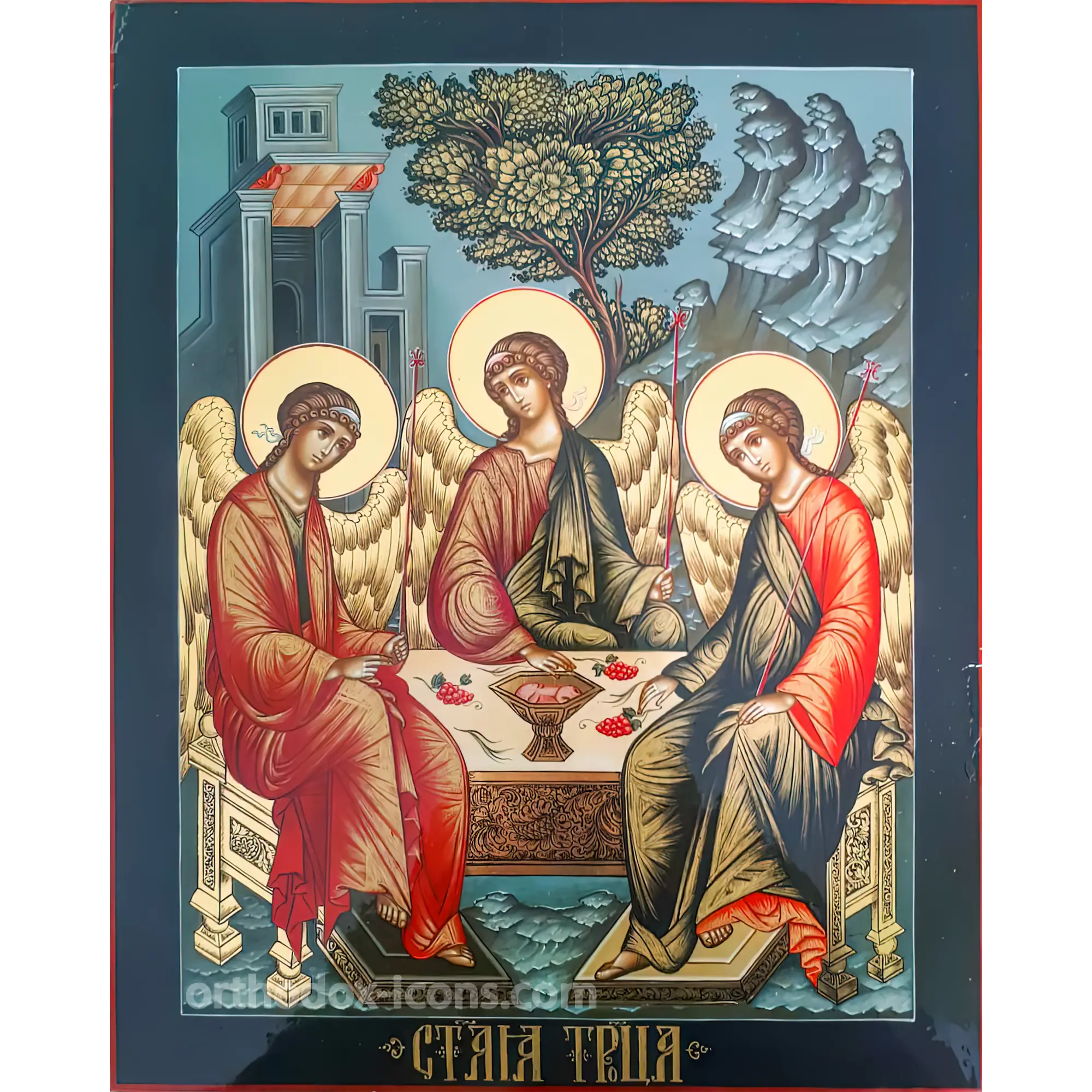
Holy Trinity Orthodox Icon is a hand-painted icon of the Old Testament Trinity, also known as the Hospitality of Abraham. It presents the three angelic visitors seated at the table beneath the Oak of Mamre, revealing through a visible biblical scene the mystery of the one God in three Persons.
This icon follows the great Orthodox tradition associated with Saint Andrei Rublev. The composition is quiet, balanced, and deeply contemplative: the three angels form a symbolic circle of eternity, their gestures turn toward the central cup, and the whole image leads the viewer away from everyday distraction toward prayerful reflection on divine love and unity.
Meaning of the Holy Trinity Orthodox Icon
The Holy Trinity icon is one of the most profound images in Christian art. Its historical foundation is the account in Genesis 18, where Abraham receives three mysterious visitors near the oaks of Mamre. In Orthodox interpretation, this meeting becomes a revelation of the Triune God and a visual confession of the consubstantial and undivided Trinity.
The icon is not a simple illustration of a biblical meal. In the Rublev tradition, the earthly details are reduced so that the viewer may contemplate the eternal counsel of God, the mystery of divine love, and the saving purpose of Christ’s sacrifice. The calm faces, inclined heads, and circular movement of the figures create an atmosphere of silence rather than narrative action.
The Rublev Tradition
Earlier Byzantine versions of the Hospitality of Abraham often included Abraham, Sarah, a servant, and many household details. Saint Andrei Rublev’s fifteenth-century icon transformed the scene into a theological image of extraordinary clarity. The three angels remain, while the domestic elements become secondary or disappear.
This hand-painted icon continues that tradition. The image is centered on the three angels in their silent dialogue. The absence of human figures helps the composition speak not merely about Abraham’s hospitality, but about the eternal unity, equality, and love of the Father, the Son, and the Holy Spirit.
Composition and Symbolism
The figures of the three angels are arranged within an invisible circle, an ancient symbol of eternity, perfection, and life without beginning or end. No figure dominates the others in a worldly way; the composition expresses equality, harmony, and communion.
The central angel is traditionally associated with the Son of God, Jesus Christ, whose head is inclined in humble obedience. The left angel is traditionally associated with the Father, and the right angel with the Holy Spirit. At the same time, Orthodox theology treats the icon with reverence and restraint, since the mystery of the Trinity cannot be reduced to a simple diagram.
The cup on the table is the spiritual center of the icon. In the Old Testament story it recalls the meal prepared for the visitors, but in Christian understanding it becomes an image of the Eucharist and the saving sacrifice of Christ. The gestures of the angels are directed toward this cup, making it the heart of the composition.
House, Tree, and Mountain
The symbolic landscape behind the angels is not decorative filler. Each element carries theological meaning. The building behind the left angel recalls Abraham’s dwelling, but also points to divine economy, the Church, and the many mansions of the heavenly Kingdom.
The tree above the central angel is the Oak of Mamre, yet it also evokes the Tree of Life and the wood of the Cross. The mountain behind the right angel signifies spiritual ascent and the places of divine revelation, such as Sinai and Tabor. Together, these elements deepen the image without disturbing its quiet simplicity.
Prayer Before the Holy Trinity Icon
Before the icon of the Holy Trinity, believers pray for unity, peace, repentance, wisdom, and the healing of division. It is especially meaningful when a family seeks harmony, when relatives need reconciliation, or when a person is facing a serious life decision and asks God for guidance.
The image is also fitting for a home icon corner, a new home, a wedding gift, or a family blessing. Its central theme is not ordinary success, but the deeper Christian desire that the home be shaped by love, peace, mutual patience, and the presence of God.
Artistic Features of This Icon
This icon is painted in an academic style rather than with a flat graphic manner. The faces are softly modeled, the garments are built with subtle transitions of color, and the landscape is carefully worked. The result is warm, readable, and prayerful, with a painterly depth that still respects the Orthodox meaning of the image.
The icon does not rely on a fully gilded or chased background. Instead, the emphasis is placed on the expressive painting: blue, crimson, rose, and green tones in the garments, the calm rhythm of the seated figures, and the symbolic depth of the house, tree, mountain, and Eucharistic cup. Gold leaf is used on the halos, giving the image a restrained sacred radiance.
Traditional Materials and Technique
The icon is painted by hand using mineral pigments in egg tempera. The board is made from solid linden wood and strengthened with oak splines to help protect it from warping. The face of the board is covered with cloth and multiple layers of chalk gesso, then polished to receive the painting.
Mineral egg tempera gives the icon a noble matte surface and lasting color. Natural pigments such as ochres, greens, blues, and reds allow for rich but restrained tones. The halos are gilded with gold leaf, while the background remains a painted landscape rather than a solid gold field.
Icon Characteristics
| Name | Holy Trinity Orthodox Icon |
| Iconographic type | Old Testament Trinity, Hospitality of Abraham |
| Tradition | Rublev-inspired composition of three angels at the table |
| Main meaning | The mystery of the Triune God, divine love, unity, and Christ’s saving sacrifice |
| Central symbol | The Eucharistic cup on the table |
| Painting style | Academic hand painting with detailed landscape and soft modeling |
| Board | Solid linden board with oak splines, cloth, and chalk gesso |
| Painting | Natural mineral egg tempera |
| Gilding | Gold leaf on the halos; painted landscape background |
| Available sizes | 20×24 cm, 27×31 cm, 30×40 cm; larger church formats by agreement |
| Purpose | Home icon corner, family prayer, house blessing, wedding gift, chapel, or church interior |
Ordering, Shipping, and Payment
Available sizes are 20×24 cm, 27×31 cm, and 30×40 cm, with larger church formats available by agreement. Free international shipping is included, and payment is made after receiving the icon.
Questions and Answers
Why are three angels shown in the Holy Trinity icon?
The icon is based on the Old Testament hospitality of Abraham, where the Lord appeared to Abraham under the form of three angelic visitors.
Is this icon connected with the icon of Saint Andrei Rublev?
Yes. This composition follows the Rublev tradition, where the scene is purified of everyday details and centered on the mystery of the Triune God.
What does the cup on the table mean?
The cup is the spiritual center of the icon and is understood as an image of the Eucharist and Christ’s saving sacrifice.
Why are Abraham and Sarah not shown here?
In the Rublev tradition, Abraham and Sarah are omitted so the viewer’s attention moves from the historical event to the eternal counsel of the Trinity.
What do the house, tree, and mountain symbolize?
The house points to divine economy and the Church, the tree to the Oak of Mamre and the Tree of Life, and the mountain to spiritual ascent.
What do the colors of the angels’ garments mean?
The colors express theological meanings: red and blue are connected with the Son, soft heavenly tones with the Father, and green with the life-giving Holy Spirit.
What painting style is used for this icon?
The icon is painted in an academic style with soft modeling of the faces, rich color transitions, and detailed landscape elements.
What materials are used?
The icon is painted on a solid linden board with cloth, chalk gesso, mineral egg tempera, oak splines, and gold leaf on the halos.
What sizes are available?
Available sizes are 20×24 cm, 27×31 cm, and 30×40 cm, with larger church formats available by agreement.
Is the Holy Trinity icon suitable as a gift?
Yes. It is often chosen for a home icon corner, house blessing, wedding, family gift, or a meaningful Orthodox inheritance.
| Dimensions | 20x24cm (7.9×9.4 in), 27x31cm (10.6×12.2 in), 30x40cm (11.8×15.7 in) |
|---|