Materials and Tools in Orthodox Icon Painting
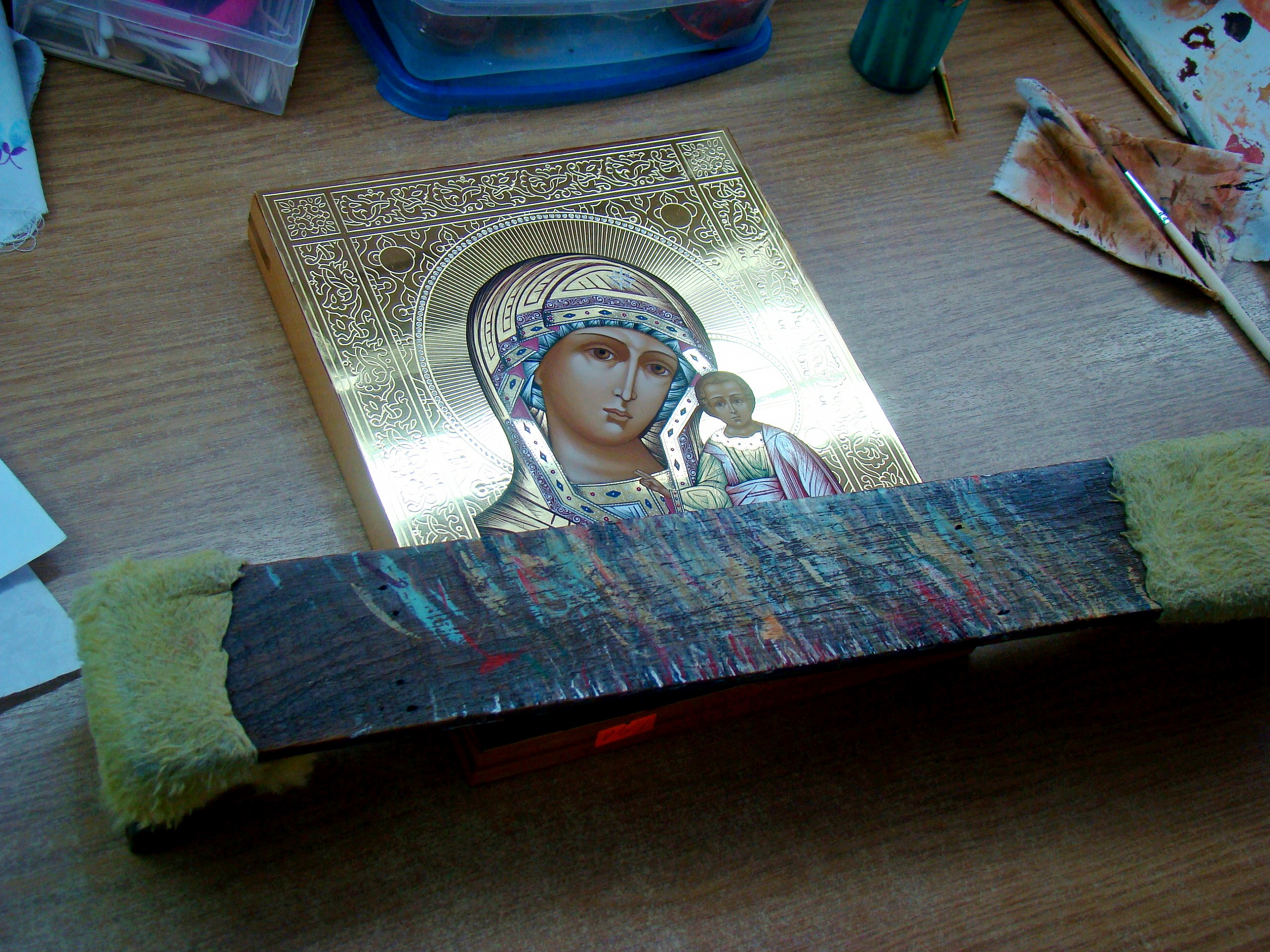
The materials and tools used in Orthodox icon painting are not accidental. A hand-painted icon is built in layers: the wooden board, ground, drawing, pigments, gilding, inscriptions, and protective finish all affect the final appearance and long-term stability of the work.
Understanding these materials helps a buyer see why a hand-painted icon differs from a printed reproduction and why size, gold leaf, detail level, and preparation influence the final price. For finished works, see our Orthodox icon shop. For custom orders, read how to order a hand-painted Orthodox icon.
The Wooden Board
The traditional base for an Orthodox icon is a prepared wooden board. The board must be stable, dry, and suitable for long-term use. Poor preparation can lead to warping, cracking, or movement of the painted surface over time.
For small home icons, the board may be simple and modest. For larger church icons, wedding icons, or icons intended for long-term public use, board quality and preparation become even more important.
Levkas: The Prepared Ground
Before painting begins, the board is prepared with a ground often called levkas. This creates a smooth and stable surface for the icon image. The quality of this layer matters because the drawing, paint, and gilding depend on it.
Levkas also gives the icon surface a particular depth and clarity. It is one reason a hand-painted icon has a different visual presence from a print on board.
Drawing and Composition
After the surface is prepared, the iconographer works with the drawing and composition. The drawing follows Orthodox iconographic tradition rather than naturalistic portraiture. Proportions, gestures, inscriptions, garments, and attributes all carry meaning.
This stage is especially important for complex subjects: feast icons, multi-figure compositions, wedding icon pairs, archangels, and patron saints with specific iconographic details.
Pigments and Paint
Icon painting uses carefully selected pigments and binders. The exact technique can vary, but the goal is the same: stable color, clear forms, and a surface appropriate for sacred iconography. Good materials help preserve the image and keep colors balanced over time.
The painter does not simply “color in” a drawing. The image is built through layers, highlights, shadows, and fine details that shape the face, garments, hands, inscriptions, and background.
Gold Leaf and Backgrounds
Gold leaf is often used for halos, backgrounds, borders, and solemn gift or church icons. It gives the icon a liturgical brightness and a sense of sacred space. A painted background can also be appropriate, especially for personal icons or more restrained formats.
Gold leaf affects both appearance and cost because it requires material, preparation, and careful application. It is often chosen for icons of Christ, the Mother of God, wedding icons, archangels, and church commissions.
Brushes and Fine Tools
Icon painting requires brushes and tools that allow both broad color work and very fine detail. Faces, eyes, hands, inscriptions, borders, and ornament demand control and patience. A small icon can still require many hours because the details are concentrated in a limited space.
This is one reason custom icons should be discussed before painting. The same subject can be simple and modest or highly detailed and solemn.
Protective Finish and Care
After painting, the icon may receive a protective finish suitable for the technique and intended use. Care should remain gentle. A hand-painted icon should be kept away from excess moisture, direct heat, and harsh cleaning products.
For ordinary home care, gentle dusting with a soft dry cloth is usually enough. If an old or damaged icon needs work, restoration should be discussed separately with specialists.
Why Materials Matter When Ordering an Icon
Materials affect the appearance, durability, time, and price of a hand-painted icon. Size, board preparation, gold leaf, detail level, number of figures, inscriptions, and finish all matter. A small personal icon and a large church icon are not the same kind of work.
If you are choosing an icon, start with the subject and the place where it will be kept. Then decide whether you need a modest painted background or a more solemn gold leaf finish. For categories, see Virgin Mary icons, Jesus Christ icons, and icons of the saints.
FAQ about Materials and Tools in Icon Painting
What is the traditional base for an Orthodox icon?
A prepared wooden board is the traditional base. The board must be stable, dry, and suitable for long-term use.
What is gesso or levkas in icon painting?
Levkas is a prepared ground applied over the board before painting. It creates a smooth, stable surface for the icon image.
Why is gold leaf used in icons?
Gold leaf gives the icon a solemn liturgical appearance and is often used for backgrounds, halos, borders, and church or gift icons.
Do materials affect the price of an icon?
Yes. Size, board preparation, gold leaf, pigments, detail level, and finishing all affect the time and cost of a hand-painted icon.
How should a hand-painted icon be cared for?
A hand-painted icon should be kept away from excess moisture, direct heat, and harsh cleaning products. Gentle dusting with a soft dry cloth is usually enough.