St. Elizabeth the Martyr Icon
Price range: $700 through $2250
Available sizes: 17×21 cm (6.7×8.3 in), 20×24 cm (7.9×9.4 in), 27×31 cm (10.6×12.2 in), 30×40 cm (11.8×15.7 in); iconostasis formats can be made by individual request.
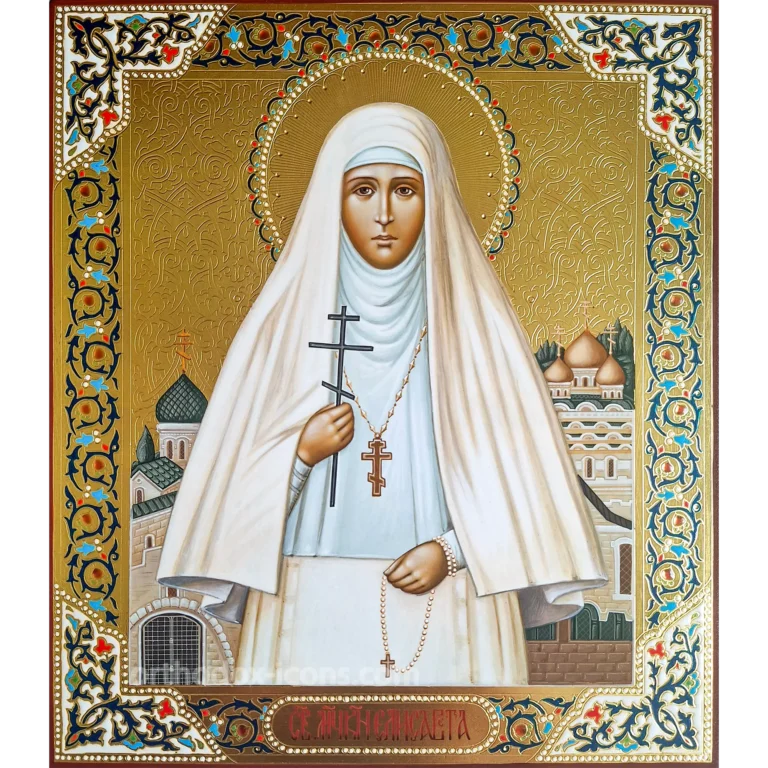
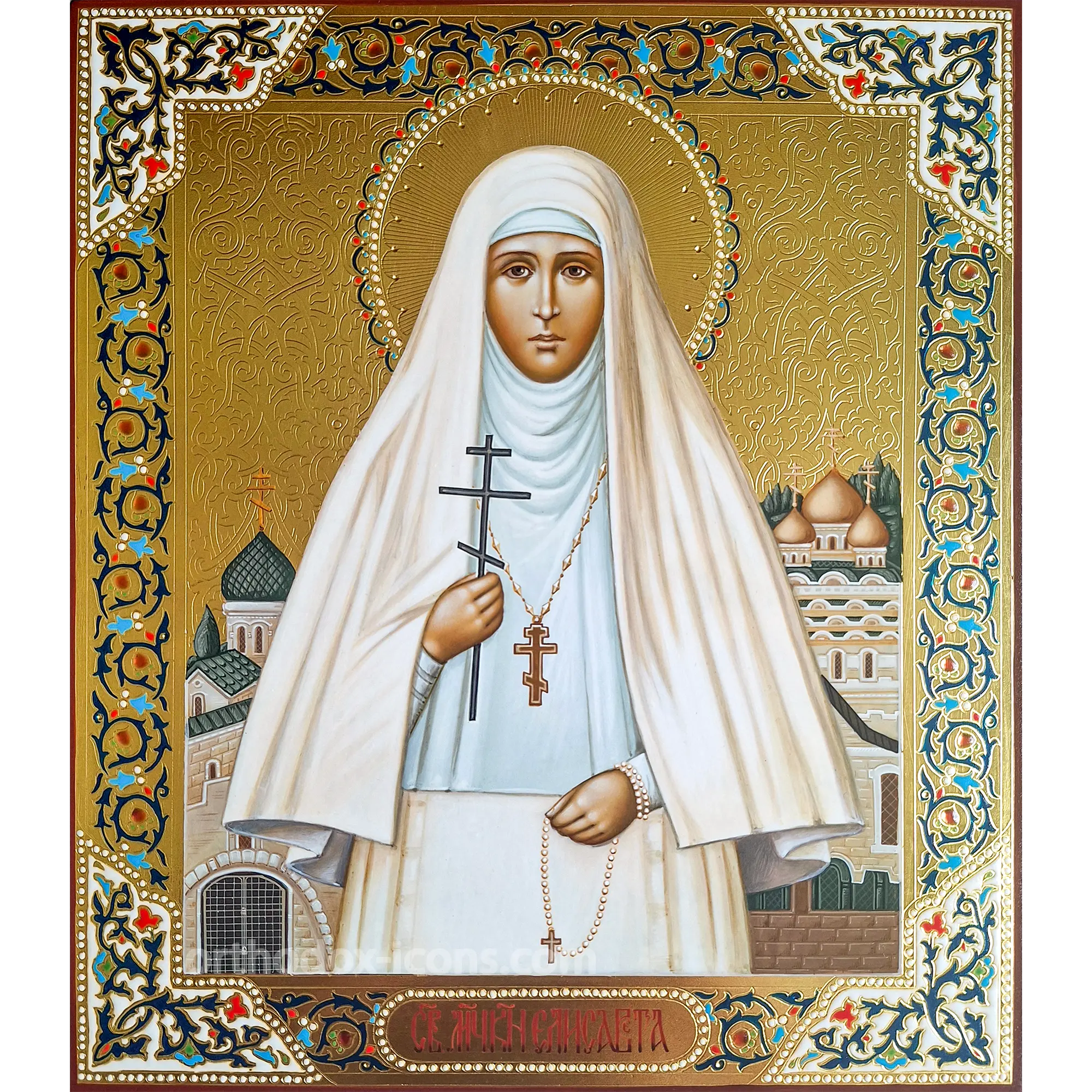
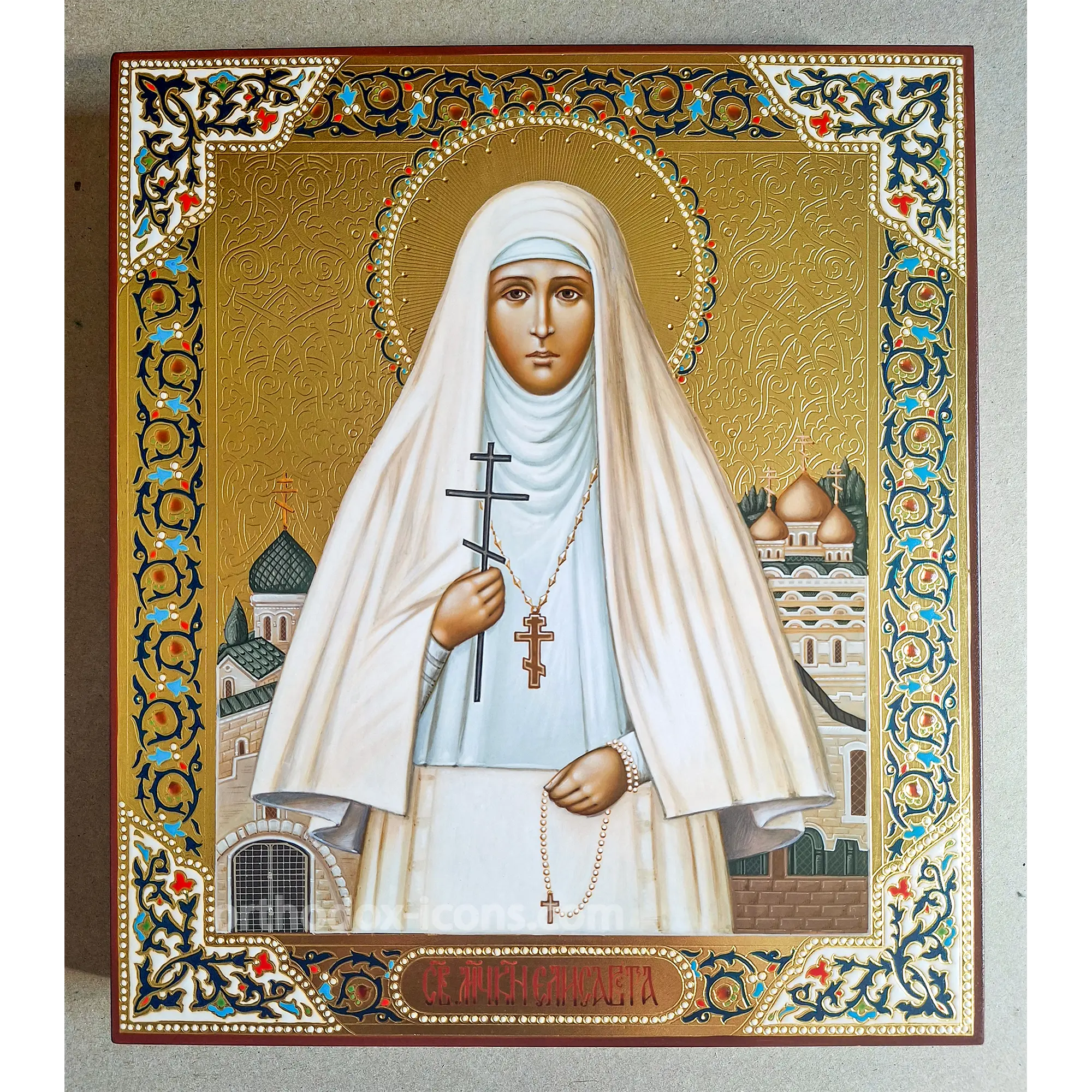
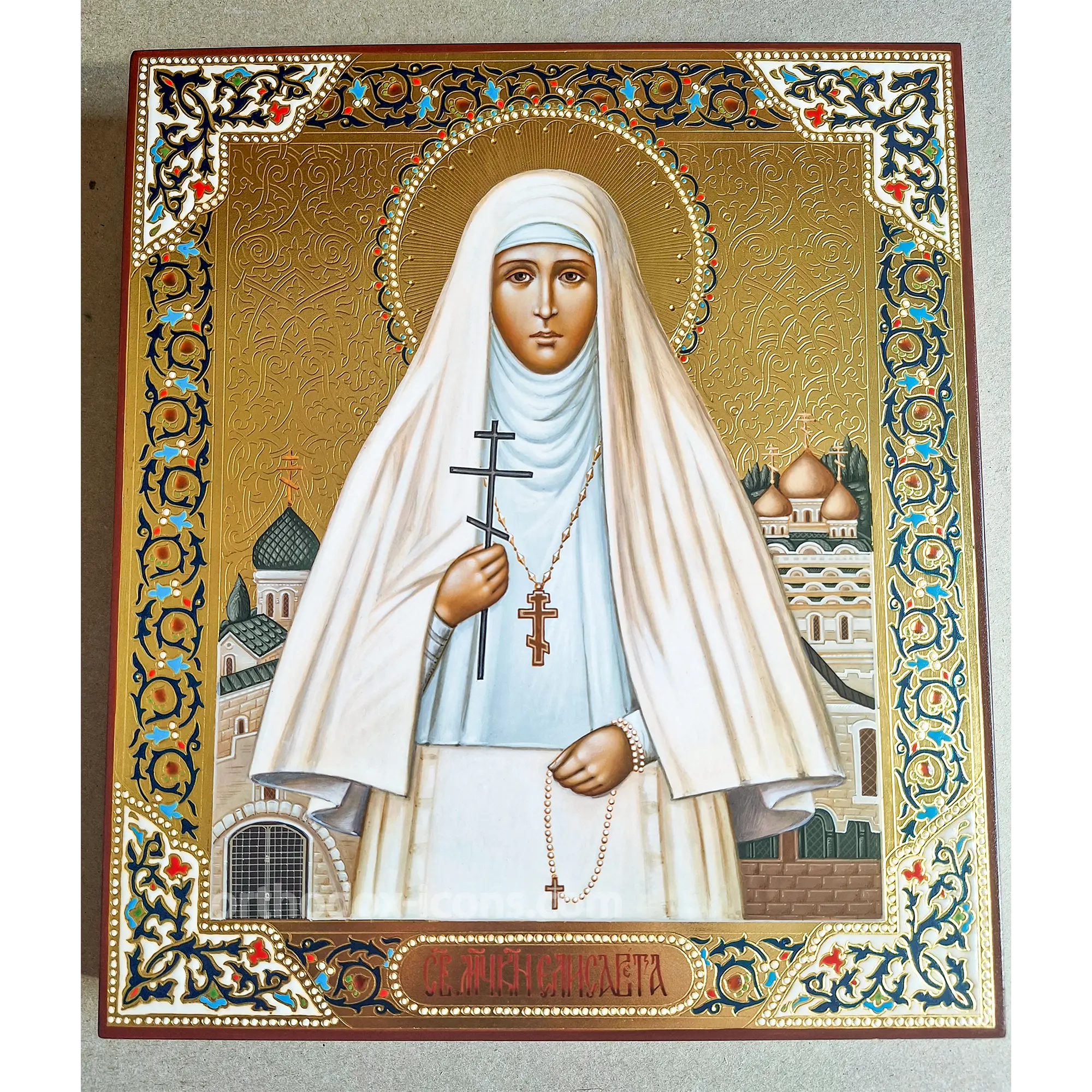
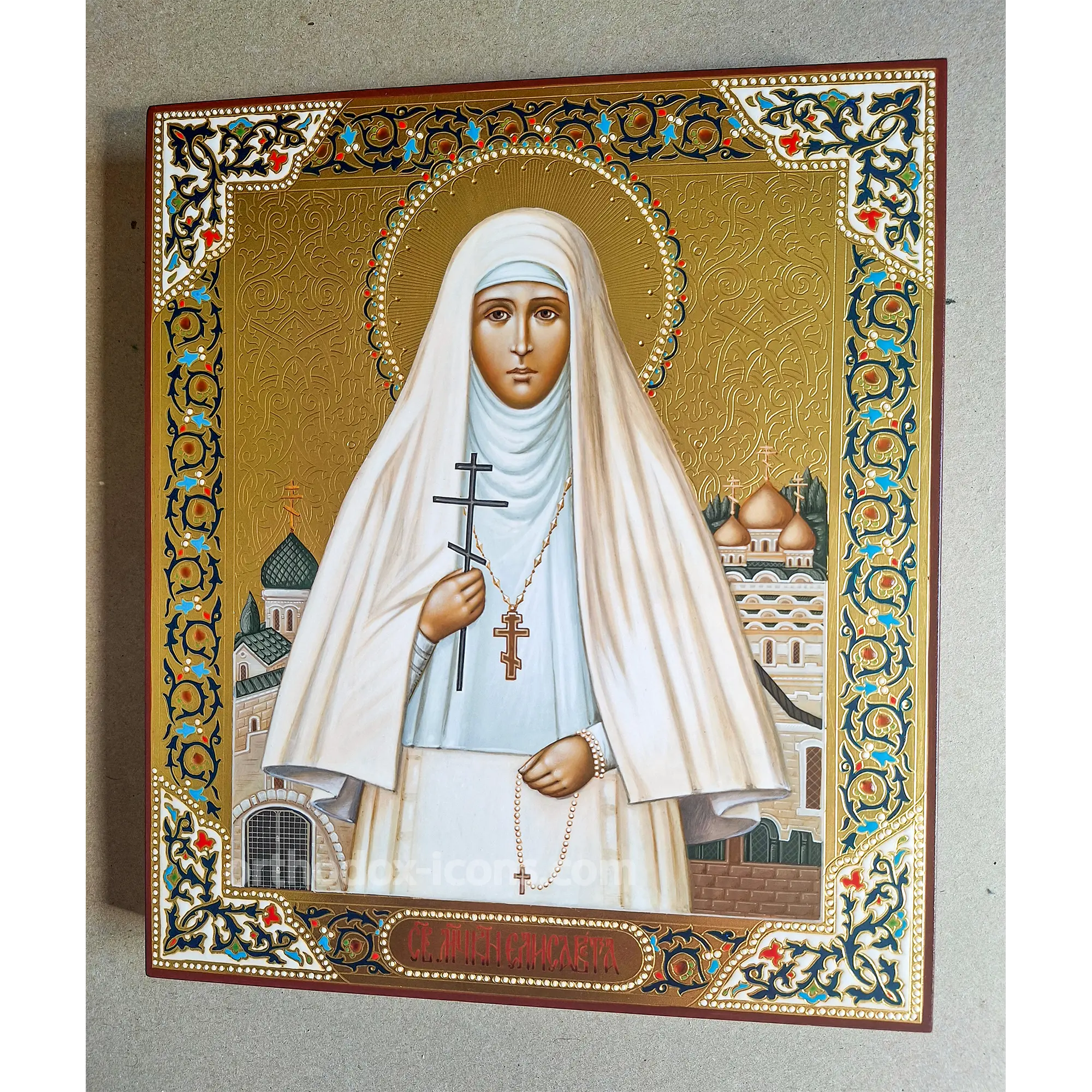
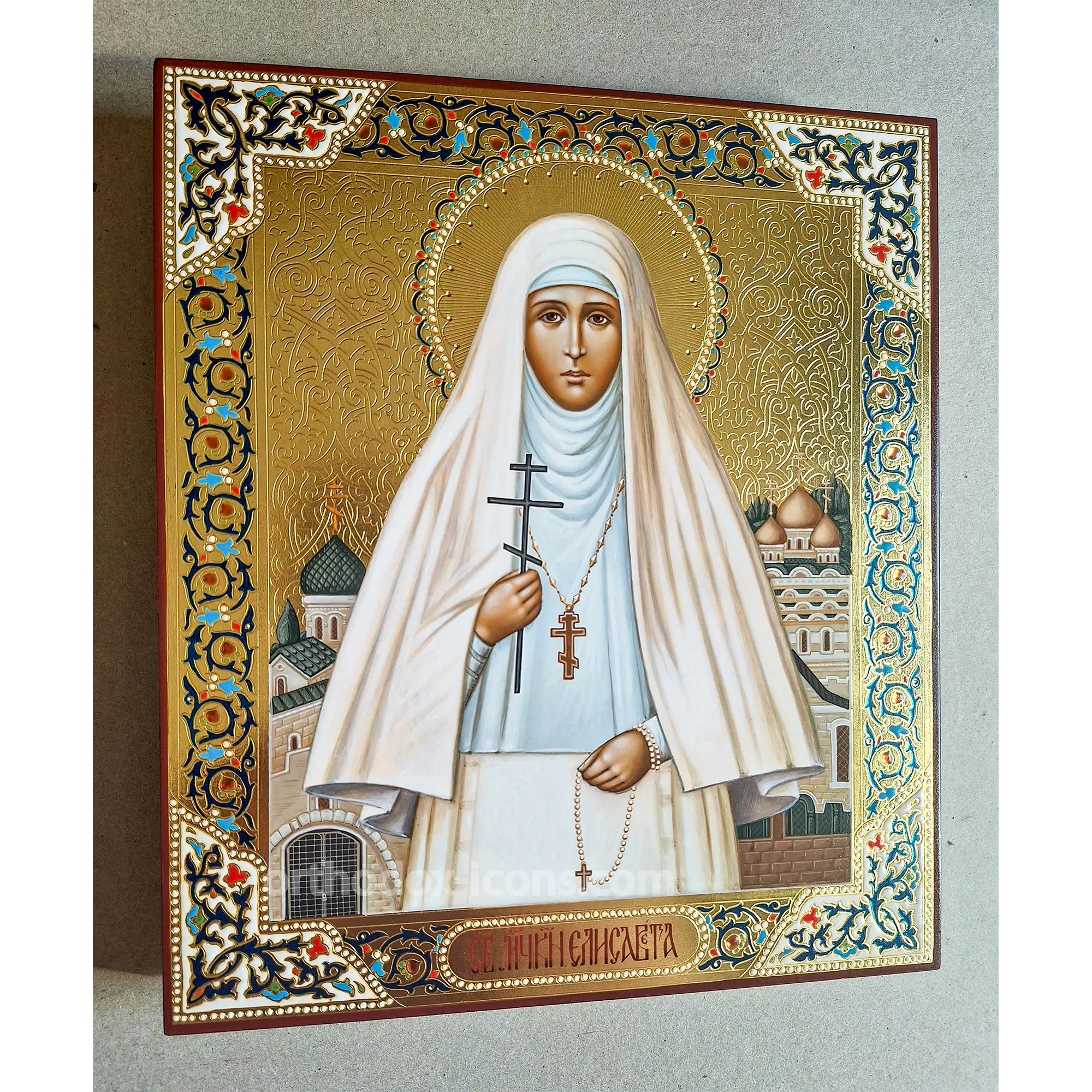
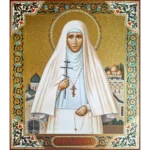
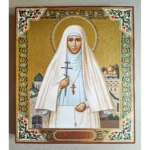
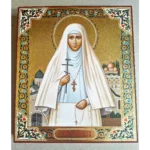
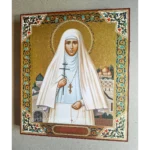
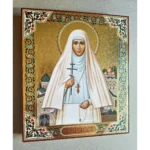
St. Elizabeth the Martyr Icon is a hand-painted icon of the Holy New Martyr Grand Duchess Elizabeth Feodorovna, the “White Angel of Moscow.” She is shown half-length in the white habit of the Martha and Mary Convent of Mercy, holding a black martyr’s cross and light monastic prayer rope.
The icon is painted in egg tempera on a linden wood panel with gold leaf, a gilded background, fine ornamental painting, and a polychrome decorative border. Free international shipping is included. Payment is made after you receive and approve the icon.
It is possible to paint an image in any size to order
Free shipping worldwide
St. Elizabeth the Martyr Icon is a hand-painted Orthodox icon of the Holy New Martyr Grand Duchess Elizabeth Feodorovna, one of the most radiant and tragic saints of the twentieth century. Born into a German ducal family and later married to Grand Duke Sergei Alexandrovich Romanov, she passed through the terrible grief of her husband’s murder and then gave her life entirely to God and to suffering people. This icon joins the white purity of her monastic clothing with a rich, almost royal gold and ornamental setting.
Icon Characteristics
| Saint shown | Holy New Martyr Grand Duchess Elizabeth Feodorovna |
| Iconography | Half-length image in white monastic clothing, with cross and prayer rope, against the background of her convent |
| Panel | Linden wood board with oak splines and levkas |
| Painting style | Academic portrait-like painting in egg tempera with mineral pigments |
| Gilding | Gold leaf on the background and halo |
| Border decoration | Wide polychrome ornamental painting with floral motifs |
| Available sizes | 17×21 cm (6.7×8.3 in), 20×24 cm (7.9×9.4 in), 27×31 cm (10.6×12.2 in), 30×40 cm (11.8×15.7 in) |
What People Pray for Before Saint Elizabeth
Grand Duchess Elizabeth, called the White Angel of Moscow during her lifetime, is remembered for her mercy toward the sick, orphans, widows, and the poor. Orthodox Christians turn to her in prayer during heavy sorrows, asking for the grace to forgive, to serve, and to remain faithful to Christ in suffering.
- For mercy and love: prayers are offered for softened hearts, strength to forgive offenders, and freedom from bitterness.
- For people in illness: Saint Elizabeth served the sick personally and assisted in medical work; the faithful ask her intercession for endurance, healing, and consolation.
- For medical workers and volunteers: she is especially meaningful for doctors, nurses, sisters of mercy, and those who serve the vulnerable.
- For orphans and widows: her work included shelters, schools, and active help for abandoned children and those without protection.
- For strengthening of faith: prayers are offered during spiritual crisis, grief, loss, and despondency.
Prayer before the icon is not a mechanical guarantee of a result. It is a turning to God through the intercession of a saint whose own life shows mercy, repentance, forgiveness, and sacrificial service.
Life of Grand Duchess Elizabeth
Princess Elisabeth of Hesse-Darmstadt, also known as Ella, was born in 1864 in Germany into a Protestant family. In 1884 she married Grand Duke Sergei Alexandrovich, brother of the Russian emperor. After studying Orthodox Christianity deeply, she freely and consciously entered the Orthodox Church.
Her life changed forever in 1905, when the revolutionary Ivan Kalyaev killed her husband with a bomb. After this tragedy, Elizabeth Feodorovna left secular life behind. She returned part of her jewels to the treasury, sold the rest, and used the money to purchase an estate on Bolshaya Ordynka in Moscow. There she founded the Martha and Mary Convent of Mercy, uniting a prayerful monastic rhythm with active service to the poor, the sick, and abandoned children.
The Grand Duchess slept on a wooden bed without a mattress, ate simple fasting food, and spent her days in hospitals, shelters, and places of suffering. After the Revolution, she refused to leave Russia. In 1918 she was arrested and taken to the Urals. On the night of July 18, 1918, Saint Elizabeth, together with Nun Barbara and other members of the imperial family, was thrown alive into a mine shaft near Alapaevsk. Even while dying, according to the traditional account, she bandaged the wounds of others and sang the Cherubic Hymn.
White Clothing and Symbols of Martyrdom
In this icon Grand Duchess Elizabeth is shown in strict white clothing. White was associated with her during life and became the form of the sisters of the Martha and Mary Convent of Mercy. It symbolizes purity of soul, chastity, mercy, and divine light.
Her head is covered with a white apostolnik that conceals the hair and falls over the chest. The face is painted in an academic, portrait-like manner, carefully preserving the noble and delicate features known from historical photographs. Her gaze carries deep inward sorrow, but also great peace and surrender to the will of God.
In her right hand Saint Elizabeth holds a large black eight-pointed cross, witnessing to her martyrdom for Christ at Alapaevsk. In her left hand she holds a light monastic prayer rope, a sign of continual prayer, the spiritual weapon she did not abandon in hospital service or in the face of death. A pectoral cross rests on her chest.
Martha and Mary Convent in the Background
The architectural background gives the icon historical depth. Behind the saint are the buildings of the Martha and Mary Convent of Mercy in Moscow, the main work of her life. On one side appears the white-stone Protection Cathedral with its characteristic domes and zakomaras, a masterpiece of the Neo-Russian style designed by architect Alexey Shchusev. This was the church where the Grand Duchess prayed and received her monastic dedication.
The entrance gate, sisterhood buildings, and green tented roofs recall the convent as a place where prayer and practical mercy were joined. The architecture is not merely scenery: it points to the saint’s life of service to the neighbor.
Gold and Polychrome Ornament
The restraint of the saint’s white figure is set against a rich gilded background and ornamental border. The entire background is covered with genuine gold leaf. Over the gold, a delicate floral pattern creates the impression of precious brocade and fine engraved work. The large gold halo is decorated with small blue and red pearl-like points, suggesting heavenly glory and the blood of martyrdom.
The wide border is painted with a complex polychrome floral ornament: dark blue, gold, and red stems interweave with bright flowers. This decoration recalls ancient Russian filigree and emphasizes both the earthly dignity of the Grand Duchess and her heavenly glorification as a martyr and saint. The decoration is rich, but the spiritual center remains the saint’s face, cross, prayer rope, and white clothing.
Materials, Technique, and Sizes
The icon is painted according to traditional methods of the Mstyora school. The panel is made from dried linden wood and reinforced with oak splines. The painting is done in natural egg tempera with mineral pigments. The background and halo are gilded with gold leaf, and the ornamental details are painted by hand with fine brushes.
The name of the saint is written in red Church Slavonic lettering in a gold cartouche at the bottom, and the edge of the board is finished with a strict dark burgundy line. The icon is available in 17×21 cm (6.7×8.3 in), 20×24 cm (7.9×9.4 in), 27×31 cm (10.6×12.2 in), and 30×40 cm (11.8×15.7 in). The smaller size is suitable for a personal gift or small shelf; the larger sizes better reveal the architecture and ornament.
Care for a Gilded Icon
An icon with gold leaf and fine ornament should be protected from moisture, direct sunlight, heaters, and sudden temperature changes. Dust should be removed only with a soft dry brush. Do not wipe the gilding with wet cloths, alcohol, household cleaners, or abrasive fabric. To preserve the beauty of the gold and painting for many years, a wooden glazed kiot is recommended.
Shipping and Payment
Free international shipping is included. The icon is packed carefully for safe transport. Payment is made after you receive and approve the icon.
Questions and Answers
Who is shown on this icon?
The icon shows Holy New Martyr Grand Duchess Elizabeth Feodorovna, founder of the Martha and Mary Convent of Mercy in Moscow.
Why is Saint Elizabeth shown in white?
The white clothing recalls the habit of the sisters of the Martha and Mary Convent and symbolizes purity, mercy, and service in Christ.
What does the black cross in her hand mean?
The cross points to her martyrdom. Saint Elizabeth was killed in 1918 near Alapaevsk for her faith and witness to Christ.
What does the prayer rope mean?
The prayer rope symbolizes continual prayer and the monastic life she embraced after leaving secular status behind.
What buildings are shown behind her?
The background shows the Martha and Mary Convent of Mercy in Moscow, including the Protection Cathedral connected with her service.
What do Orthodox Christians pray for before this icon?
They pray for mercy, forgiveness, strength in grief, help for the sick, support for medical workers and volunteers, and protection for widows and orphans.
What sizes are available?
The available sizes are 17×21 cm, 20×24 cm, 27×31 cm, and 30×40 cm, with iconostasis formats possible by request.
What materials are used?
The icon is painted on a linden wood panel with oak splines, levkas, egg tempera, gold leaf, and hand-painted ornamental decoration.
Is this icon suitable as a gift for a medical worker?
Yes. Saint Elizabeth is especially meaningful for doctors, nurses, sisters of mercy, volunteers, and everyone who serves the suffering.
How is the icon shipped and paid for?
Free international shipping is included, and payment is made after you receive and approve the icon.
| Dimensions | 17x21cm (6.7×8.3 in), 20x24cm (7.9×9.4 in), 27x31cm (10.6×12.2 in), 30x40cm (11.8×15.7 in) |
|---|---|
| Name | Elizabeth |