Spyridon Orthodox Icon
Price range: $700 through $2250
Available sizes: 17×21 cm (6.7×8.3 in), 20×24 cm (7.9×9.4 in), 27×31 cm (10.6×12.2 in), 30×40 cm (11.8×15.7 in), with larger iconostasis sizes available by individual order.
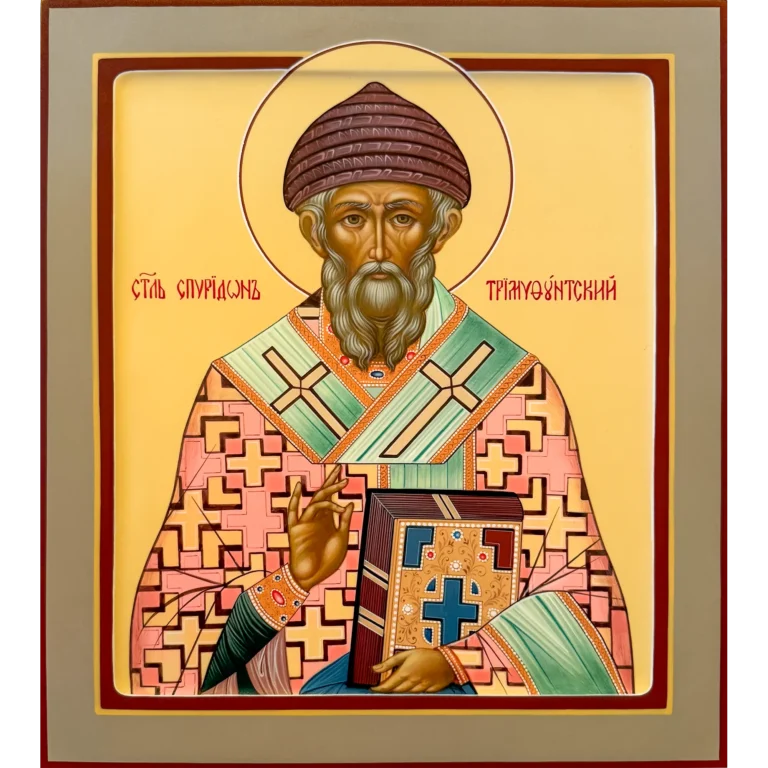
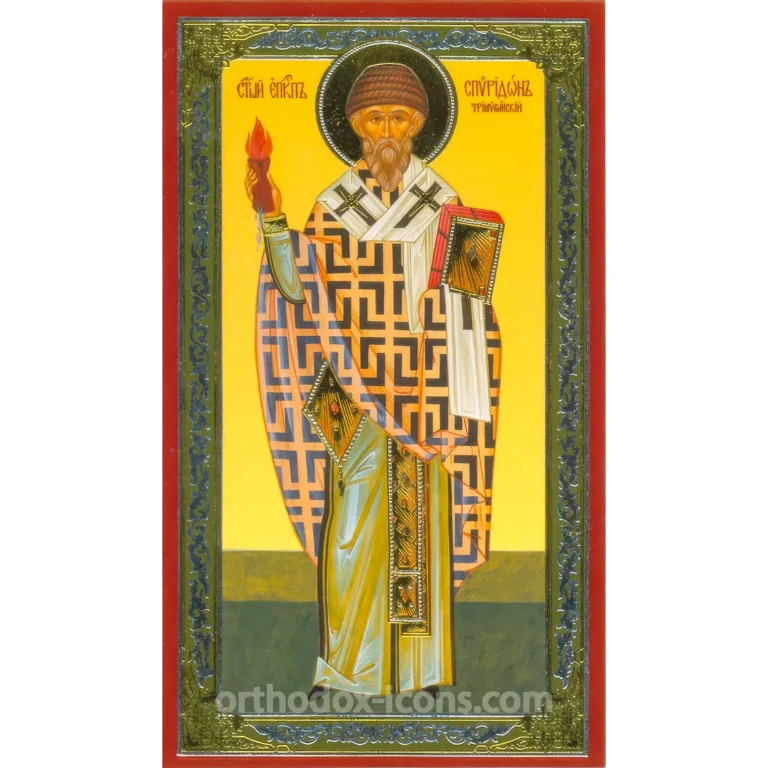
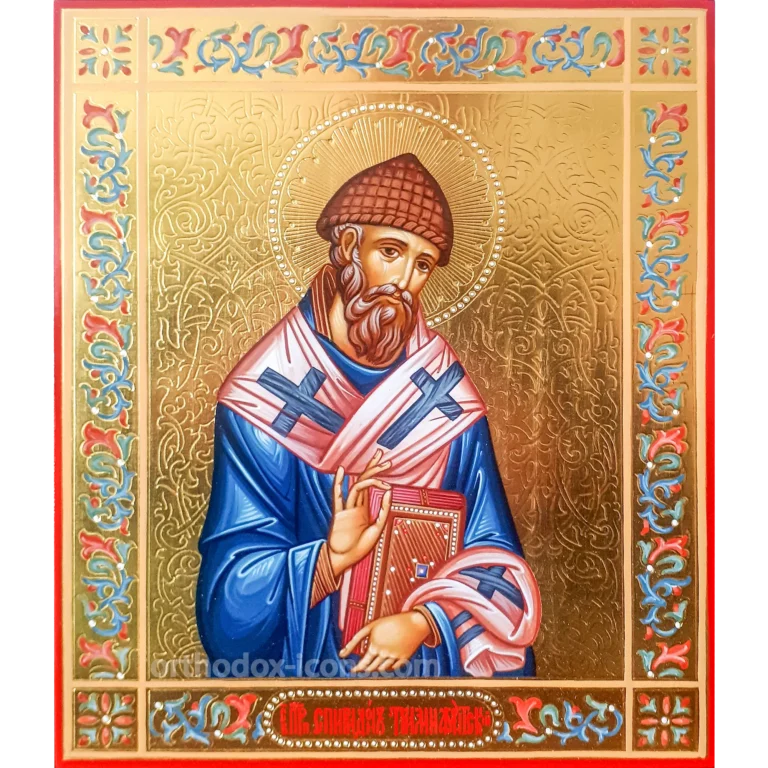
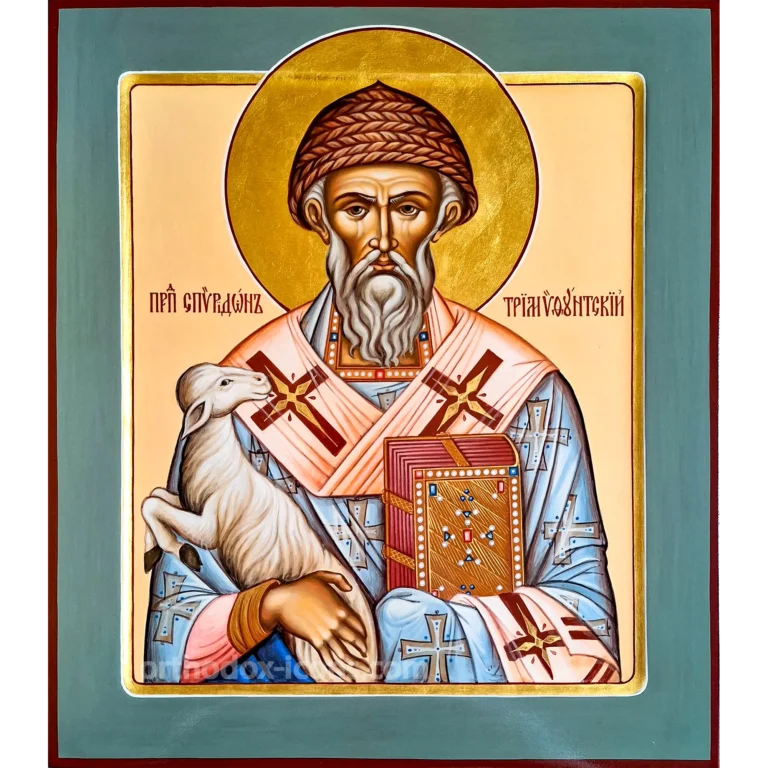
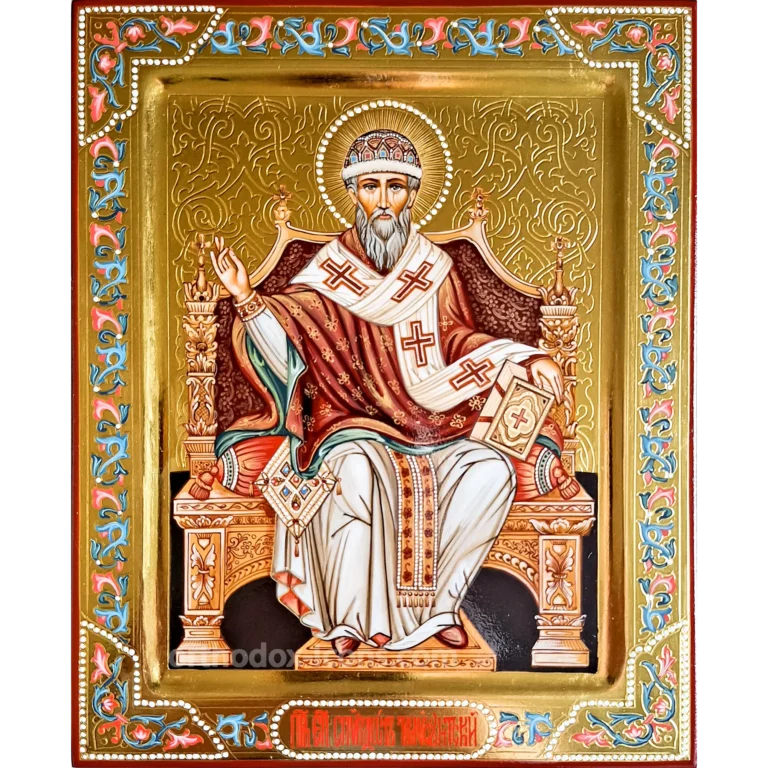
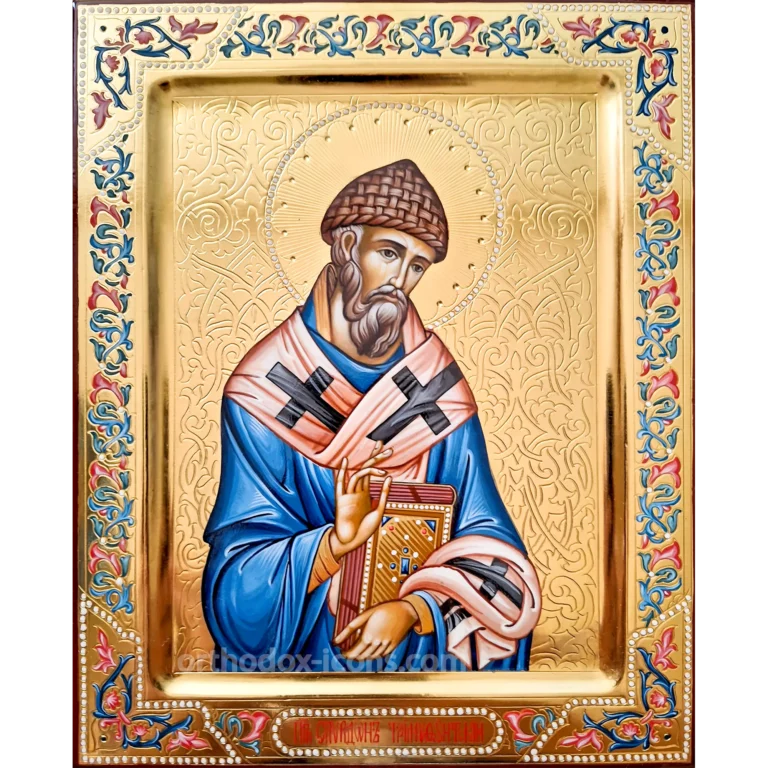
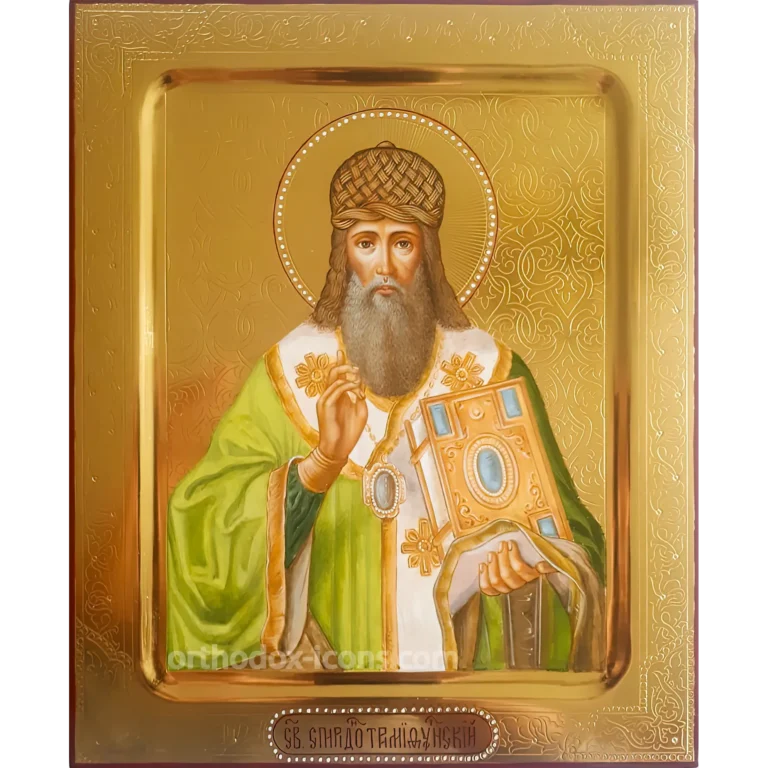
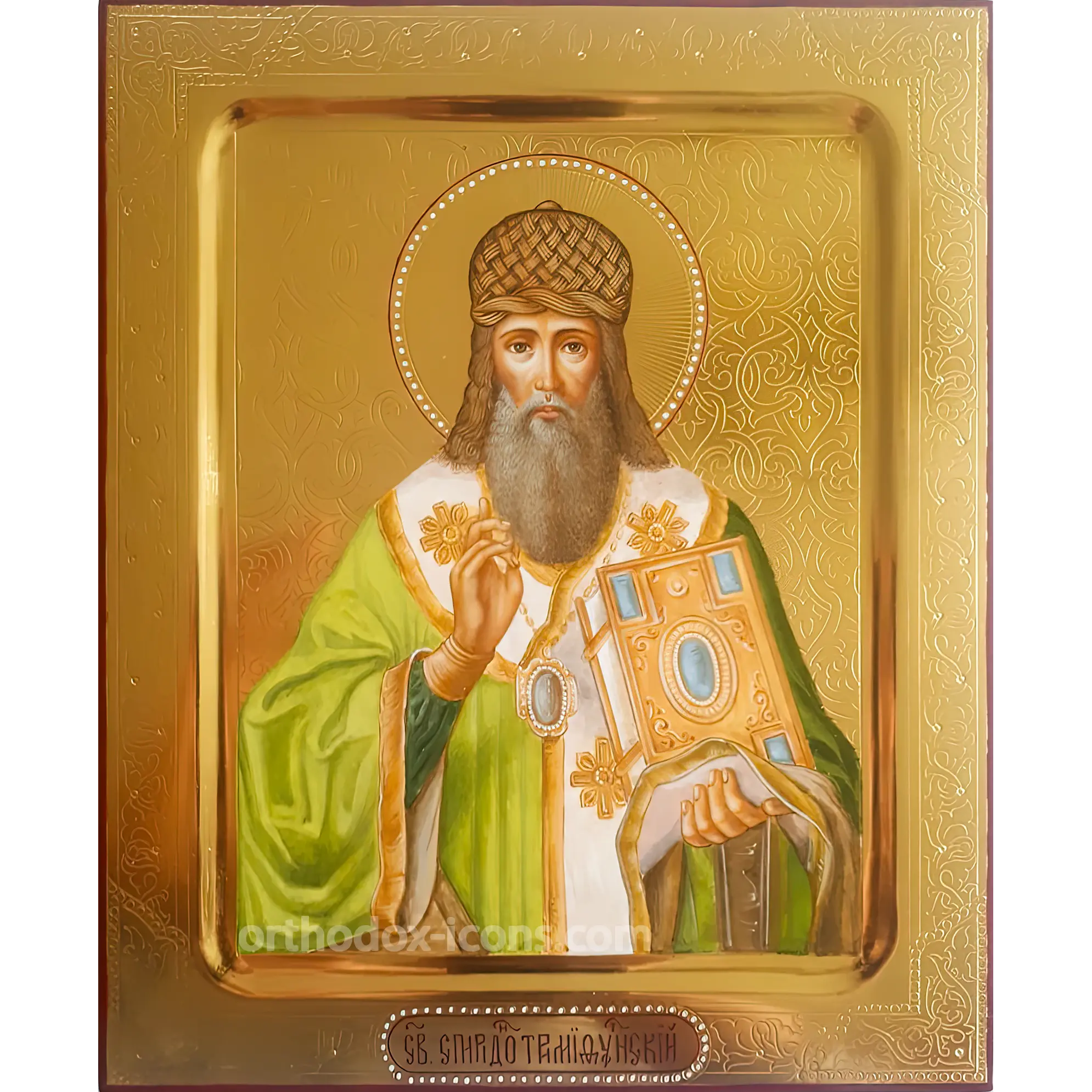
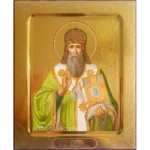
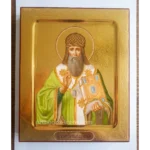
Spyridon Orthodox Icon is a hand-painted waist-length icon of Saint Spyridon of Trimythous, a beloved Orthodox bishop and wonderworker. The saint is shown in episcopal vestments, with the Gospel and a blessing gesture; his woven shepherd’s cap recalls his humility, simplicity, and closeness to ordinary people.
Prayer focus: help in material hardship, housing concerns, work, family peace, wise decisions, protection from despondency, and strengthening of faith.
Materials: linden wood board, oak splines, natural chalk gesso, egg tempera, 23K gold leaf (960 purity), tooled gold ornament, and protective finish.
Best suited for: men named Spyridon, an Orthodox family, a nameday or birthday gift, a housewarming, the beginning of an important work, or a home icon corner.
It is possible to paint an image in any size to order
Free shipping worldwide
The Spyridon Orthodox Icon is a hand-painted icon of Saint Spyridon of Trimythous, one of the most loved Orthodox bishops and wonderworkers. He is remembered by the Church as a shepherd of souls who remained close to ordinary people, helped the poor, comforted those in sorrow, and showed living faith through mercy, prayer, and practical care.
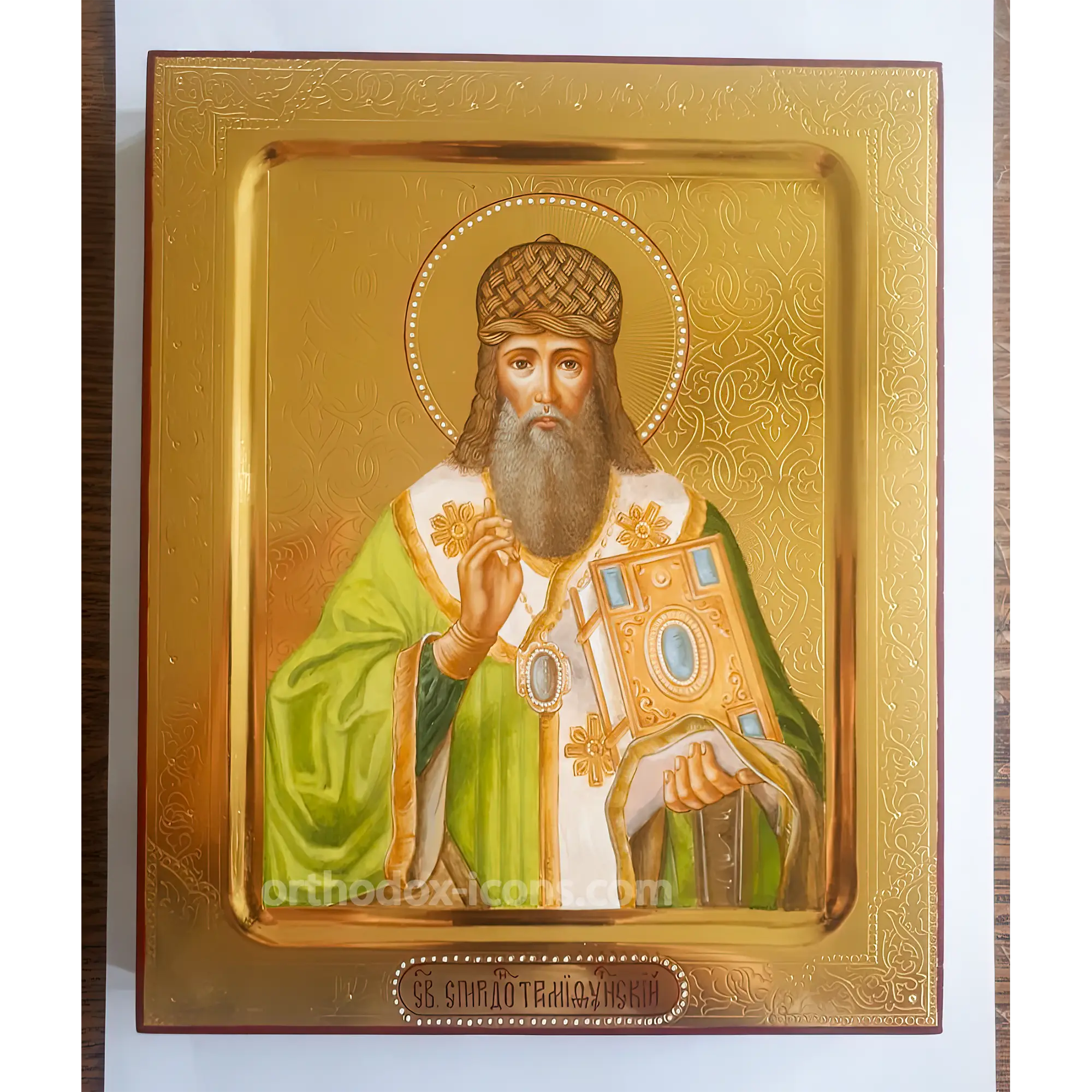
In this icon Saint Spyridon is shown waist-length, in episcopal vestments, holding the Gospel and blessing the faithful. The composition is solemn but clear: the saint’s face, white beard, woven cap, Gospel, panagia, omophorion, blessing hand, gilded background, and ornamental fields are all easy to read. The icon is intended for prayer and veneration, not as a printed decoration or mass-produced souvenir.
This image is suitable for a home icon corner, family prayer shelf, study, chapel, parish church, or iconostasis row. It can also be chosen as a personal patron saint icon for a man named Spyridon, or as a meaningful Orthodox gift for a nameday, birthday, housewarming, the beginning of an important work, or a family going through a difficult period.
Icon Characteristics
| Name | Hand-painted Spyridon Orthodox Icon |
| Saint | Saint Spyridon of Trimythous, bishop and wonderworker |
| Iconographic type | Waist-length image of the saint in episcopal vestments, with the Gospel and a blessing gesture |
| Feast day | December 25 / December 12 according to the old calendar |
| Visible features | Woven cap, green episcopal vestment, Gospel, panagia, blessing hand, gold halo, kovcheg, tooled gold ornament, and ornamental border fields |
| Available sizes | 17×21 cm (6.7×8.3 in), 20×24 cm (7.9×9.4 in), 27×31 cm (10.6×12.2 in), 30×40 cm (11.8×15.7 in), with larger iconostasis sizes by individual order |
Who This Icon Is For
An icon of Saint Spyridon of Trimythous is especially appropriate for men baptized with the name Spyridon. As a patron saint icon, it can be given for baptism, nameday, birthday, anniversary, the beginning of independent adult life, or another important family date. Its value is not only decorative: it gives the person an image of a heavenly intercessor to whom he can turn throughout life.
The icon is also often chosen for families in a period of change: moving home, buying or selling property, looking for work, beginning a new business, facing financial uncertainty, caring for parents or children, or seeking peace in the household. Orthodox Christians venerate Saint Spyridon as a helper in concrete earthly needs, while remembering that prayer does not replace honest work, responsibility, and discernment.
Because this version has a gilded background and restrained solemn ornament, it can fit both a home iconostasis and a church setting. In larger sizes it may be ordered for a chapel, parish church, or iconostasis row.
Prayer Before Saint Spyridon
Before an icon of Saint Spyridon, Orthodox Christians pray for help in material difficulties, housing concerns, work, family well-being, protection from despondency, and the wise ordering of daily life. He is especially close to those who bring real human worries before God: where to live, how to support a family, how to act honestly in a difficult situation, how to preserve peace at home, and how not to lose faith amid anxiety.
Believers commonly ask Saint Spyridon for intercession in buying, selling, exchanging, or finding a home; finding work and honest income; supporting a family during financial difficulty; making wise decisions about money and household responsibilities; restoring peace between relatives; resisting envy, despair, and restlessness; receiving blessing in labor, craft, and family work; and growing in faith, patience, and gratitude to God.
Orthodox prayer before an icon is not a mechanical way to solve a practical problem. It is an appeal to God through the intercession of a saint. For this reason, prayer before Saint Spyridon’s icon is also a request for spiritual order: honesty, humility, diligence, mercy, and the ability to make decisions without panic or bitterness.
Life of Saint Spyridon of Trimythous
Saint Spyridon lived on Cyprus in the fourth century. Before becoming a bishop, he was a shepherd and lived simply, working, helping others, and showing compassion. His humble origin did not prevent spiritual greatness. On the contrary, simplicity, trust in God, mercy, and readiness to help those in need became the clearest marks of his holiness.
After he became Bishop of Trimythous, Saint Spyridon remained close to ordinary people. He helped the poor, supported debtors, prayed for the sick, comforted those who suffered, and instructed the faithful. Church memory preserves many accounts of his miracles, but these miracles are always connected with love for people and the glorification of God, not with outward fame.
Saint Spyridon took part in the First Ecumenical Council, where the Church defended the Orthodox teaching on the Holy Trinity. A well-known tradition tells how, through his prayer, a brick showed fire, water, and clay as a visible image of unity and distinction. This account expresses the spiritual character of the saint: he spoke about profound truth simply, convincingly, and with living faith.
After his earthly repose, Saint Spyridon continued to be honored as a wonderworker and intercessor. His relics are kept on the island of Corfu, and his veneration is widespread throughout the Orthodox world. For many faithful people, he remains a saint to whom they bring the most immediate needs of home, work, family, and daily life.
Feast Day of Saint Spyridon
The feast day of Saint Spyridon of Trimythous is celebrated on December 25 according to the civil calendar, or December 12 according to the old calendar. This day is especially meaningful for people named Spyridon and for those who venerate him as a prayerful helper in family, housing, work, and material concerns.
If the icon is needed for a particular date, it is best to discuss the size, decorative finish, kiot, and painting time in advance. This is especially important for a large format or a church iconostasis order.
Features of This Spyridon Orthodox Icon
In the presented icon, Saint Spyridon is shown waist-length in episcopal vestments. This format is convenient for personal and family prayer because the saint’s face, blessing hand, Gospel, panagia, omophorion, and characteristic woven cap are clearly visible. The composition is concentrated on the spiritual image of the saint and is not overloaded with secondary narrative details.
The face of the saint is strict, attentive, and calm. His white beard, quiet gaze, and inward concentration express pastoral experience and prayerful depth rather than harshness. Saint Spyridon appears as a bishop who understands human needs: home, work, family, debt, fear for the future, and care for loved ones.
The green episcopal vestment gives the icon a deep and peaceful color harmony. The white omophorion with golden crosses points to his bishop’s ministry, while the Gospel in his hand reminds the viewer that all help from the saint is joined to faithfulness to Christ and the teaching of the Church. The panagia on his chest emphasizes his episcopal dignity and service.
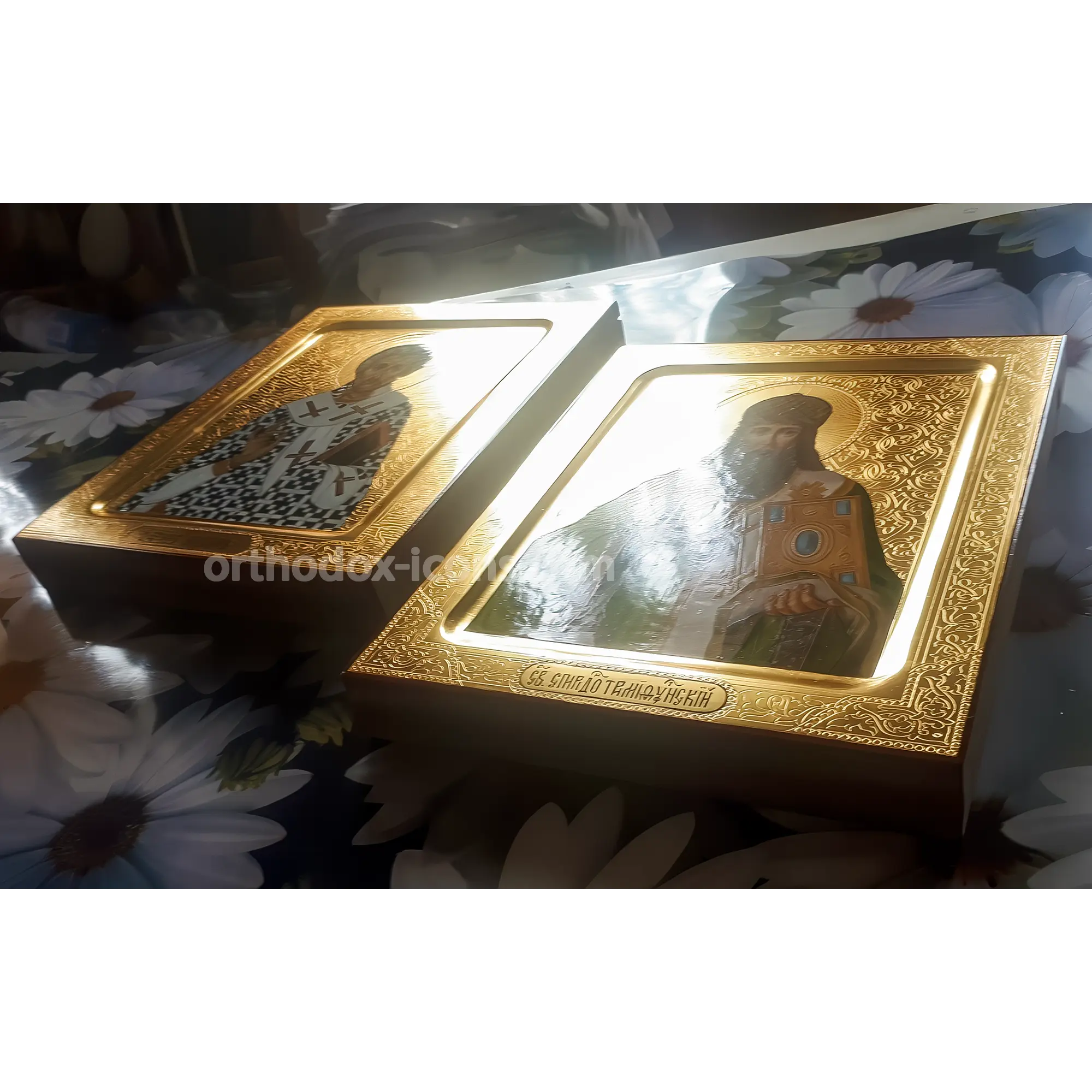
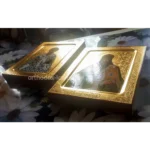
The gilded setting gives the icon particular expressiveness. The inner space is made with a kovcheg; the gold background and border fields are decorated with relief ornament. The halo is outlined with a fine decorative line, and the saint’s name is placed in the lower inscription medallion. The tooled gold ornament makes the image solemn while preserving its prayerful clarity.
Iconography: Woven Cap, Gospel, and Blessing
The woven cap is one of the most recognizable details in the iconography of Saint Spyridon. It recalls his shepherd origin and simple way of life. Even after becoming a bishop, he did not lose humility or closeness to ordinary people. This is one reason his icon is especially dear to those who work, care for a family, manage a household, and face everyday difficulties.
The Gospel in the saint’s hand points to his episcopal ministry and faithfulness to the word of God. Saint Spyridon is venerated not only as a helper in practical troubles, but first of all as a bishop of Christ’s Church, a guardian of faith, and a pastor. Prayer before his icon therefore calls a person to connect earthly concerns with faith, mercy, honesty, and responsibility.
The blessing gesture reveals Saint Spyridon as a pastor and intercessor. It is directed toward the person standing before the icon and reminds the faithful that the saint prays before God for those who come with faith. Together with the Gospel, omophorion, panagia, and gold halo, this gesture makes the icon especially fitting for prayer for family, labor, provision, and peaceful order in life.
Materials, Gold Leaf, and Custom Options
The icon is painted on a solid linden wood board with oak splines. Linden is well suited for hand-painted icons because of its even wood structure and its ability to receive a carefully prepared ground. Oak splines strengthen the board and help it keep its form through natural changes in humidity and temperature.
A natural chalk gesso is applied under the painting. The image is written in egg tempera, a traditional icon-painting technique that allows the iconographer to form the saint’s face, white beard, woven cap, green episcopal vestment, white omophorion, Gospel, panagia, blessing hand, and inscriptions with clarity and restraint.
This version uses 23K gold leaf (960 purity) and tooled gold ornament. The gilded background, halo, fields, and border receive a relief texture that deepens the solemnity of the composition. The gold is not random decoration: it frames the face of the saint, marks the halo, creates a light-filled space, and supports the icon’s prayerful character.
For an individual order, the size, degree of decorative work, color of the fields, ornament style, inscriptions, kiot, or large church format can be discussed. Free international shipping is included. Payment is made after you receive and approve the icon.
How to Choose the Size
The 17×21 cm (6.7×8.3 in) size is suitable for a small apartment, personal prayer, a study, or a compact home icon corner. Even in this format, the main features remain readable: the saint’s face, woven cap, blessing hand, Gospel, and episcopal vestment.
The 20×24 cm (7.9×9.4 in) size is a balanced home format. It is still easy to place, while giving more space for the gilded background, halo, inscription medallion, and details of the vestment. The 27×31 cm (10.6×12.2 in) size is a good choice when the icon should become a more visible part of a family iconostasis or a meaningful gift for a special date.
The 30×40 cm (11.8×15.7 in) format feels more solemn. It gives more room for the tooled gold ornament, relief border, folds of the vestments, Gospel, panagia, and the general light of the icon. This size is suitable for a spacious home, prayer room, chapel, parish space, or church setting. Iconostasis sizes are chosen individually according to the height of the row, viewing distance, lighting, and surrounding icons.
Blessing and Care
The icon may be blessed in an Orthodox church after it is received, or brought to your parish for blessing. A blessed icon is treated as a holy image for prayer, thanksgiving, and turning to God through the intercession of Saint Spyridon.
A hand-painted icon should be handled carefully. Dust should be removed with a dry soft brush or dry cloth, without pressure. Do not wipe the surface with a wet cloth, household cleaner, alcohol-based liquid, or abrasive material. Keep the icon away from direct sunlight, strong heat, moisture, and sudden temperature changes.
Special care should be taken around gilded areas, tooled ornament, inscriptions, and the painted surface. A wooden glazed kiot can provide additional protection from dust, smoke, accidental touch, and mechanical damage, especially if the icon is placed in the central part of a home iconostasis or made in a larger size.
Questions and Answers
Who is depicted on this Spyridon Orthodox Icon?
This icon depicts Saint Spyridon of Trimythous, a fourth-century Orthodox bishop, wonderworker, intercessor, and one of the most beloved saints in the Orthodox Church.
Why is Saint Spyridon shown with a woven cap?
The woven cap recalls his shepherd origin, humility, simplicity, and closeness to ordinary people, even after he became a bishop.
What do Orthodox Christians pray for before an icon of Saint Spyridon?
Believers often pray for help in material difficulties, housing concerns, work, family well-being, wise decisions, protection from despondency, and strengthening of faith.
Who is this hand-painted icon suitable for?
It is suitable for men named Spyridon, Orthodox families, a home icon corner, and as a meaningful gift for a nameday, birthday, housewarming, or the beginning of an important undertaking.
When is the feast day of Saint Spyridon?
Saint Spyridon of Trimythous is commemorated on December 25 in the civil calendar, corresponding to December 12 in the old calendar.
What does the Gospel in Saint Spyridon’s hand mean?
The Gospel points to his episcopal ministry, faithfulness to the word of God, and pastoral teaching. It reminds us that earthly concerns should be joined with faith and Christian responsibility.
Why is Saint Spyridon often asked for help with housing concerns?
In Orthodox tradition, Saint Spyridon is venerated as a quick helper in everyday needs, so many believers ask his intercession in questions of housing, work, provision, and peace at home.
What decorative features does this icon have?
The icon is painted with 23K gold leaf (960 purity) and tooled gold ornament. The gilded background, halo, border, and ornamental fields create a solemn light-filled setting around the saint.
What sizes are available for this icon?
The available sizes are 17×21 cm (6.7×8.3 in), 20×24 cm (7.9×9.4 in), 27×31 cm (10.6×12.2 in), and 30×40 cm (11.8×15.7 in). Larger iconostasis sizes can be discussed individually.
How should a hand-painted icon of Saint Spyridon be cared for?
Keep the icon away from moisture, direct sunlight, strong heat, and sudden temperature changes. Dust it gently with a dry soft brush or cloth, especially around gilded and tooled areas.
| Dimensions | 17x21cm (6.7×8.3 in), 20x24cm (7.9×9.4 in), 27x31cm (10.6×12.2 in), 30x40cm (11.8×15.7 in) |
|---|---|
| Name | Spyridon |