Simeon the New Stylite Orthodox Icon
Price range: $700 through $2250
Available sizes: 17×21 cm (6.7×8.3 in), 20×24 cm (7.9×9.4 in), 27×31 cm (10.6×12.2 in), 30×40 cm (11.8×15.7 in); church and iconostasis formats can be made by individual request.
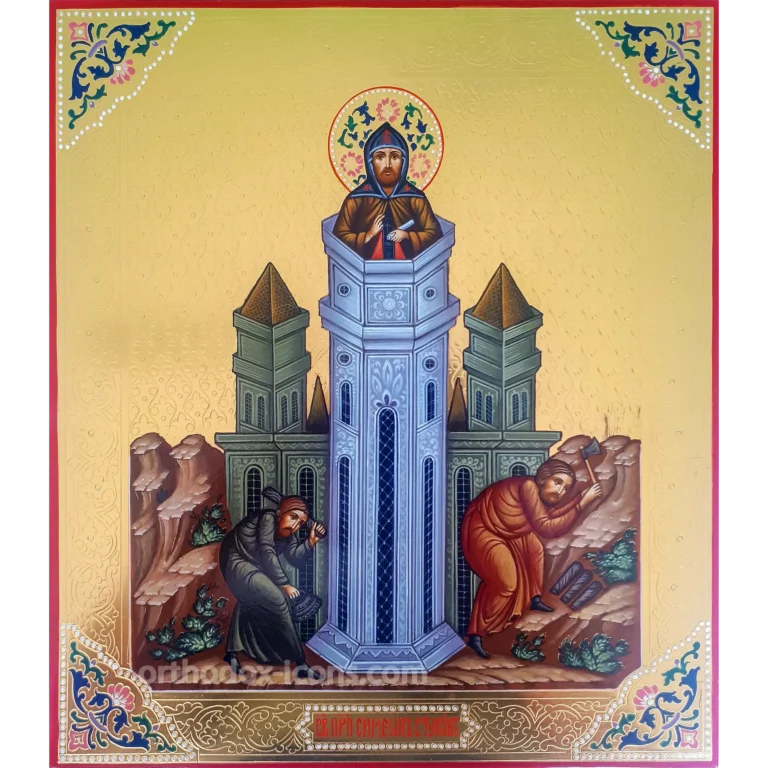
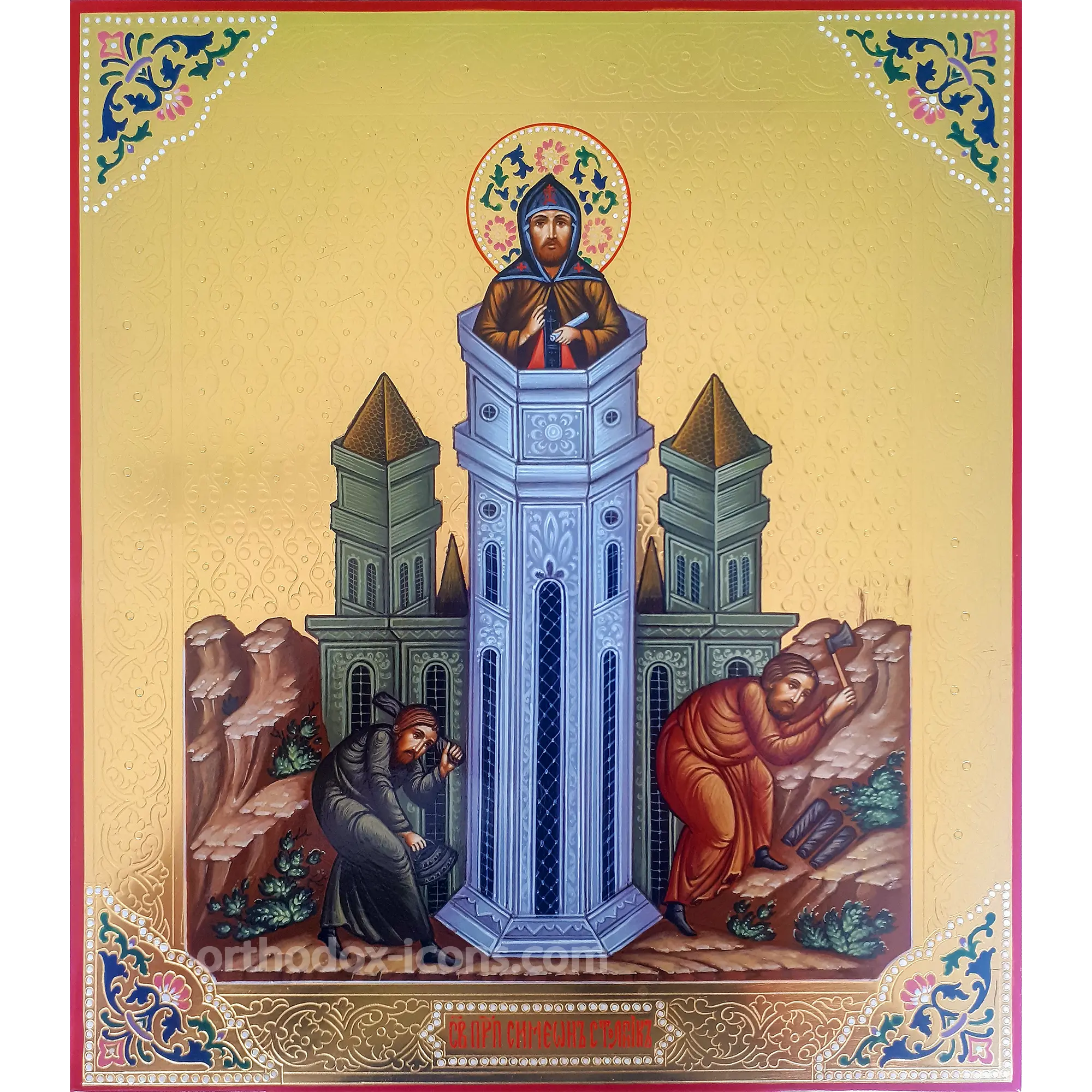
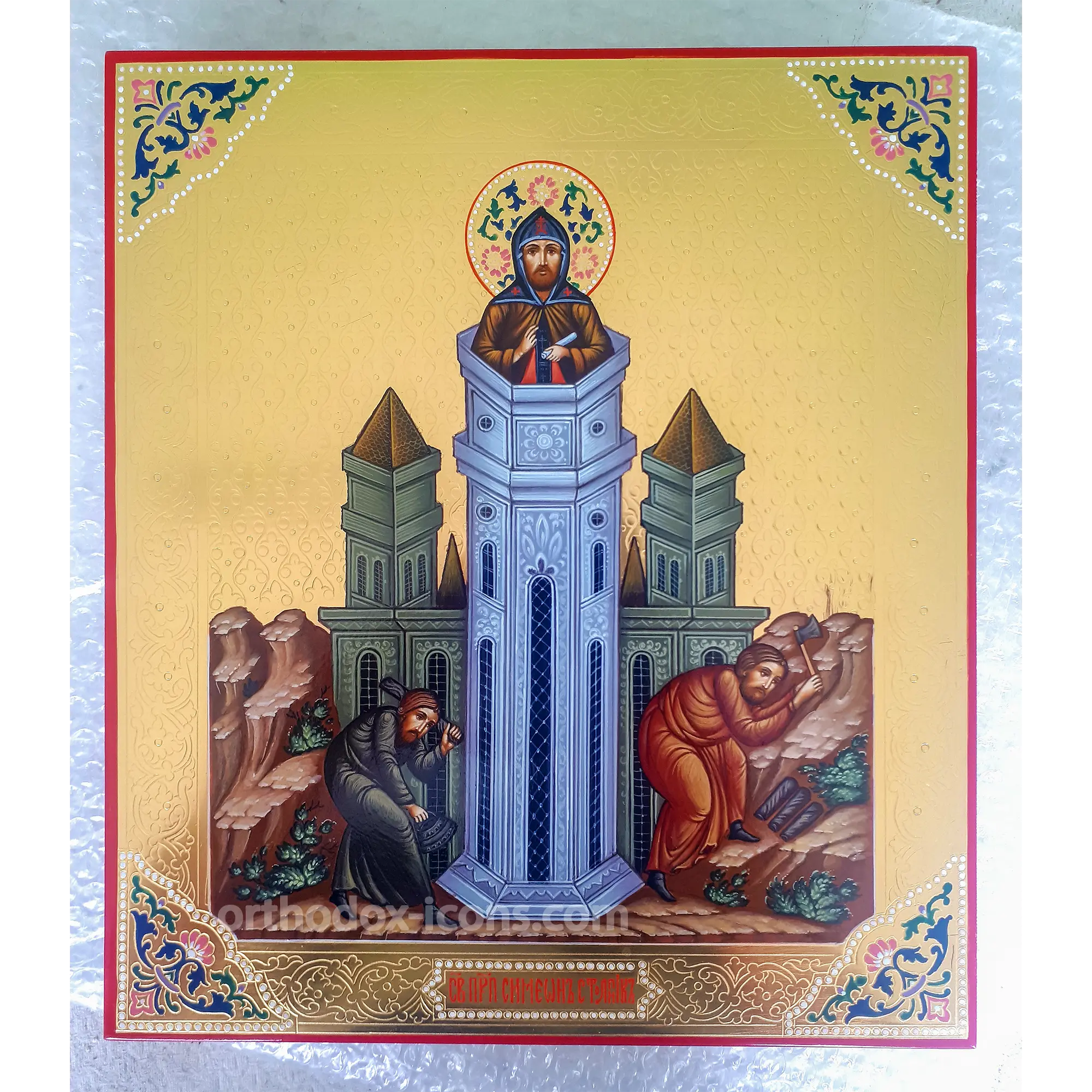
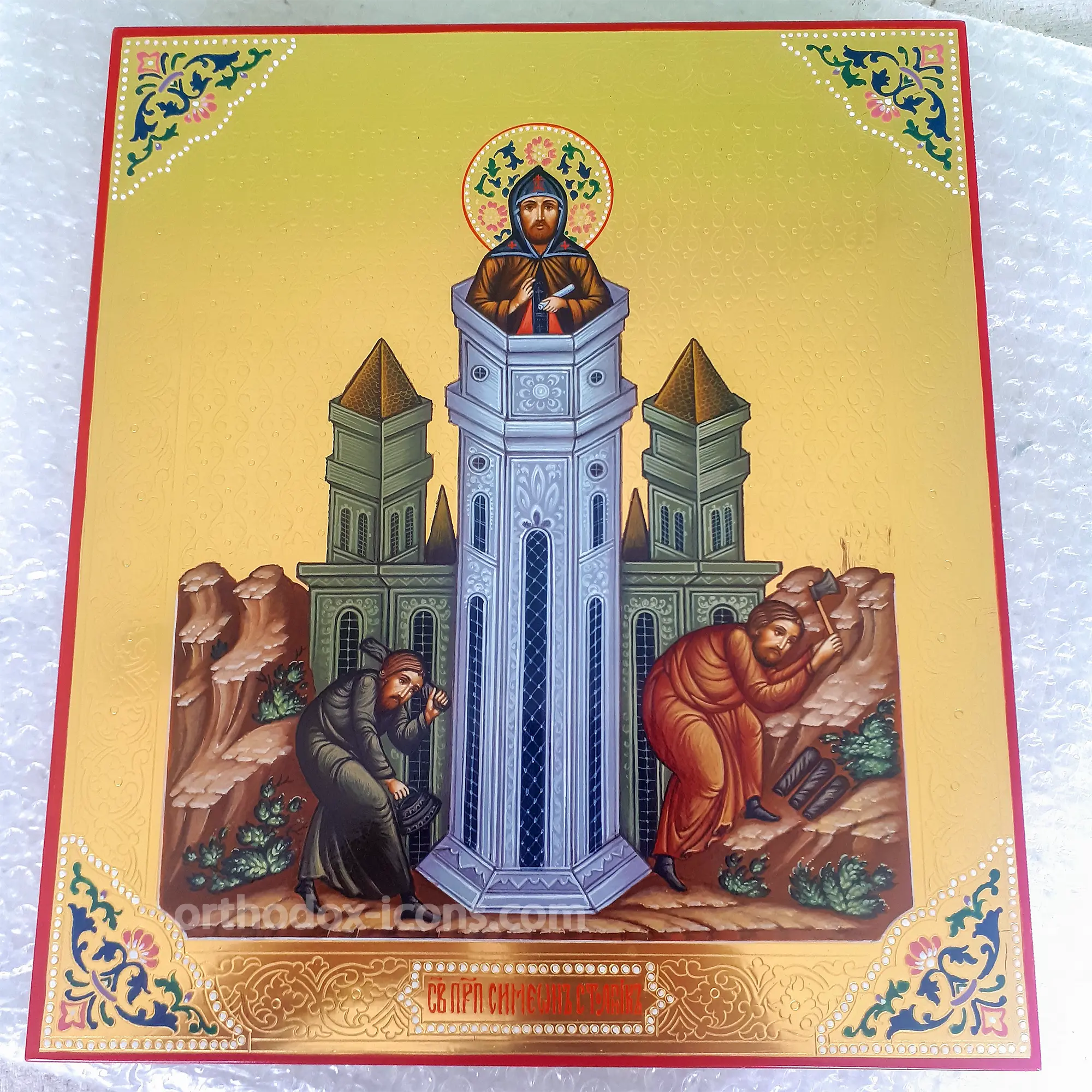
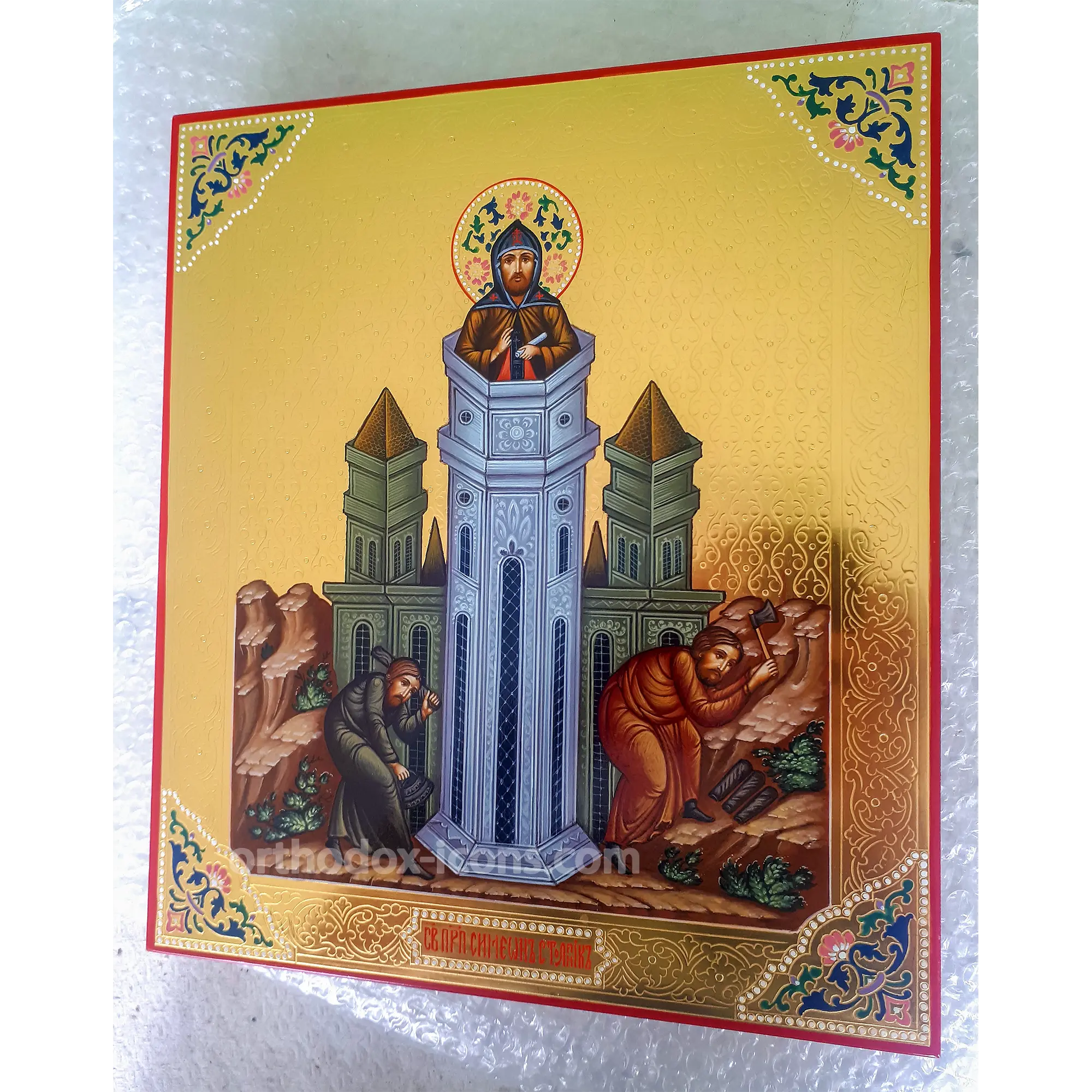
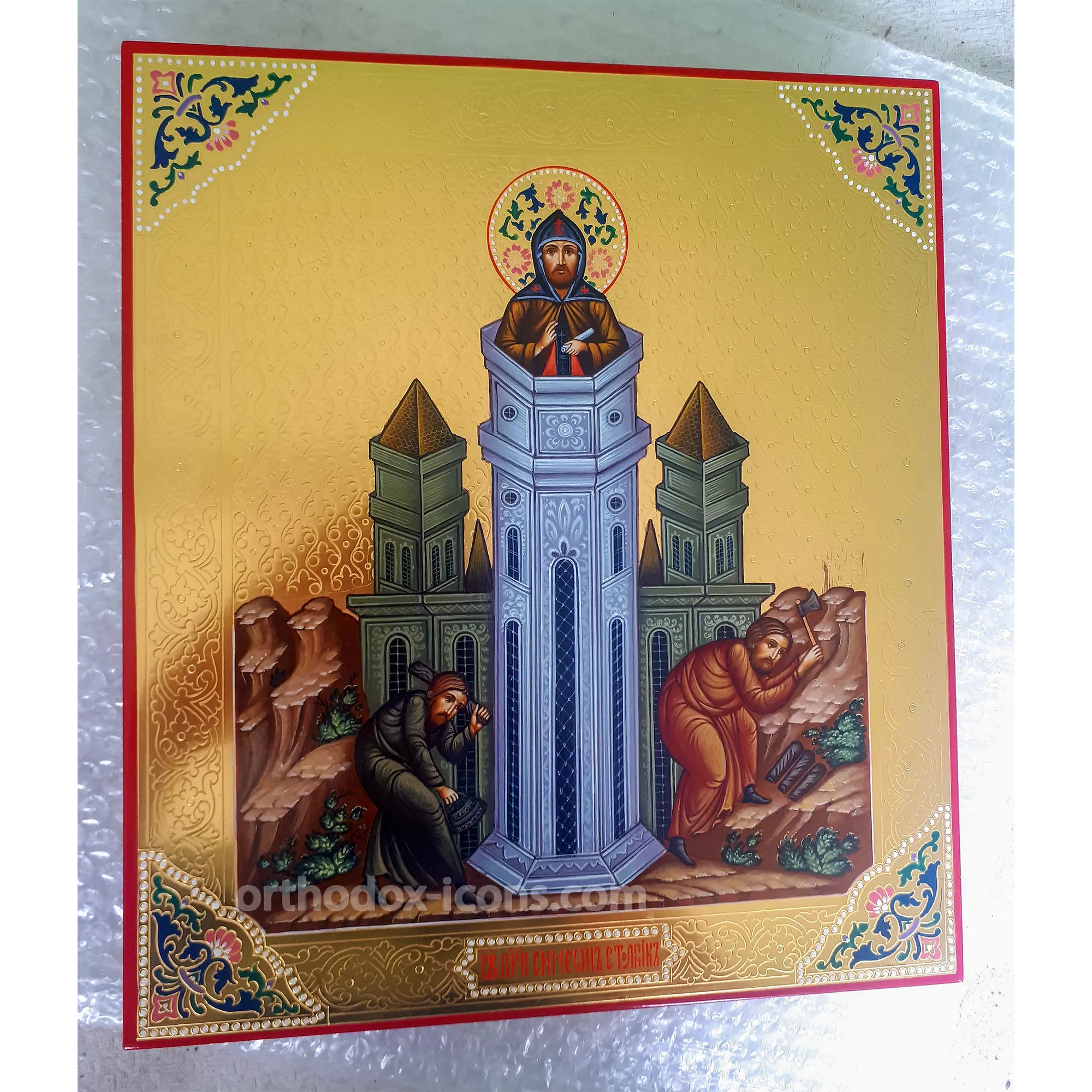
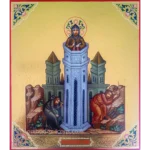
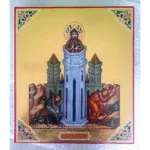
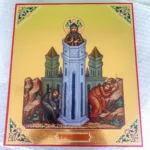
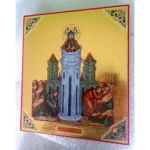
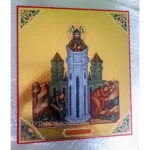
Simeon the New Stylite Orthodox Icon is a richly decorated hand-painted icon of Saint Simeon the Stylite, shown on the top of his pillar in strict monastic clothing, blessing with one hand and holding a scroll. Below the pillar are builders at work; behind the saint rises church architecture.
The icon is painted in egg tempera on a linden wood panel with gold leaf, hand-tooled relief ornament, and polychrome cold enamel-style decoration. Free international shipping is included. Payment is made after you receive and approve the icon.
It is possible to paint an image in any size to order
Free shipping worldwide
Simeon the New Stylite Orthodox Icon is a hand-painted Orthodox icon of Saint Simeon the Stylite, one of the most astonishing ascetics in Christian history and the founder of the stylite form of monastic struggle. The image unites strict canonical iconography with the richness of traditional decorative work: a solid gold background, deep hand-tooled relief ornament, and bright cold enamel-style accents. It is a solemn icon for prayer, a meaningful gift, or a church offering.
Icon Characteristics
| Holy image | Saint Simeon the Stylite |
| Iconography | Hagiographical composition: the saint on a pillar, with builders working below |
| Panel | Solid linden wood, oak splines, pavoloka, and levkas |
| Painting | Natural egg tempera with mineral pigments |
| Gilding | Gold leaf background and fields |
| Decoration | Deep hand-tooled relief ornament and polychrome cold enamel-style details |
| Available sizes | 17×21 cm (6.7×8.3 in), 20×24 cm (7.9×9.4 in), 27×31 cm (10.6×12.2 in), 30×40 cm (11.8×15.7 in), and church formats by request |
Gold Background, Tooled Ornament, and Cold Enamels
The main artistic feature of this icon is its rich, almost jewel-like decoration. The iconographer does not merely paint the saint, but creates around him a radiant sacred space. The background and wide fields are covered with genuine gold leaf. In Orthodox iconography gold is not a sign of earthly luxury; it points to divine light, grace, and the eternal life in which the saints dwell.
Over the gilded ground, the fields and background are decorated with deep hand-tooled relief ornament. The pattern is formed in the levkas with special tools before gilding, so the gold catches candlelight and lamplight in a lively way. The relief gives the surface depth and solemnity while preserving the prayerful center of the image.
Colored cold enamel-style details add blue, rose, green, and red accents to the corners, lower field, flowers, and halo. These glossy colors create the impression of precious inlay and recall paradise flowers, a symbol of spiritual fragrance and the Kingdom of Heaven opened to the righteous.
Life and Ascetic Struggle of Saint Simeon
Saint Simeon was born in Syria at the end of the fourth century. As a young man, after hearing the Gospel commandments, he left the world and entered monastic life. His desire for purification of the soul was so strong that he embraced severe fasting, wore rough ascetic clothing, and spent long nights in prayer.
Seeking solitude and distance from earthly distractions, he began a new and extraordinary form of asceticism. Simeon built a tall pillar with a small platform at the top and lived there exposed to the burning Syrian sun, winter cold, wind, and rain. He could not live a comfortable life there; the very form of his struggle became a visible sermon of patience, repentance, and longing for God.
As more pilgrims came to him for blessing, counsel, and prayer, the pillar was raised higher. According to the traditional account, Saint Simeon spent many years on the pillar and became a teacher, prophet, and wonderworker for people throughout the region. His life remains one of the strongest examples of endurance, prayer, and total dedication to Christ.
Iconography: Pillar, Architecture, and Builders
The composition is a detailed hagiographical image. In the center rises a light, many-sided tower or pillar. At the top, Saint Simeon is shown to the waist. He wears a pointed monastic hood with a cross, indicating the strictest form of monastic renunciation. His right hand is raised in blessing, and in his left hand he holds a scroll, a sign of the Gospel preaching and spiritual teaching he offered from the height of his pillar.
Behind the pillar, green tented domes and pointed towers rise as a symbol of the Church. The prayers of ascetics such as Saint Simeon are shown as a spiritual foundation and protection for the Church.
At the base of the pillar, among brown and ocher rocks, two men are shown at work. One swings an axe; another strikes stone with a pickaxe. These builders recall the historical detail that the pillar was strengthened and raised. Their heavy earthly labor contrasts with the still and detached face of the saint above, emphasizing the difference between the earthly world and the spiritual height of prayer.
What People Pray for Before This Icon
The ascetic struggle of Saint Simeon is an image of human patience made possible by the help of God. Orthodox Christians may turn to him in prayer during severe trials, long illness, exhausting labor, family distress, and spiritual discouragement. His icon is also associated with prayers for perseverance, reconciliation, and the strengthening of faith.
- For strength and patience: when sorrow, illness, work, or family difficulties feel overwhelming.
- For healing and endurance: especially in chronic, long-lasting, or difficult illnesses.
- For the gift of children: in the traditional accounts, Saint Simeon’s intercession is connected with help for childless couples.
- For wisdom and peace: he was sought by rulers, leaders, and ordinary people for counsel and reconciliation.
- For deepening prayer: his life calls the faithful away from distraction and toward repentance, humility, and trust in God.
Prayer before the icon should be understood in the Orthodox way: as turning to God through the intercession of the saint, not as a mechanical promise of a result.
Materials and Hand-Painted Technique
This icon is made by hand on a solid linden wood panel. The board is reinforced with oak splines, covered with pavoloka, and prepared with layers of chalk levkas. The image is painted in egg tempera with natural mineral pigments. Gold leaf is applied to the background and fields, and the ornament is formed as relief work in the levkas before gilding.
The cold enamel-style decoration is applied as glossy polychrome accents. It gives the icon a festive, precious character while remaining subordinate to the prayerful image. This is not a printed reproduction; it is a handmade icon with real tempera painting, real gilding, and individual work in the face, architecture, figures, and ornament.
Choosing the Size
The icon is available in 17×21 cm (6.7×8.3 in), 20×24 cm (7.9×9.4 in), 27×31 cm (10.6×12.2 in), and 30×40 cm (11.8×15.7 in). The smaller sizes are suitable for a home prayer corner or personal gift. The larger formats allow the pillar, builders, architecture, relief ornament, and enamel-style details to be read more clearly. Church and iconostasis formats may be made by individual request.
Care for a Gilded and Tooled Icon
Because the icon includes gold leaf, relief ornament, and colored decorative work, it should be kept away from direct sunlight, heaters, high humidity, and household chemicals. Dust should be removed very gently with a soft dry natural brush. Do not wipe the gilded relief with wet cloths or abrasive fabric. A glazed kiot is the best protection from dust, temperature changes, and accidental contact.
Shipping and Payment
Free international shipping is included. The icon is packed carefully for safe transport. Payment is made after you receive and approve the icon.
Questions and Answers
Who is shown on this icon?
The icon shows Saint Simeon the Stylite, the ascetic saint associated with the extraordinary spiritual struggle of living and praying on a pillar.
What is stylite asceticism?
Stylite asceticism is a form of monastic struggle in which a saint lived on a pillar in prayer, fasting, endurance, and separation from worldly distractions.
Why is Saint Simeon shown on a pillar?
The pillar represents his radical withdrawal from earthly comfort and his desire to dedicate his whole life to prayer, repentance, and service to God.
Who are the people working below the pillar?
They are builders and stone workers connected with the hagiographical scene of strengthening and raising the saint’s pillar.
What does the monastic hood with a cross mean?
It points to strict monastic renunciation, prayer, fasting, and the saint’s complete dedication to Christ.
What do people pray for before this icon?
Orthodox Christians may pray for patience, endurance in illness, strength in trials, peace in conflicts, the gift of children, and deeper faith.
What materials are used?
The icon is painted on a linden wood panel with oak splines, pavoloka, levkas, egg tempera, gold leaf, hand-tooled relief ornament, and cold enamel-style decoration.
What sizes are available?
The icon is available in 17×21 cm, 20×24 cm, 27×31 cm, and 30×40 cm, with church formats available by individual request.
Is this icon printed?
No. It is a hand-painted Orthodox icon made in egg tempera on wood, with real gilding and handmade decorative work.
How is the icon shipped and paid for?
Free international shipping is included, and payment is made after you receive and approve the icon.
| Dimensions | 17x21cm (6.7×8.3 in), 20x24cm (7.9×9.4 in), 27x31cm (10.6×12.2 in), 30x40cm (11.8×15.7 in) |
|---|---|
| Name | Simeon |