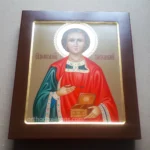
Panteleimon Orthodox Icon 27×31
$850
Available size: 27×31 cm (10.6×12.2 in); larger and iconostasis sizes can be made by agreement.
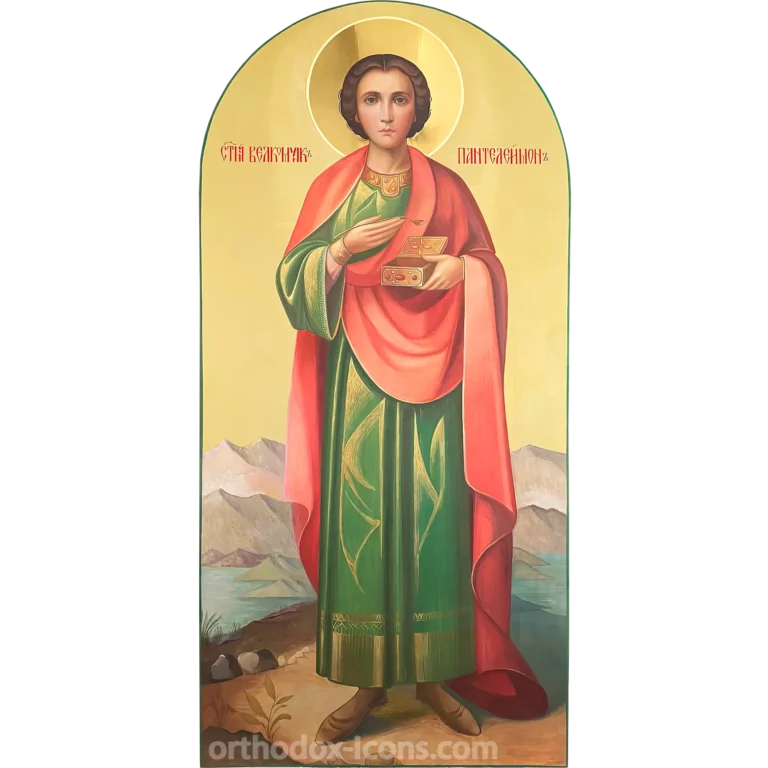
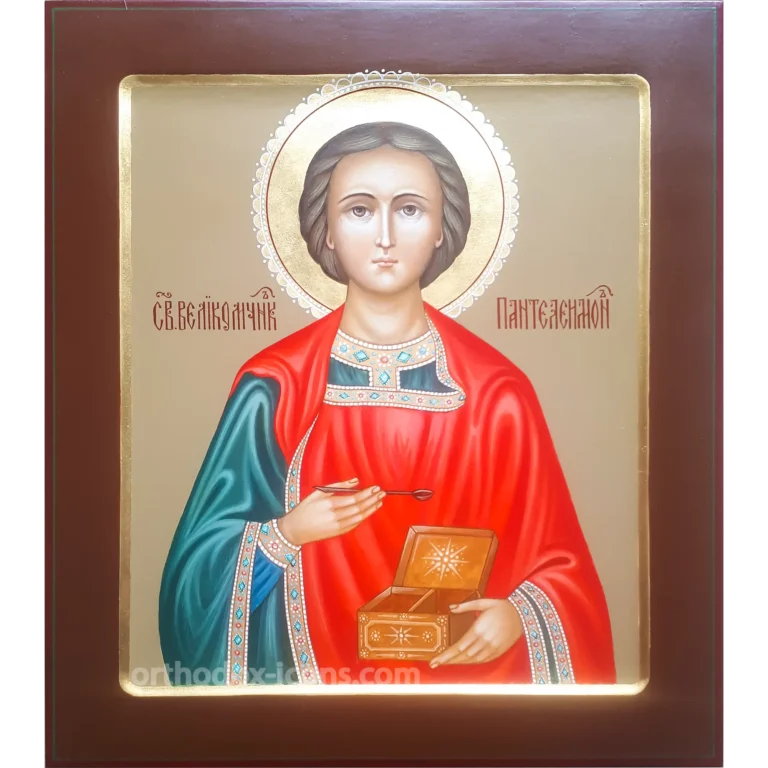
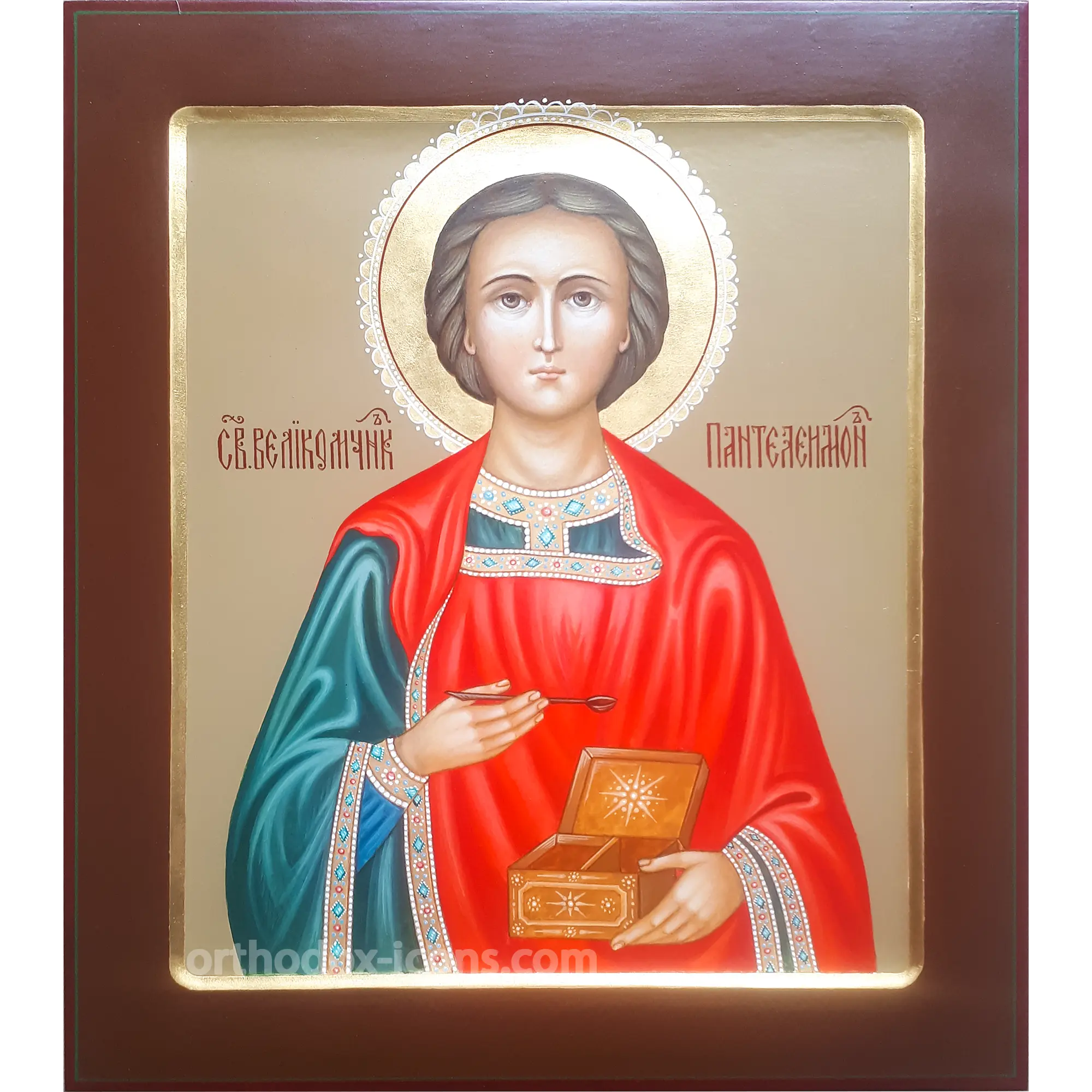
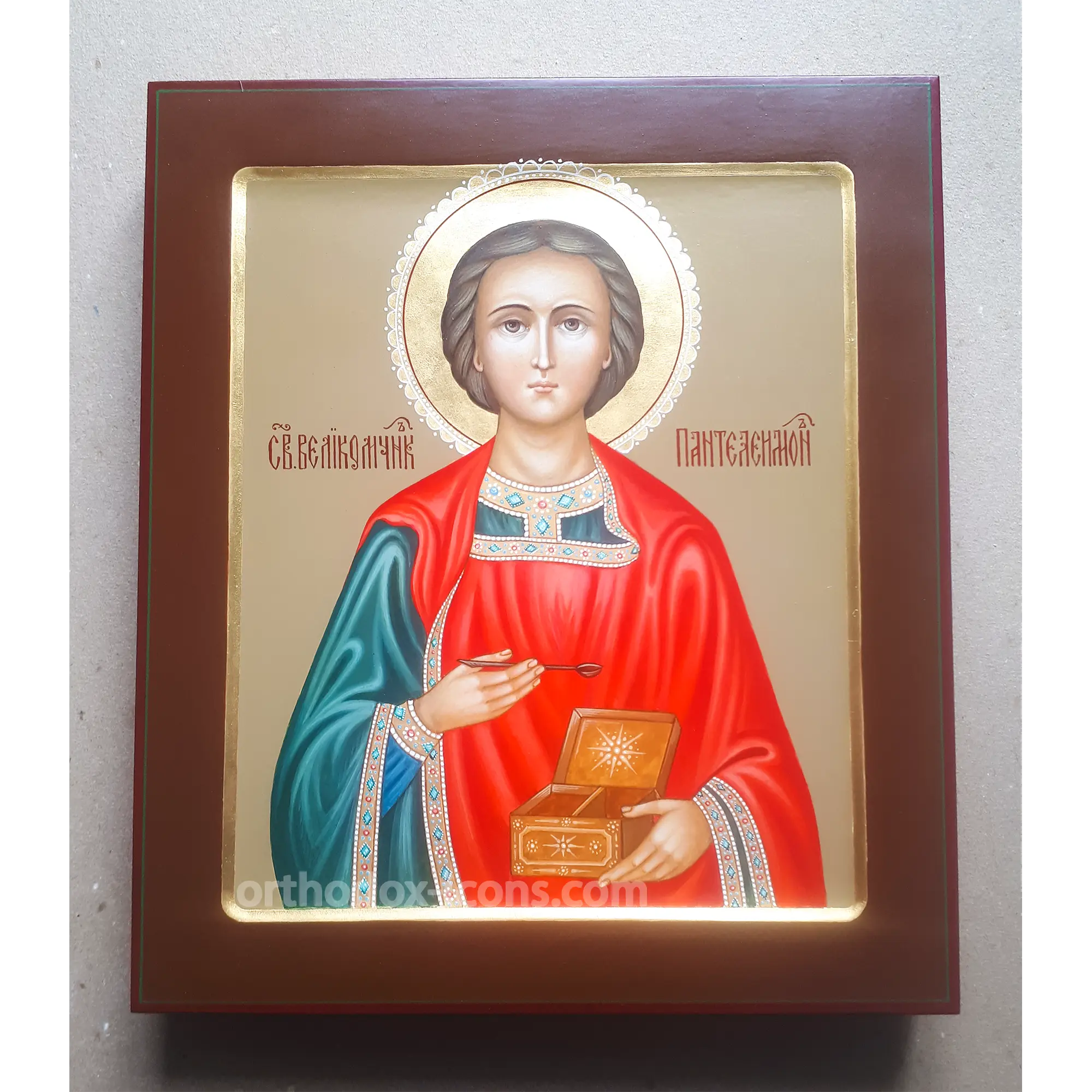
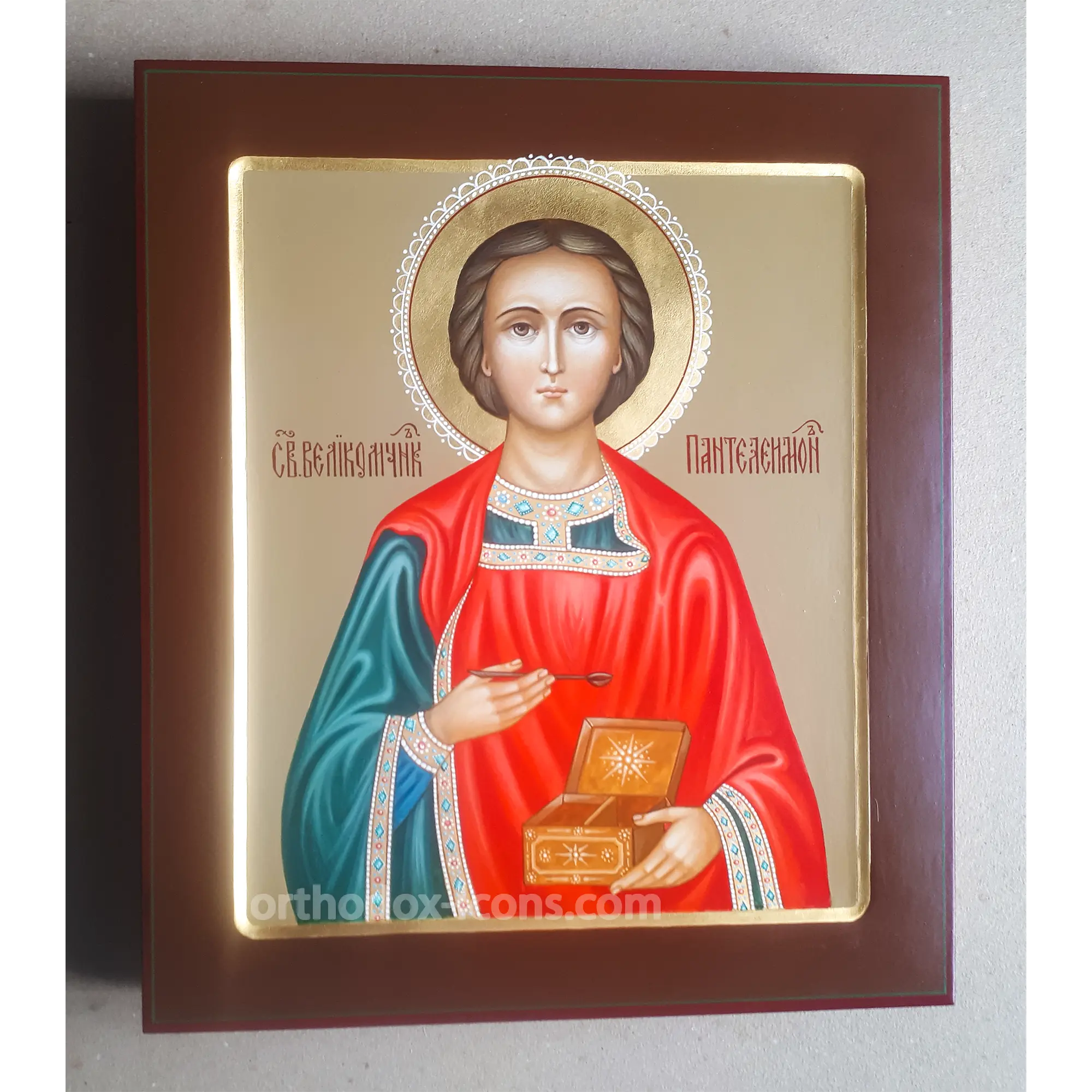
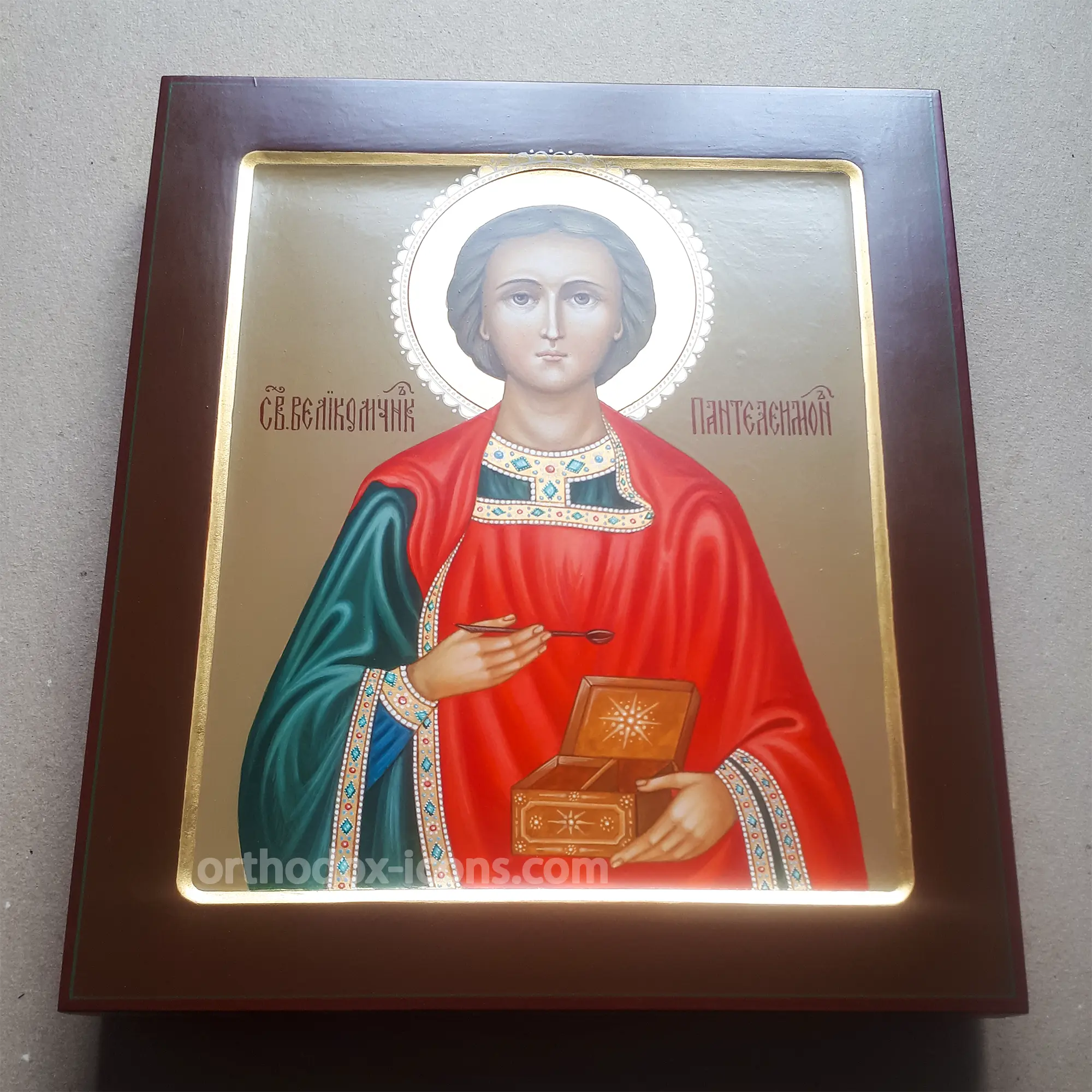
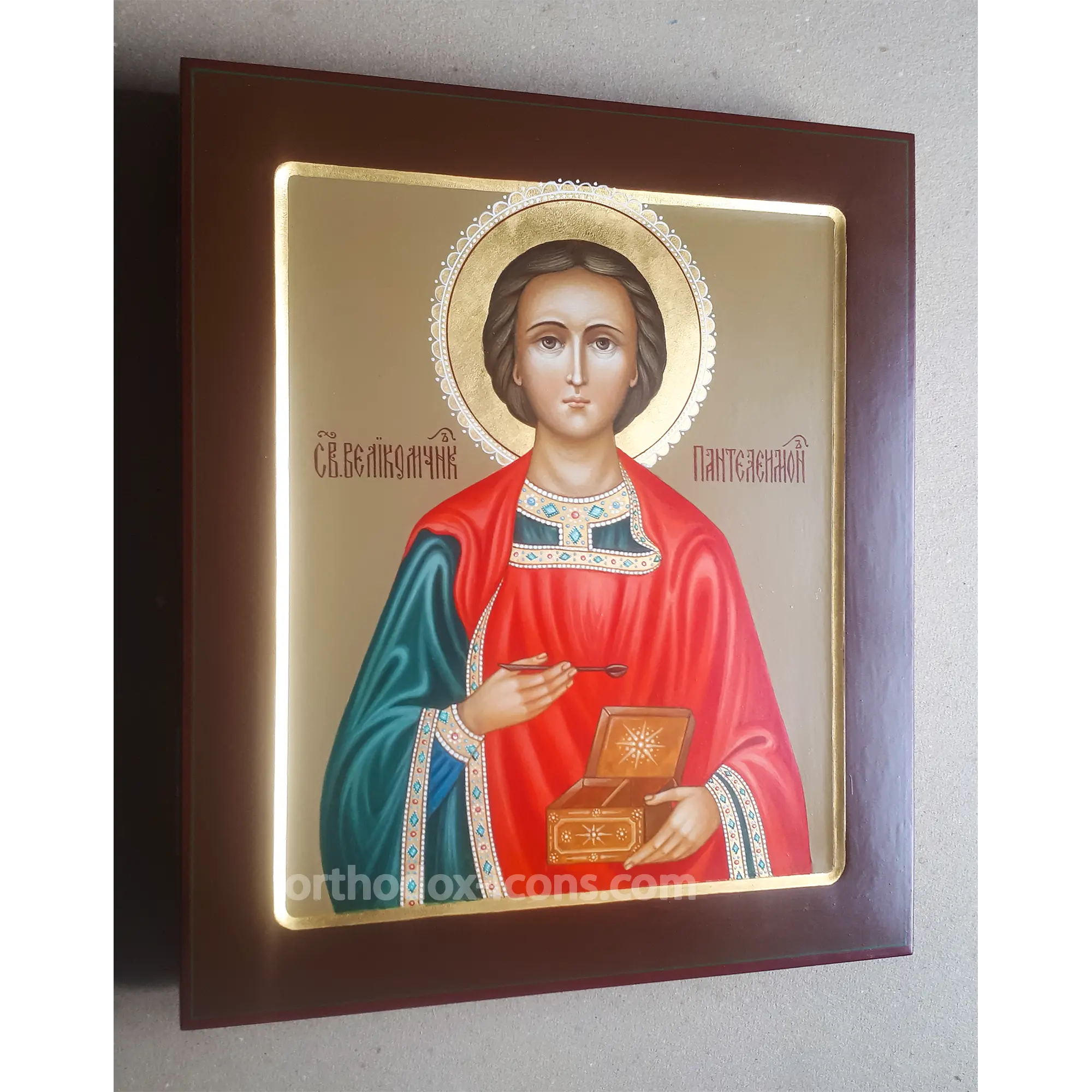
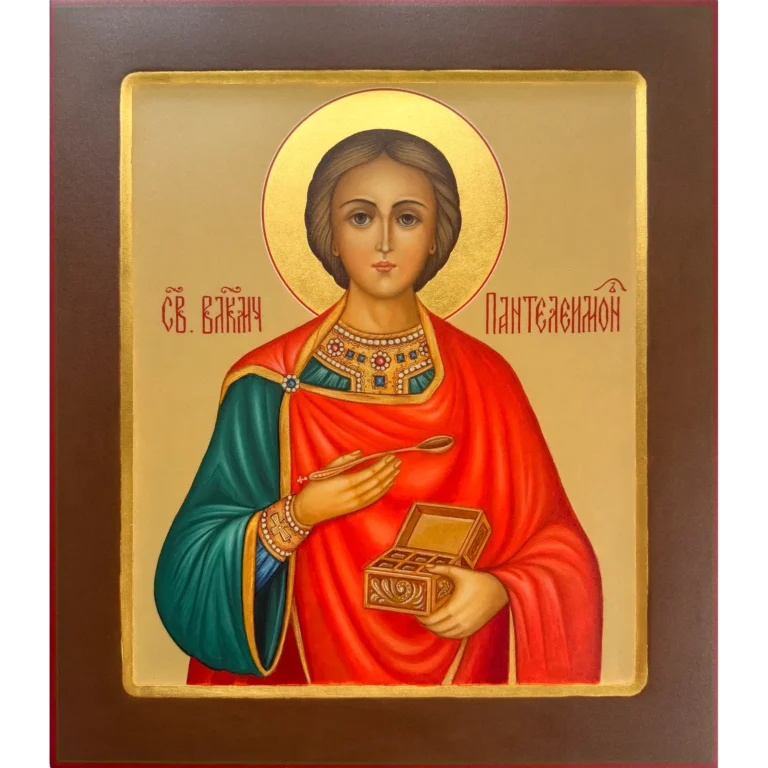
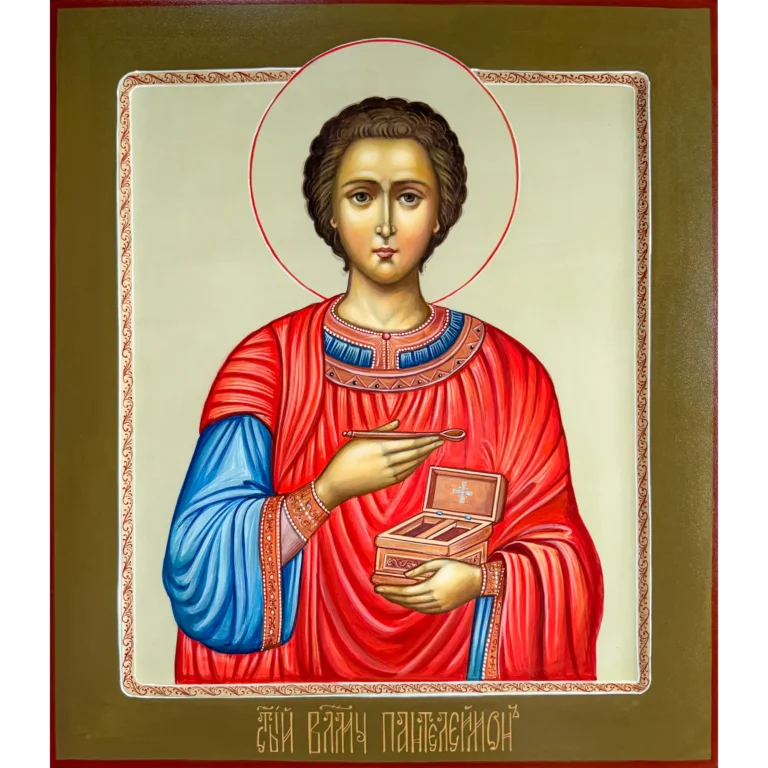
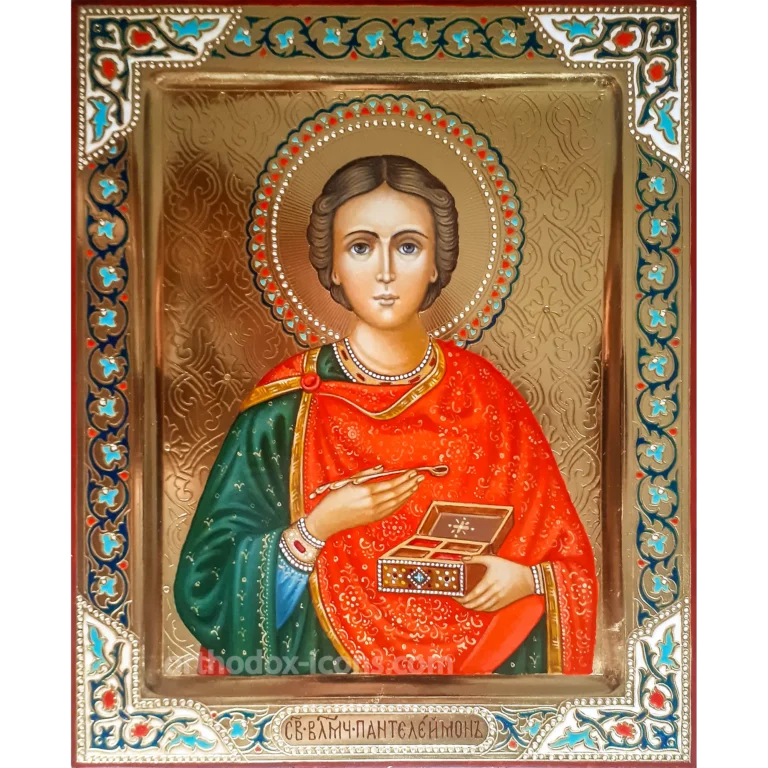
Panteleimon Orthodox Icon 27×31 is a hand-painted icon of the Holy Great Martyr and Healer Panteleimon, a prayerful image for illness, treatment, recovery, and sorrow of soul. The saint is shown young, in red and green garments, with a medicine casket and spoon, a gold halo, blessing character of the gesture, and a calm luminous face.
- Prayer: for healing from illness, help before surgery and treatment, strengthening of the sick, support for doctors, peace of soul, patience, freedom from fear, and help for loved ones in a difficult time.
- Materials: linden wood board, braces, recessed kovcheg, linen cloth, chalk gesso, egg tempera, 23K gold leaf (960 purity), protective varnish.
- Suitable for: a home icon corner, bedside prayer place, gift for a sick person, doctor, nurse, medical worker, child, godchild, person named Panteleimon, church, chapel, or iconostasis row.
It is possible to paint an image in any size to order
Free shipping worldwide
Panteleimon Orthodox Icon 27×31 is a hand-painted icon of the Holy Great Martyr and Healer Panteleimon, one of the closest and most beloved Orthodox images for prayer about health, healing, treatment, support of the sick, and strengthening of the soul. People turn to St. Panteleimon when illness enters the home, before surgery, during a long recovery, before difficult medical examinations, or while waiting anxiously for a diagnosis. He is venerated not only as a healer of the body, but also as a saint who helps a person not lose hope, not close up in fear, and pass through trial with prayer.
In the presented icon, St. Panteleimon is shown young, in a red garment with a green mantle, holding a medicine casket in his left hand and a small spoon in his right. The saint’s face is bright, gentle, attentive, and free from outward severity. This image especially reveals the merciful character of his service: Panteleimon was a physician who helped the sick without payment, and after turning to Christ he united medical knowledge with prayer and compassion. The icon is therefore received very personally, as an image of a saint to whom one may bring the simplest and heaviest request for a loved one.
The available size is 27×31 cm (10.6×12.2 in); larger and iconostasis sizes can be made by agreement. This format is suitable for a home icon corner, separate kiot, bedside prayer shelf, room of a sick person, medical office, or gift for a doctor. In this size the saint’s face, gold halo, medicine casket, spoon, blessing character of the gesture, red and green garments, and calm gilded composition remain clearly visible. A larger format is chosen for a church, chapel, hospital prayer space, analogion, or iconostasis row.
This icon is especially appropriate in a family where people pray for the health of children, parents, spouses, elderly relatives, or those undergoing treatment. It is often given to a sick person not as a formal wish for recovery, but as a sign of real care: we are praying for you, you are not alone. The icon of Panteleimon the Healer is also fitting for medical workers: doctors, nurses, paramedics, medical students, and all whose work is connected with pain, responsibility, and daily service to another human being.
Features of This Icon
The main feature of this icon is the calm half-length image of St. Panteleimon, painted without excessive decorative weight. The composition is concentrated on the face, hands, and medicine casket. The saint is shown close to the praying person, almost frontally, which makes the icon especially suitable for personal prayer. Before such an image it is natural to ask for the most important things: a child’s health, relief from pain, wisdom for doctors, strength for caregivers, and patience during long illness.
The saint’s face is young and pure. There is no strained drama in it, but there is quiet inner collectedness. This is an important trait in the iconography of Panteleimon: he does not seem distant from human pain. His image is turned toward those who need mercy, support, and hope. The gentle gaze of the saint helps the icon be perceived not only as a solemn church image, but as the living prayerful presence of a holy intercessor.
In his left hand the saint holds an open medicine casket. This detail immediately reveals his earthly service. The casket recalls medicine, medical skill, attention to the sick person, and readiness to help. In the icon, however, it has a deeper meaning: in Christian understanding every healing is accomplished not by the power of an object or by human self-confidence, but by the mercy of God. St. Panteleimon was a physician, but his help was sanctified by faith in Christ.
In his right hand the saint holds a thin spoon or medical instrument. It completes the image of the healer and makes the icon recognizable. This is not a random everyday detail. The instrument in the saint’s hand speaks of attentive, careful, almost tender care for the person. Healing requires not only knowledge, but compassion. For this reason the image of Panteleimon is especially dear to those who heal others, and to those who undergo treatment and hope for human participation from doctors, not only a procedure.
The red garment recalls the saint’s martyrdom, while the green mantle adds softness and life to the image. The combination of red, green, gold, and warm ocher-brown tones is festive but not loud. The large gold halo gathers attention around the saint’s face. The inner gilded border and dark fields give the icon restrained solemnity. The kovcheg deepens the central image and helps separate the prayerful space of the icon from the broad borders.
Iconography of St. Panteleimon the Healer
In Orthodox iconography, St. Panteleimon is most often shown as a young unmercenary physician. He is painted with a casket for medicines, a spoon, or a medical instrument. These attributes remind us that he received medical training and was known as a physician. Yet the Church does not venerate him simply for skill in treatment. The heart of his image is mercy, faith in Christ, and readiness to help those who suffer without self-interest.
Before Baptism the saint’s name was Pantoleon. After turning to Christ he received the name Panteleimon, connected with the meaning of mercy and compassion. This name reveals the center of his witness: the saint did not separate healing of the body from care for the soul. He saw in the sick person not a case and not a source of profit, but a living human being in need of help, attention, and prayer. This is why people pray before his icon not only for recovery, but also for strengthening of the heart.
The half-length format makes this icon especially intimate. The saint is shown close, without a complex narrative background or many secondary details. Such an image is well suited for daily prayer at home. It can be placed near icons of Christ, the Mother of God, St. Nicholas, St. Luke of Crimea, Cosmas and Damian, St. Matrona of Moscow, and other saints to whom a family turns in illness, anxiety, and prayers for health.
The gold halo shows the saint’s glorification in the Church. The red garment reveals the martyr side of his path. The medicine casket and spoon speak of merciful service. Together these details create a complete image: before us is a saint who unites purity, medical care, faithfulness to Christ, and readiness to suffer for the faith. This is why the icon of Panteleimon the Healer so often becomes a family holy image in homes where people especially pray for health.
Prayer Before the Icon of Panteleimon
Before the icon of the Holy Great Martyr and Healer Panteleimon, Orthodox Christians pray for healing from illnesses, help before surgery, beneficial treatment, recovery after serious disease, support for doctors, and strengthening of the sick. People turn to him in bodily pain, chronic illness, anxiety for a child, illness of parents, a serious diagnosis, fear before medical procedures, and a long period of rehabilitation.
- for healing from bodily illnesses;
- for help before surgery, examination, or difficult treatment;
- for support of children, elderly parents, and seriously ill people;
- for wisdom for doctors and medical workers;
- for patience for those caring for the sick;
- for relief from pain, fear, despondency, and anxiety;
- for recovery of strength after illness;
- for help with addictions and heavy inner conditions;
- for preservation of hope during long trials;
- for the heavenly patronage of people named Panteleimon.
Prayer before this icon does not replace a doctor, examination, or responsible treatment. On the contrary, the image of St. Panteleimon helps us see medical help as a place of mercy and service. Before the icon people ask that treatment be beneficial, medical decisions wise, the sick person strengthened, and relatives patient and attentive. Sometimes a person needs not only physical relief, but quiet confidence: the Lord is near, prayer continues, and hope has not been lost.
Brief Life of the Saint
The Holy Great Martyr Panteleimon was born in the city of Nicomedia. Before Baptism he bore the name Pantoleon. His mother was a Christian and tried to raise her son in the faith, but she died early. His father, who remained a pagan, sent the young man to study medicine. Pantoleon was capable, attentive, and educated. He was noticed as a talented physician, and the possibility of earthly honor and high position opened before him.
The decisive meeting in his life was with the priest Hermolaus. He spoke to the young man about Christ, faith, and the true source of life and healing. According to Church tradition, Pantoleon came to firm faith especially after a miracle: seeing a dead child bitten by a snake, he prayed to Christ, and the child came back to life. After this the young man received Holy Baptism and became Panteleimon.
After becoming a Christian, the saint devoted himself to helping the sick, the poor, prisoners, and all who suffered. He treated without payment, visited those in need, comforted people, and openly confessed Christ. His mercy caused envy among other physicians, and he was denounced to Emperor Maximian. The saint was pressured to renounce Christ, but he remained faithful. Tortures did not break him, and he accepted death as a Great Martyr.
The memory of St. Panteleimon is especially dear to Orthodox people because medical service and confession of faith are united in him. He helps us understand that care for health is important, but a person needs more than medicine. A person needs mercy, prayer, hope, support, forgiveness, patience, and trust in God. Therefore his image stands in homes, hospital churches, chapels, medical offices, and near those who pray for loved ones every day.
Commemoration and Name Icon Meaning
The commemoration of the Holy Great Martyr and Healer Panteleimon is kept on August 9 according to the new calendar, corresponding to July 27 according to the old calendar. On this day churches especially pray for the sick, doctors, those who suffer, children, elderly people, and all who need strengthening. For a family this date can become a day of special prayer for health, thanksgiving for help, and renewal of hope.
The icon of St. Panteleimon may be a name icon for a man or boy named Panteleimon. It is appropriate as a gift for Baptism, a name day, birthday, entrance into medical school, beginning of medical practice, graduation, house blessing, or an important family occasion. More often, however, this icon is chosen not only by name, but by prayerful meaning, as the image of a heavenly healer and helper in illness.
This gift is especially appropriate for a doctor, paramedic, nurse, rehabilitation specialist, medical student, person working with the sick, or someone undergoing treatment. The icon reminds us that medical work is not only a profession, but a service of mercy. For a sick person, this image becomes quiet support: before it one may pray in one’s own words, ask for strength, and give thanks for every step toward recovery.
Materials, Gold Leaf, and Custom Options
The icon of St. Panteleimon is painted on a linden wood board. Applied or recessed braces help stabilize the wooden base. In the presented version the image is made with a kovcheg: the central field is recessed and separated from the borders, so the figure of the saint is perceived with special concentration. Linen cloth and chalk gesso are applied to the board, and the image is then painted in egg tempera.
23K gold leaf (960 purity) is used in the icon. Gilding appears in the halo, inner framing, and certain decorative elements. The gold does not look excessive here: it gently emphasizes the holiness of the image and creates warm radiance around the face. Against the warm ocher and brown fields, the saint’s gold halo looks especially clear and prayerful.
The face, hands, medicine casket, spoon, folds of clothing, inscriptions, and borders are painted by hand. For an icon of Panteleimon, softness is especially important: the image should not be coldly ceremonial, but living, merciful, and turned toward human pain. The restrained decoration suits this icon well. It has enough solemnity, while the main focus remains the holy healer, his calm face, and his prayerful presence.
For an individual order, the size, background tone, type of borders, degree of gilding, inscriptions, kiot, and format for a home, medical office, hospital church, chapel, or iconostasis row can be discussed. In a larger version it is especially important to preserve the clarity of the face, expressiveness of the hands, accuracy of the medicine casket, and harmony of the whole image.
Choosing the Size
The 27×31 cm (10.6×12.2 in) size is a convenient and expressive format for a home prayer place. It is compact enough for a shelf, kiot, or bedside placement, while clearly revealing the main details: the saint’s face, gold halo, medicine casket, spoon, red and green garments, and kovcheg. This size is often chosen as a gift for a sick person or for a family that especially prays for health.
If the icon is needed for a spacious home, chapel, hospital prayer corner, church, or iconostasis row, a larger version can be ordered. In a large size the saint’s face, line of the hands, soft transitions in the garments, gilding, and overall prayerful character of the image are revealed more fully. Iconostasis sizes are selected individually, taking into account placement height, lighting, neighboring icons, and the general arrangement of the space.
For a doctor or medical worker, the 27×31 cm format looks dignified without overwhelming the interior. It can be placed at home, in an office, in a rest room, or in a prayer corner. For a hospital church or chapel, a larger format is usually better, because different people may approach the icon and the image should remain readable from a distance.
Placement, Blessing, and Care
The icon of St. Panteleimon can be placed in a home icon corner near icons of Christ, the Mother of God, St. Nicholas, St. Luke of Crimea, Cosmas and Damian, the Martyr Tryphon, St. Matrona of Moscow, and other saints to whom the family turns in prayer for health. If there is a sick person in the home, the icon is often placed where daily prayer before it is convenient.
After receiving the icon, it may be blessed in an Orthodox church. A blessed icon is intended for prayer, thanksgiving to God, and asking St. Panteleimon for healing, strengthening of powers, help for doctors, support of the sick, protection from fear, and a blessed course of treatment.
A hand-painted icon with gilding should be protected from direct sunlight, moisture, overheating, soot, and sudden temperature changes. Do not wipe the surface with wet cloths, alcohol, household cleaners, or rough fabric. The saint’s face, gilded halo, hands, medicine casket, spoon, inscriptions, and borders require careful handling.
Dust should be removed gently with a soft dry brush, without pressure. For protection of the painting and gilding, a wooden glazed kiot is recommended. It helps preserve the icon from dust, moisture, and accidental damage, especially when the image is placed in an active home area, medical room, church, or is intended for long-term devotional use.
Questions and Answers
Who is depicted in the Panteleimon Orthodox Icon 27×31?
The icon depicts the Holy Great Martyr and Healer Panteleimon, a Christian physician, unmercenary healer, martyr, and heavenly helper of the sick.
Why is St. Panteleimon called a healer?
During his earthly life he was a physician, helped the sick without self-interest, healed people with prayer to Christ, and is therefore venerated by the Church as a healer.
What does the medicine casket in his hand mean?
The open medicine casket recalls St. Panteleimon’s earthly service, his mercy toward the sick, and his readiness to help those who suffer.
What does the spoon or medical instrument mean?
This detail is connected with the saint’s image as a physician. It emphasizes attentive, careful, and merciful service to a sick person.
What do Orthodox Christians pray for before this icon?
People pray before this icon for healing from illness, help before treatment or surgery, strengthening of the sick, support for doctors, peace of soul, and freedom from fear.
Who may receive this icon as a gift?
The icon is suitable for a sick person, doctor, nurse, medical worker, child, godchild, family, and also for someone named Panteleimon.
What size is available?
The available size is 27×31 cm (10.6×12.2 in). Larger formats and iconostasis sizes can be made by agreement for a church, chapel, hospital prayer space, or iconostasis row.
When is St. Panteleimon commemorated?
The commemoration of the Holy Great Martyr and Healer Panteleimon is kept on August 9 according to the new calendar, corresponding to July 27 according to the old calendar.
Is this icon suitable for a hospital chapel?
Yes. The image of St. Panteleimon is especially fitting for hospital churches, chapels, medical institutions, and places where people pray for health and support of the sick.
How should a hand-painted Panteleimon icon be cared for?
Keep the icon away from moisture, direct sun, overheating, soot, and mechanical damage. Dust should be removed with a soft dry brush, and a glazed kiot is recommended to protect the painting and gilding.
| Dimensions | 27x31cm (10.6×12.2 in) |
|---|---|
| Name | Panteleimon |
Related products
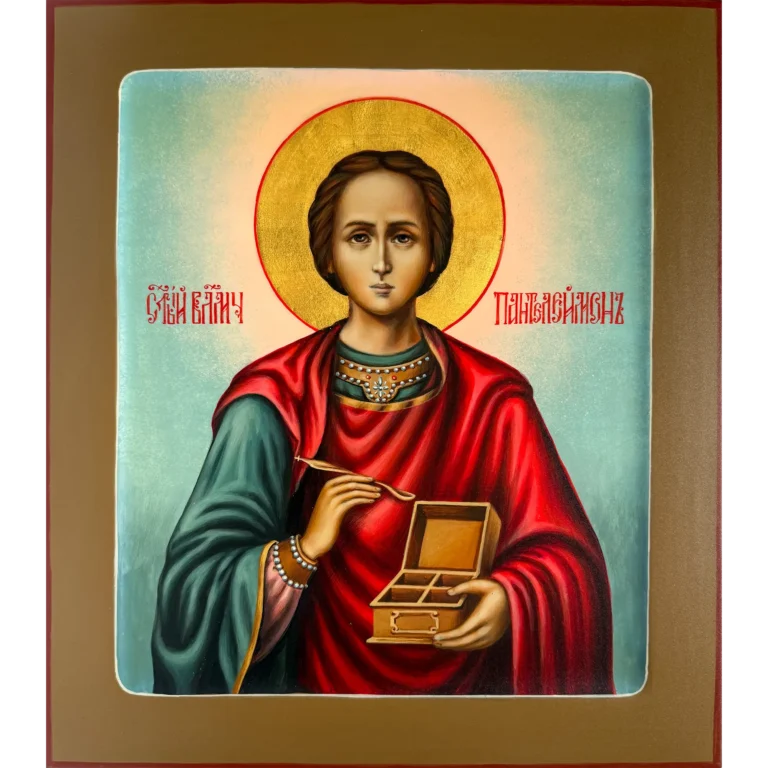
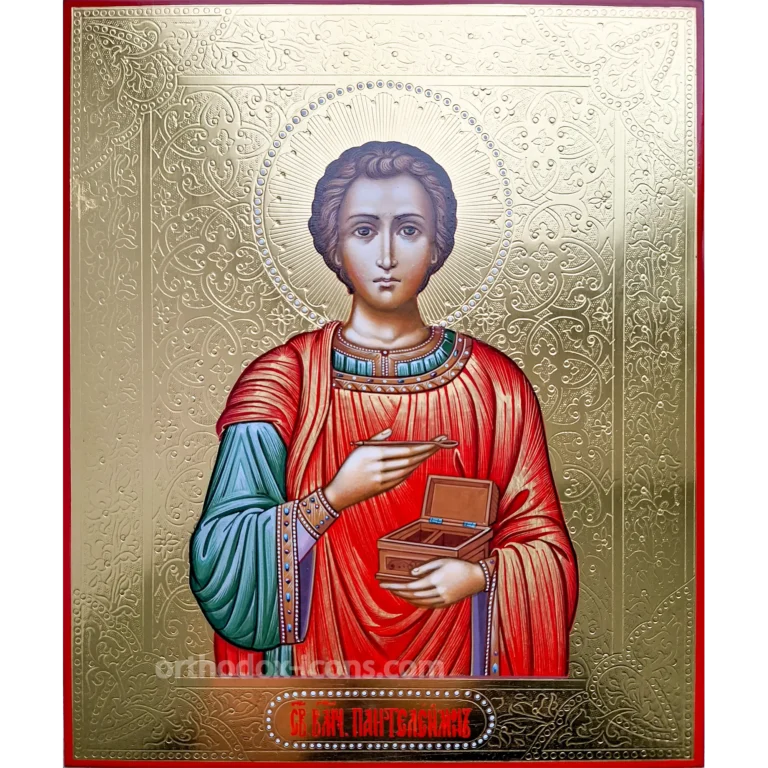
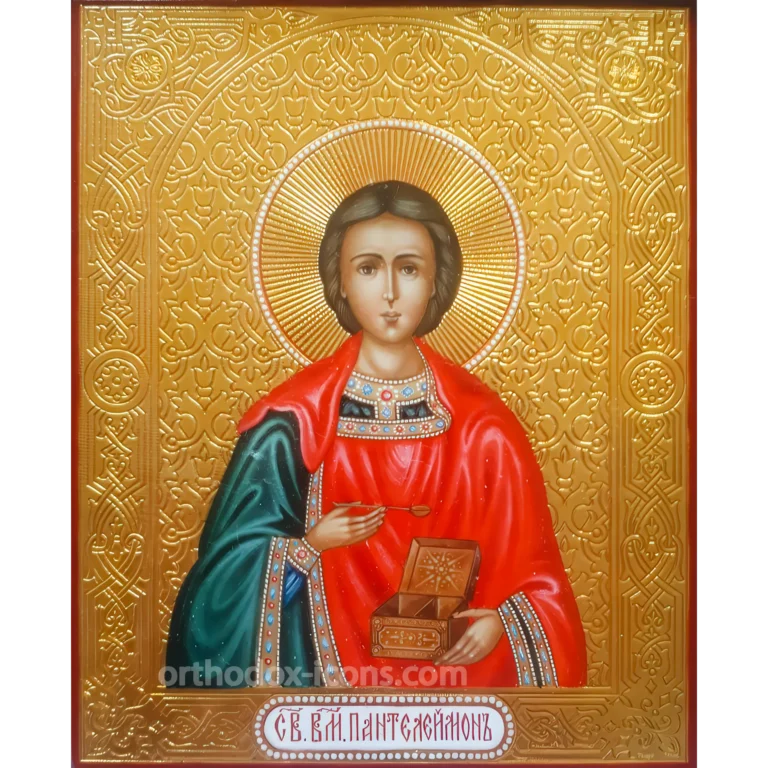
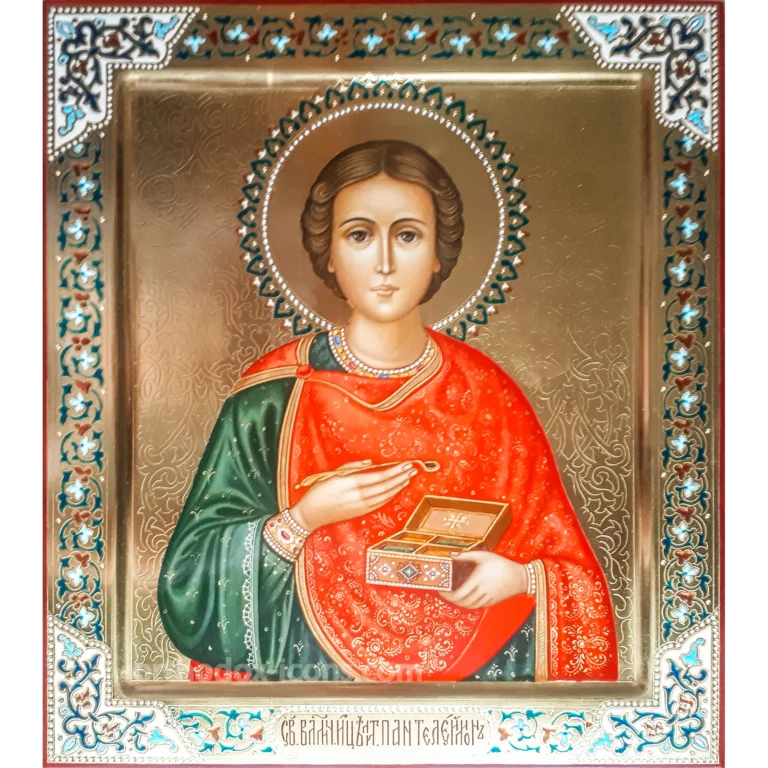
Hand-Painted Orthodox Icon of Saint Panteleimon
Available on backorder
Price range: $700 through $2250