Nicholas the Wonderworker Orthodox Icon 27×31
$850
Available size: 27×31 cm (10.6×12.2 in); larger and iconostasis sizes can be made by agreement.
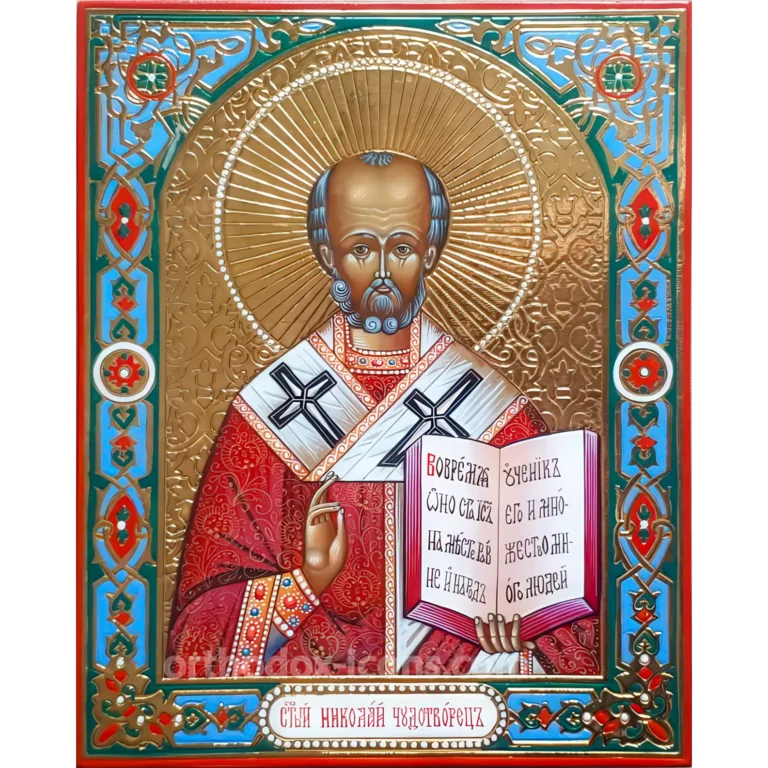
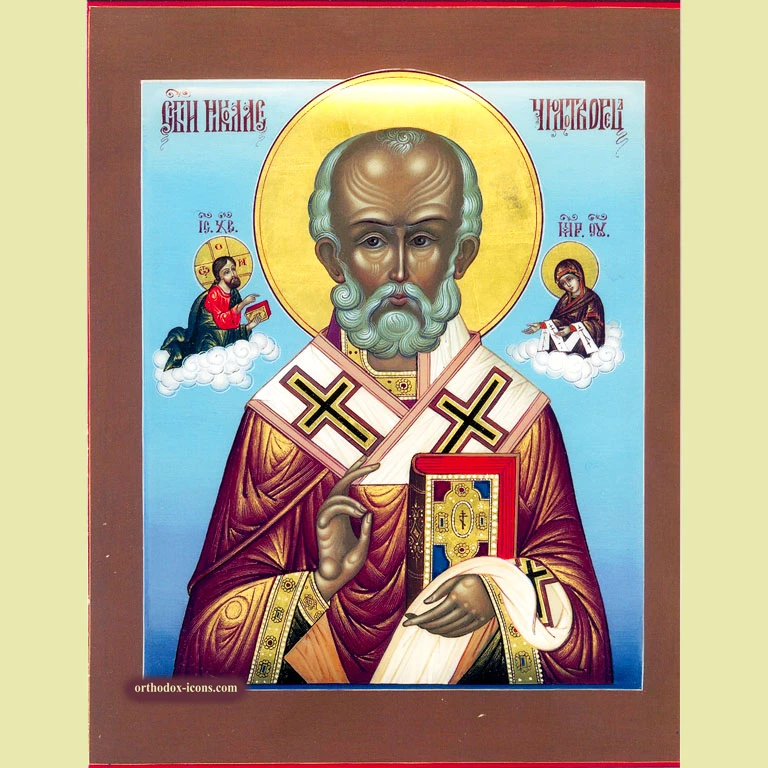
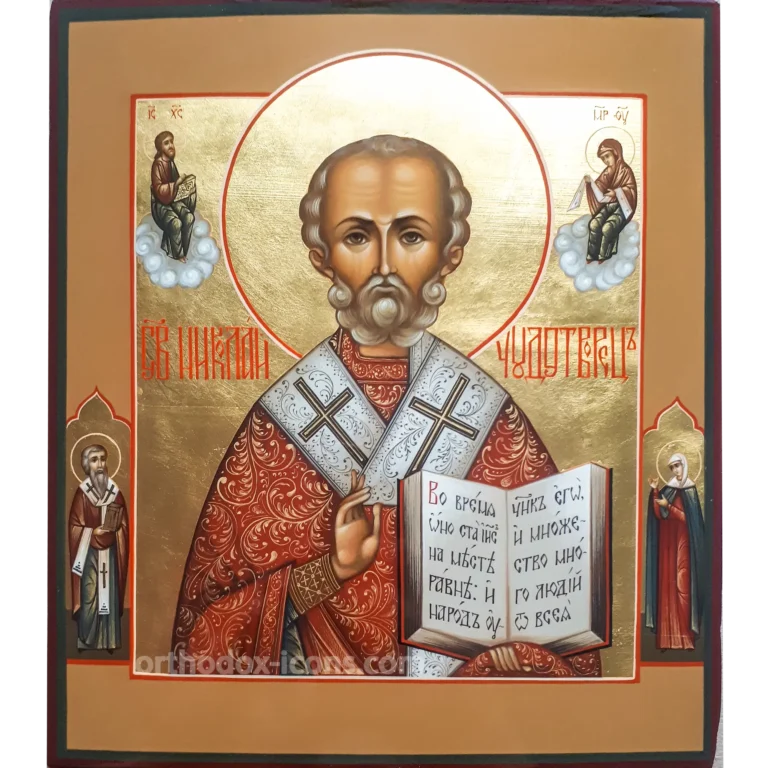
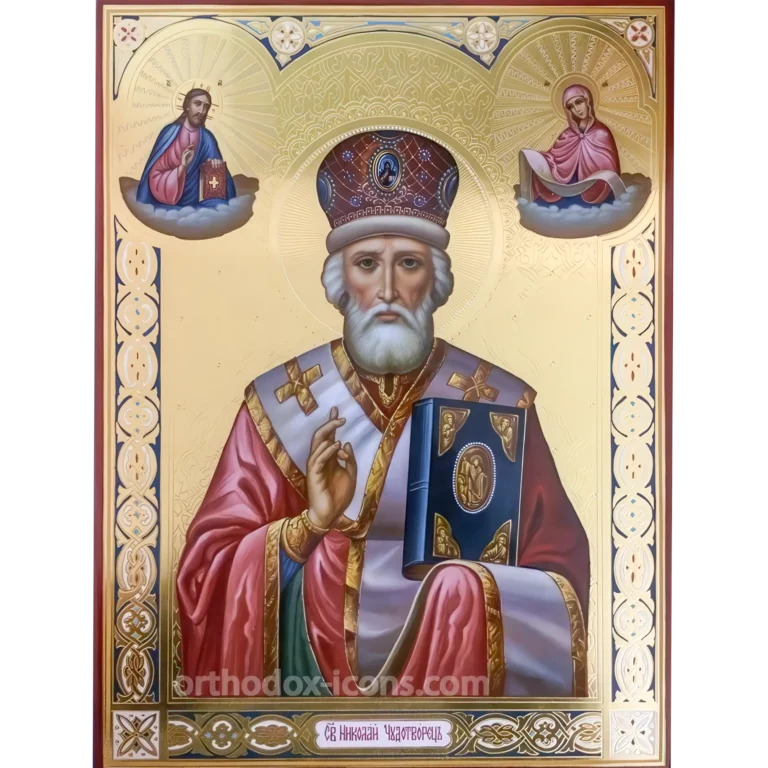
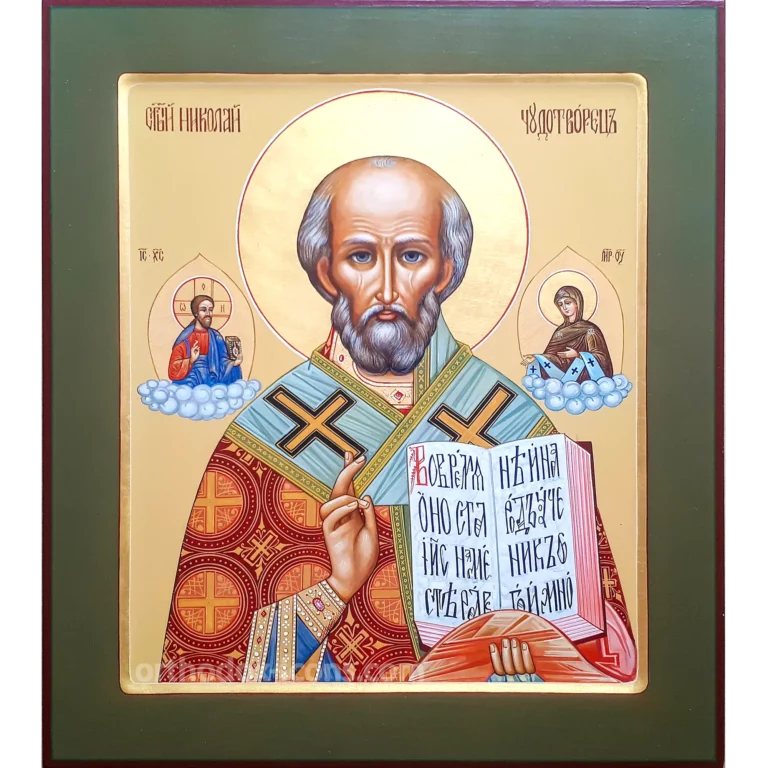
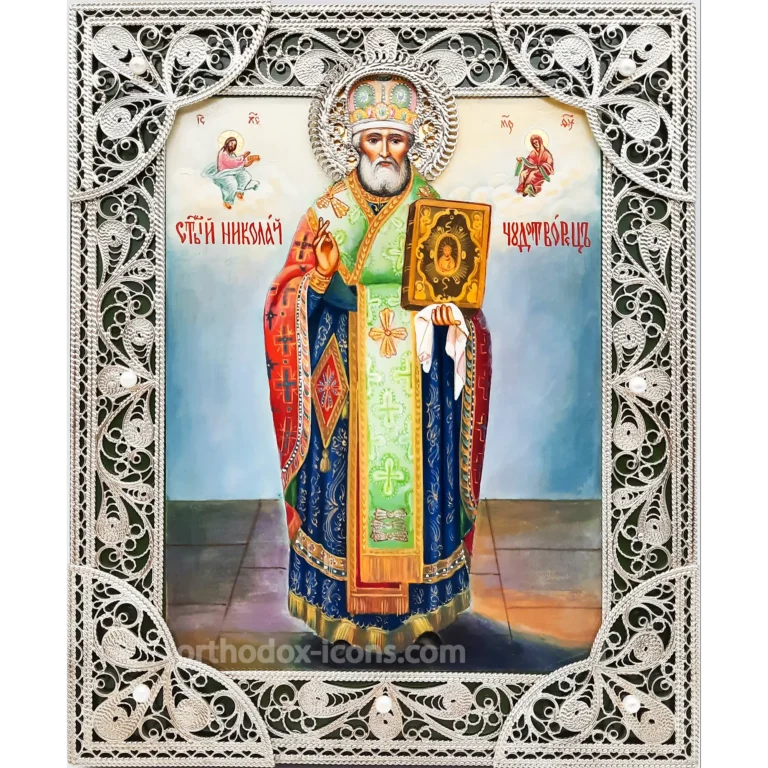
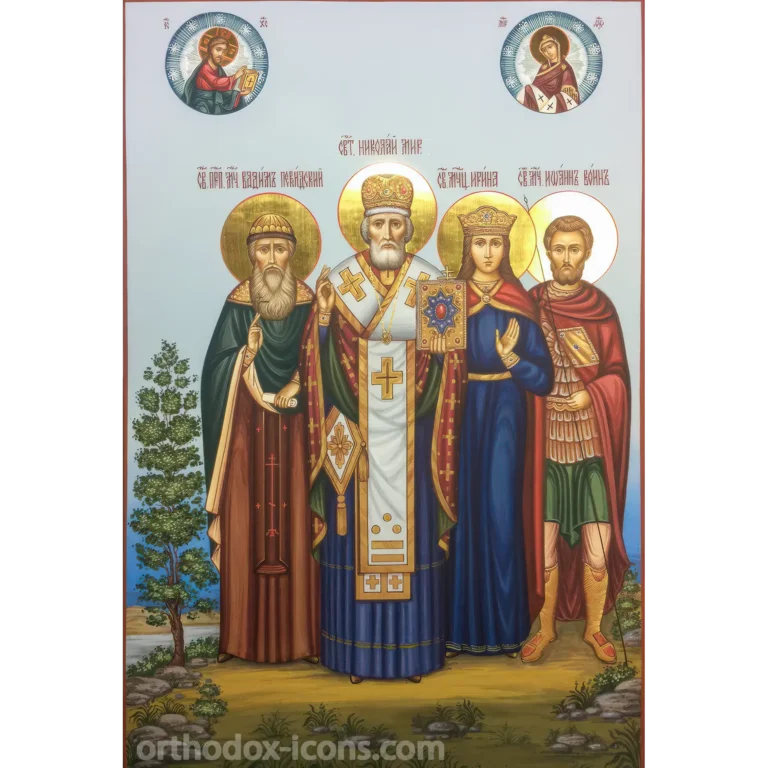
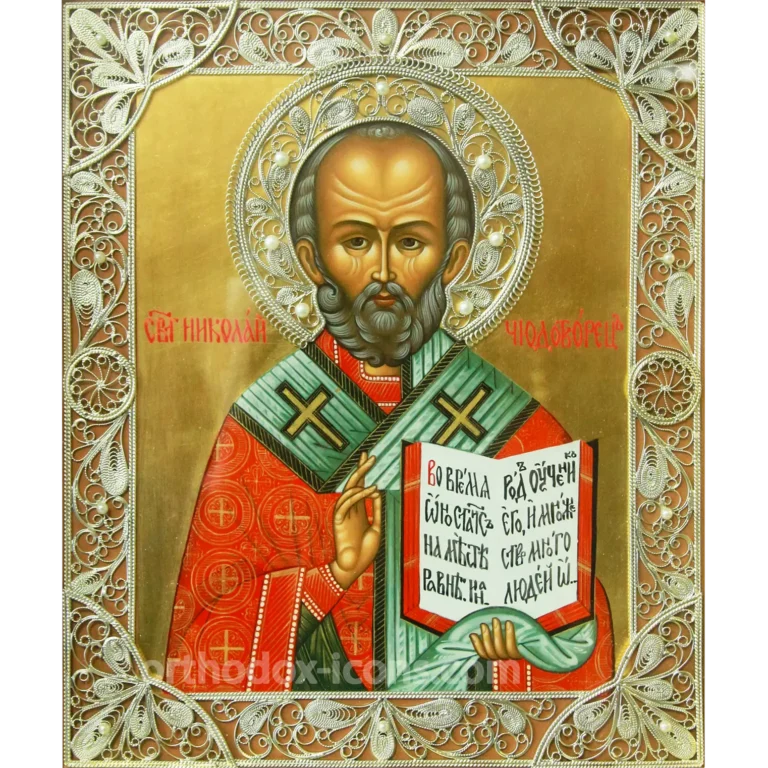
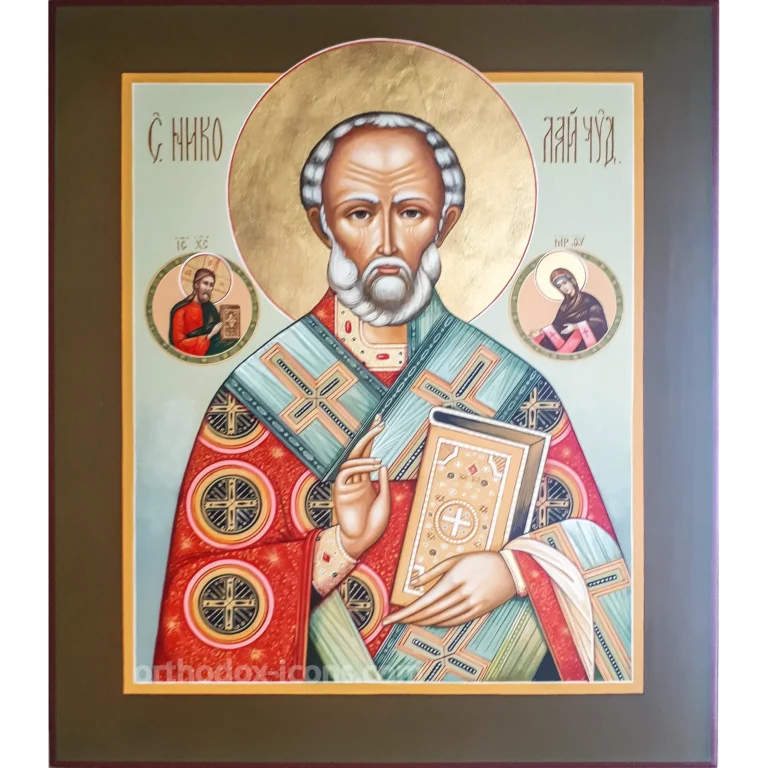
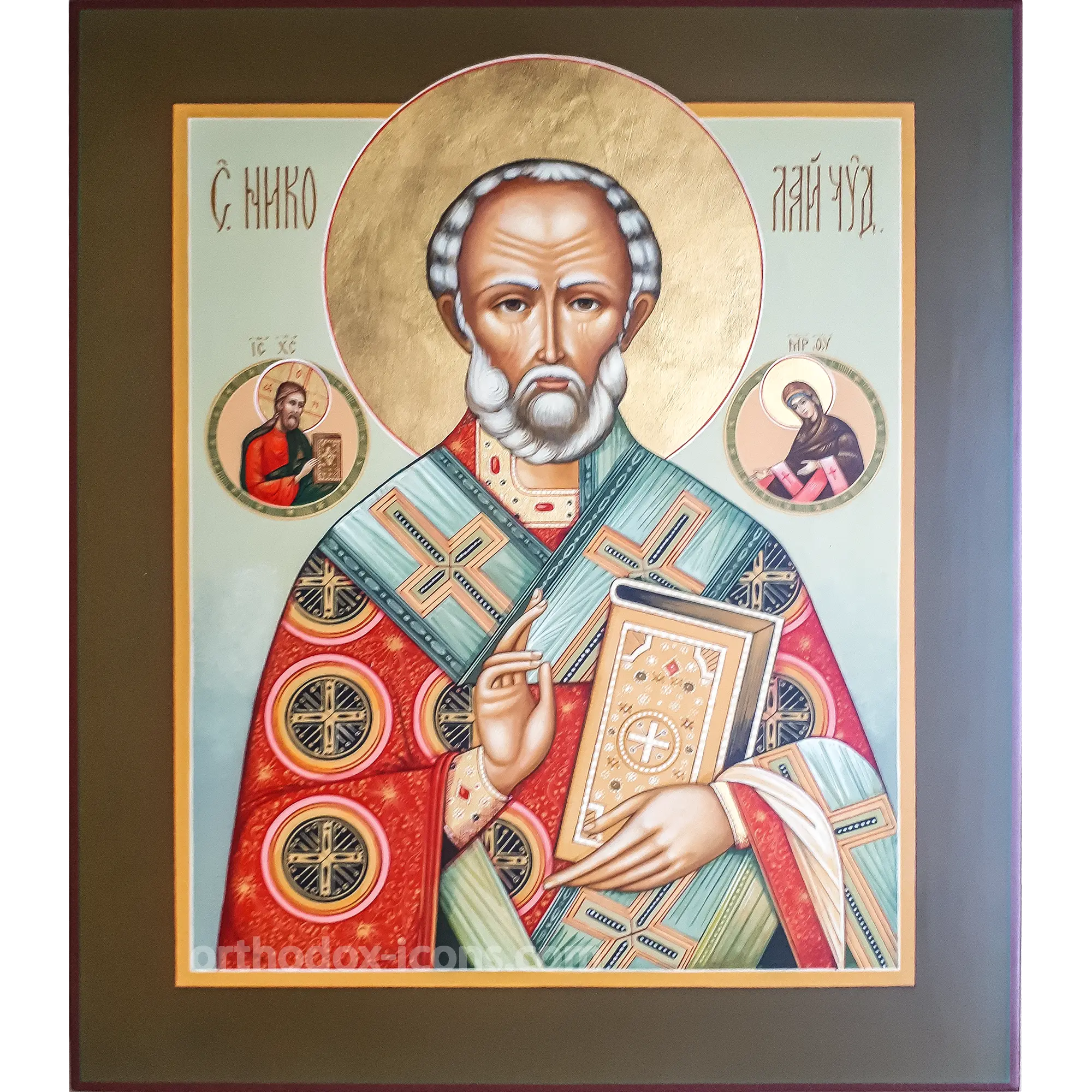
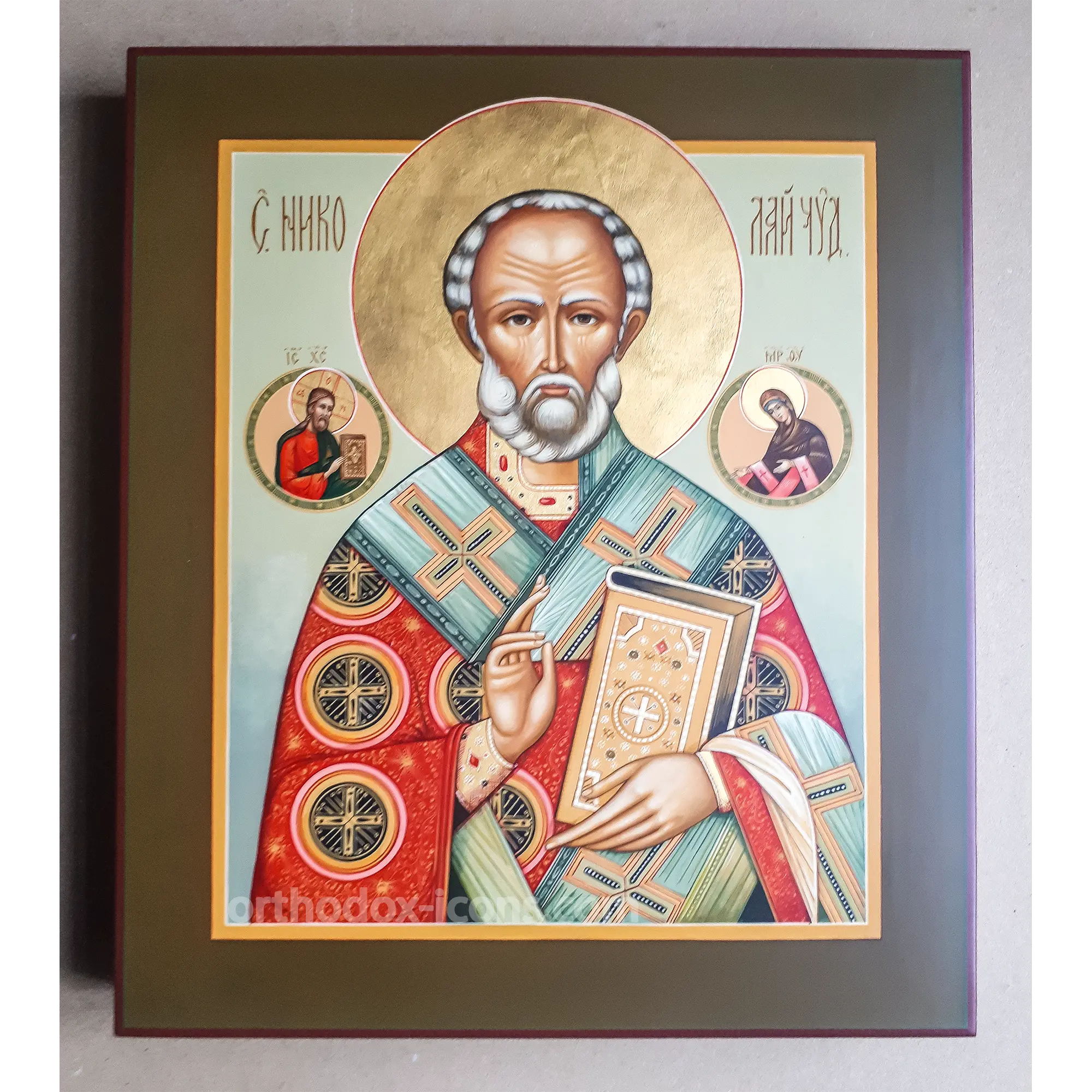
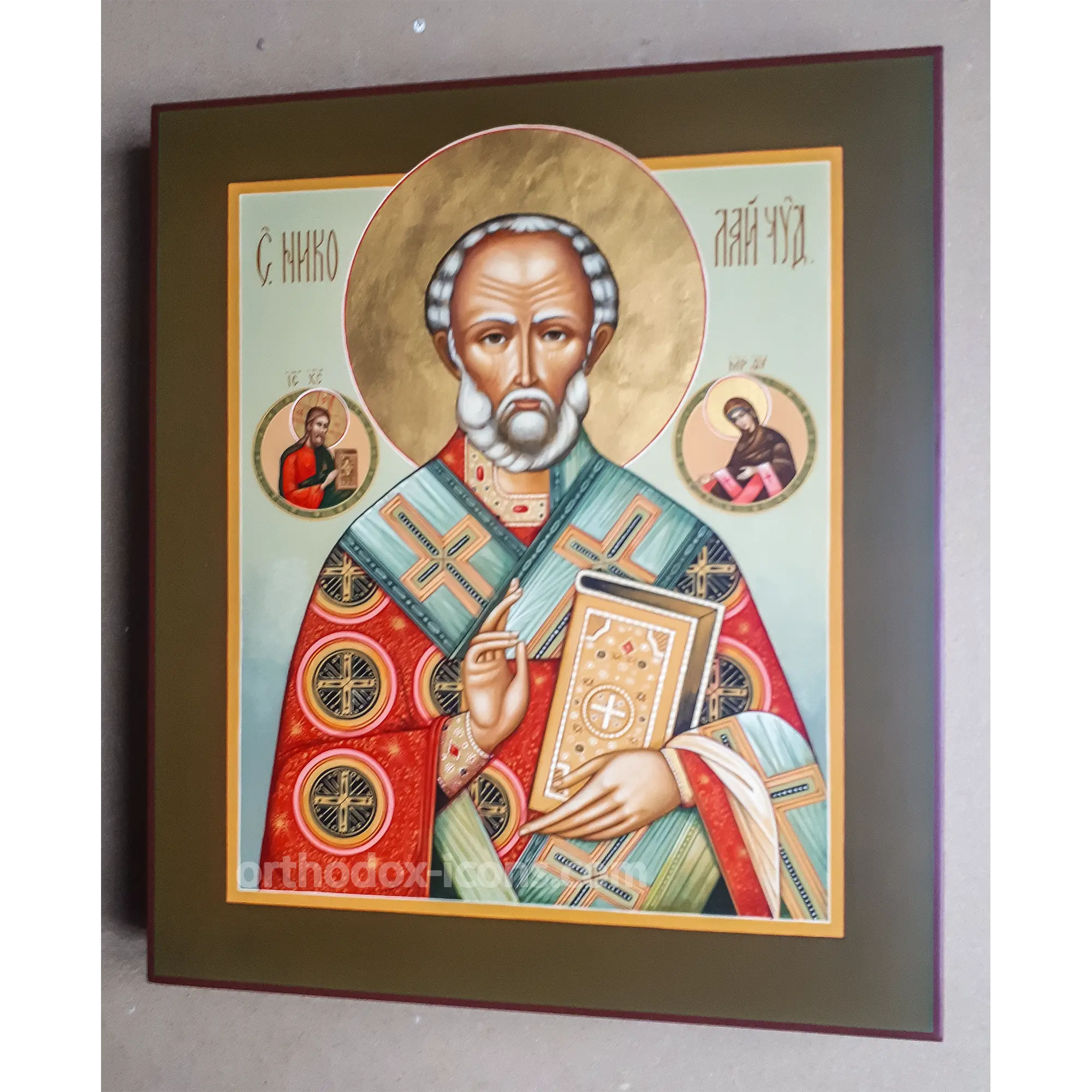
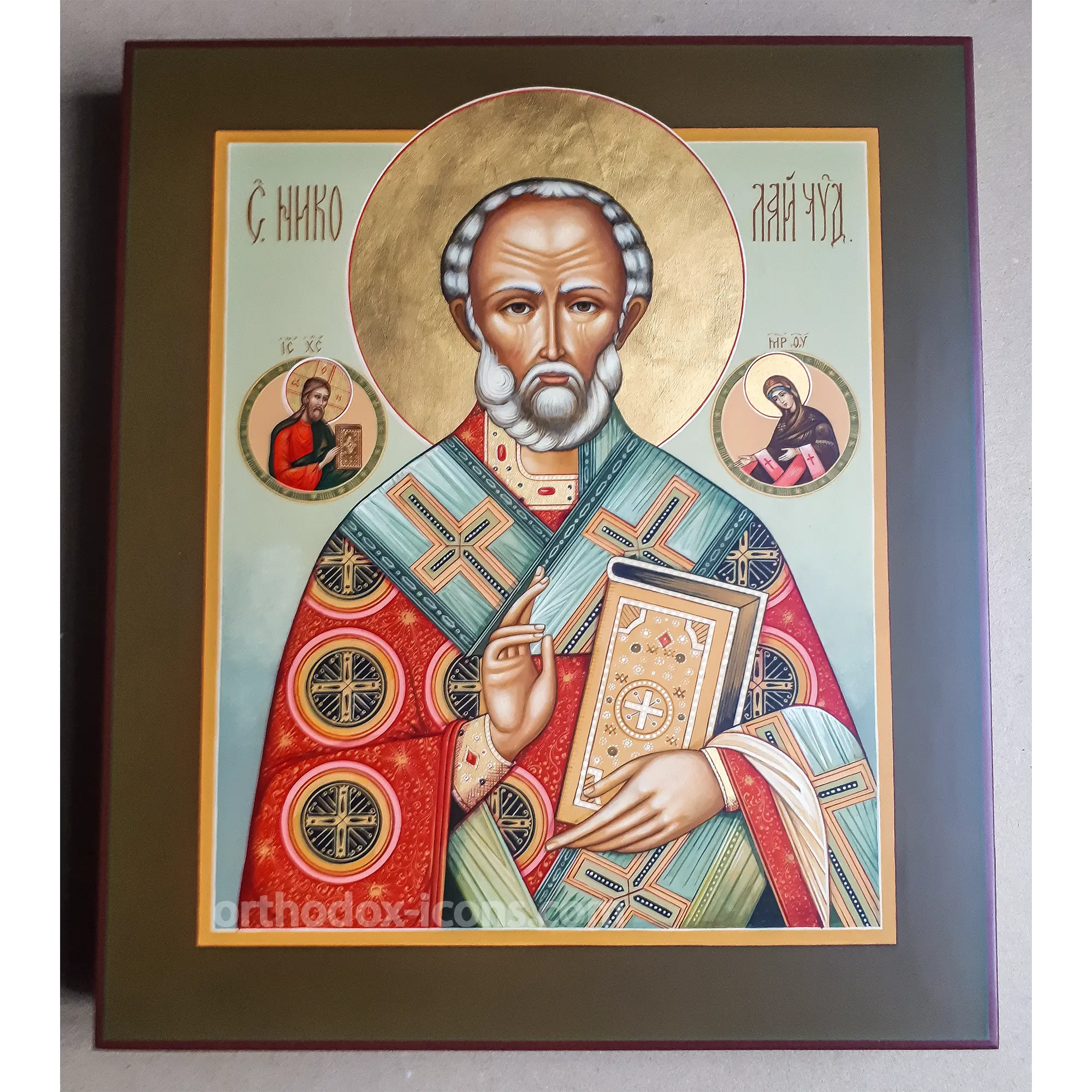
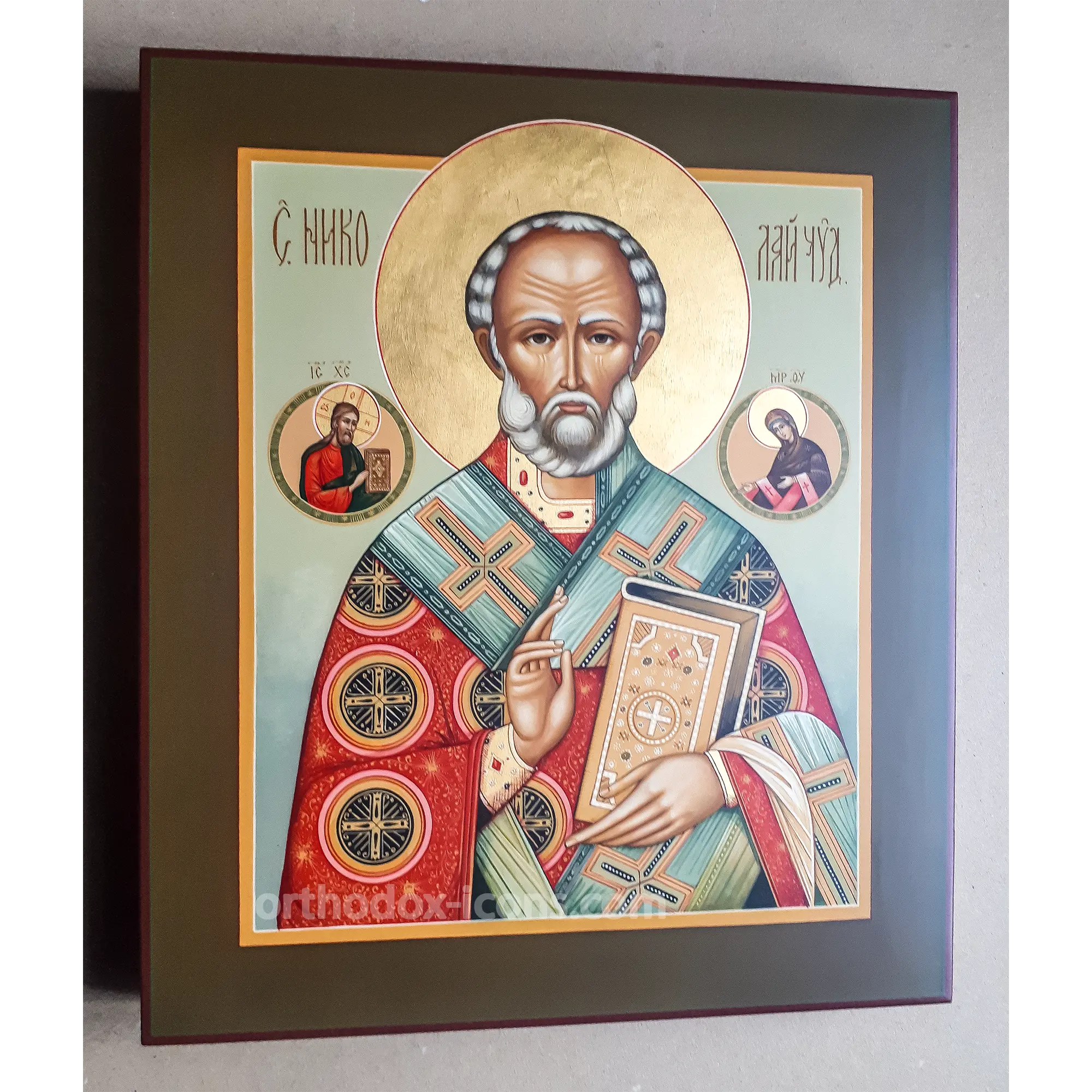
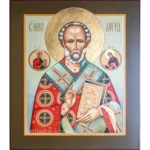
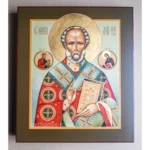
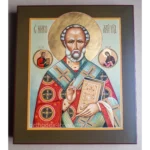
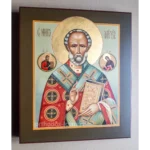
Nicholas the Wonderworker Orthodox Icon 27×31 is a hand-painted icon of St. Nicholas, Archbishop of Myra in Lycia, one of the most beloved Orthodox saints for the home, family, travel, protection, and prayer in difficult circumstances. The saint is shown in episcopal vestments, with a blessing hand, the Gospel book, a gold halo, and medallions of Christ and the Mother of God.
- Prayer: for protection of family and children, help on journeys, healing, deliverance from troubles, wise guidance, support in financial and everyday difficulties, peace in the home, and patronage for people named Nicholas.
- Materials: linden wood board, braces, linen cloth, chalk gesso, egg tempera, 23K gold leaf (960 purity), protective varnish.
- Suitable for: a home icon corner, name icon for Nicholas, gift for a child, godson, father, husband, traveler, sailor, driver, soldier, doctor, leader, church, chapel, or iconostasis row.
It is possible to paint an image in any size to order
Free shipping worldwide
Nicholas the Wonderworker Orthodox Icon 27×31 is a hand-painted icon of St. Nicholas the Wonderworker, Archbishop of Myra in Lycia, one of the most beloved and familiar saints for Orthodox Christians. People turn to St. Nicholas in many different circumstances: on journeys, in illness, family anxiety, financial difficulty, before important decisions, in care for children, when facing injustice, and in moments when swift prayerful help is especially needed. He is called the God-pleaser and Wonderworker for good reason: church memory preserves many testimonies of his mercy, protection of the weak, defense of the innocent, and help to people in distress.
In the presented icon, St. Nicholas is shown half-length, in episcopal vestments, holding the Gospel in his left hand and blessing with his right. His face is strict and at the same time deeply human: attentive, calm, collected, and without cold distance. Before us is not an abstract patron for every occasion, but a holy bishop, pastor, intercessor, and defender who hears human pain and teaches us to answer it with mercy, faith, and truth.
The available size is 27×31 cm (10.6×12.2 in); larger and iconostasis sizes can be made by agreement. The 27×31 cm format is well suited for a home icon corner, separate kiot, family prayer place, or name gift for someone named Nicholas. In this size the saint’s face, gold halo, episcopal vestments, omophorion, Gospel book, blessing hand, and side medallions with Christ and the Mother of God remain clearly readable. Larger versions are chosen for a spacious home, chapel, church, analogion, or iconostasis row.
An icon of St. Nicholas the Wonderworker is especially fitting where people pray for family peace, protection of children, safe travel, help in difficulty, and strengthening of faith. It is often given for Baptism, a name day, birthday, church crowning, house blessing, the beginning of independent life, a long journey, entrance into study or service, or another important stage of life. The image is received warmly even by people who are only beginning their church life. It easily enters the home icon corner and often becomes one of the main family holy images.
Features of This Icon
The main feature of this icon is the large half-length image of St. Nicholas in episcopal vestments. The composition is built so that attention immediately turns to the saint’s face, blessing hand, and Gospel book. There is no unnecessary movement in the image. The saint stands calmly, directly, and prayerfully. His gaze does not frighten with severity, but it also does not dissolve into softness. It carries pastoral responsibility: Nicholas the Wonderworker is a saint who helps, and at the same time calls a person to faith, honesty, mercy, and correction of life.
The right hand of the saint is formed in a blessing gesture. For icons of St. Nicholas this is one of the most recognizable details. It reminds us that he was a bishop, served the Liturgy, taught people the word of God, and cared for his flock. This gesture is turned toward the praying person not as a command, but as blessing, support, and spiritual guidance. Before such an icon it is natural to ask not only for outward help, but also for wisdom: to act rightly, not become hardened, not surrender to fear, and not lose trust in God.
In his left hand St. Nicholas holds the Gospel. This detail is very important: the miracles of Nicholas the God-pleaser are never separated from his faith in Christ. He helps not as a kindly magician, but as a holy pastor of the Church who lived according to the Gospel and directed people toward God. The closed book in his hand speaks of church teaching, episcopal service, and spiritual authority founded not on earthly force, but on faithfulness to Christ.
The saint is painted in richly ornamented vestments. Red, greenish, blue, and golden tones create a solemn but not overloaded color harmony. The omophorion with crosses shows his episcopal dignity. Ornamental details on the vestments emphasize the beauty of hierarchal service, while the warm gold halo distinguishes the saint’s face and makes the image especially luminous. At the same time decoration does not compete with prayerful meaning: the face, hands, and Gospel remain central.
In the upper part of the composition, on both sides of the saint, there are medallions of Christ and the Mother of God. This is a traditional detail in the iconography of St. Nicholas, connected with the memory of his episcopal dignity and glorification in the Church. The medallions do not distract from the central image, but reveal it more deeply: St. Nicholas stands as a God-pleaser, servant of Christ, and intercessor under the protection of the Most Holy Theotokos.
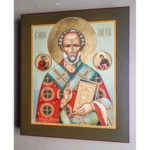
The broad dark borders and the lighter inner field create a calm frame for the image. This icon is perceived naturally in a family icon corner, in a separate kiot, and in a larger church space.
Iconography of St. Nicholas the Wonderworker
St. Nicholas is most often shown as a hierarch: in episcopal vestments, with an omophorion, Gospel book, and blessing hand. This is how the main meaning of his earthly ministry is revealed. He was Archbishop of Myra in Lycia, a pastor of the Church, defender of the faith, and caring father for his flock. In popular devotion he is known as a swift helper, but the iconography reminds us that his help is rooted in church service, prayer, mercy, and faithfulness to Christ.
The omophorion on the saint’s shoulders is a sign of episcopal ministry. Spiritually, it also recalls pastoral care: the bishop bears responsibility for people, prays for them, protects them from spiritual danger, teaches, and consoles. Therefore the image of St. Nicholas is especially close to those who feel lost, unprotected, or in need of wise guidance. Before his icon people pray that the Lord, through the saint’s intercession, will help them find the right path.
The Gospel in the saint’s hand shows that he was not only a wonderworker, but also a teacher of the faith. His mercy was not simple human kindness without a spiritual foundation. It was born from life in Christ. For this reason the icon of St. Nicholas helps unite a request for everyday help with a deeper desire: to live honestly, not abandon prayer, do good, protect the weak, and preserve Christian conscience.
The medallions of Christ and the Mother of God in the upper part emphasize the saint’s ecclesial dignity. They open, as it were, the invisible spiritual space of the icon. Nicholas the Wonderworker is not shown as an independent hero, but as a saint of the Church glorified by God. His prayerful help always turns a person toward Christ and teaches gratitude, even after the request has been heard and the danger has passed.
Prayer Before the Icon of Nicholas the Wonderworker
Before the icon of St. Nicholas the Wonderworker, Orthodox Christians pray for protection on journeys, help for children, family well-being, healing, deliverance from troubles, support in financial difficulty, just resolution of complicated matters, and help in study, work, and service. His image is especially loved by travelers, sailors, drivers, soldiers, parents, orphans, the poor, the sick, and all who find themselves in a difficult life situation.
- for protection of family, home, and children;
- for help on a journey, move, travel, or business trip;
- for healing from illness and strengthening of powers;
- for support in financial, household, and work difficulties;
- for protection from slander, injustice, and evil people;
- for help to sailors, drivers, soldiers, and travelers;
- for the well-being of schoolchildren, students, and learners;
- for guidance of children and loved ones;
- for peace in the family and reconciliation after quarrels;
- for the heavenly patronage of people named Nicholas.
Prayer before the icon of St. Nicholas should not be perceived as a demand for instant fulfillment of a wish. The saint helps a person not only to leave trouble behind, but also to see how to live further: more honestly, more mercifully, more attentively toward others. His own life was filled with hidden charity, defense of the innocent, and care for the weak. Therefore before his image it is especially important to ask not only for help for oneself, but also for a heart capable of helping others.
Brief Life of St. Nicholas
St. Nicholas was born in Lycia, in the city of Patara, into a devout Christian family. From childhood he was marked by deep piety, love for the church, attention to prayer, and compassion for people. After the death of his parents, Nicholas received an inheritance but did not use it for his own comfort. He secretly helped those in need, trying to do good not for praise, but for God and the salvation of his neighbors.
One of the best-known episodes from his life concerns his help to a poor father and three daughters. The family was in severe need, and St. Nicholas secretly provided money so the daughters could avoid dishonor and arrange their lives honorably. This became one of the most recognizable examples of Christian mercy: help given quietly, without demanding gratitude and without raising oneself above the poor.
Later Nicholas was appointed bishop of Myra in Lycia. As archpastor he cared for the people, defended Christians, helped prisoners, the poor, travelers, sailors, and everyone who needed intercession. During persecution he was not afraid to confess the faith and endured imprisonment. After the persecutions ended, he continued serving the Church, strengthening people in the Orthodox faith and rebuking false teachings.
Church tradition preserves many testimonies of St. Nicholas’ miraculous help. He saved those perishing at sea, defended the unjustly condemned, helped the poor, comforted the sorrowful, and guided those who had gone astray. His veneration spread throughout the Christian world, and among Orthodox Christians he became one of the most beloved saints. In every generation believers have recognized in him a close helper: strict but merciful, swift in intercession, and deeply human.
Commemoration and Name Icon Meaning
In the church calendar, St. Nicholas the Wonderworker is especially commemorated on December 19 according to the new calendar, corresponding to December 6 according to the old calendar, the day of his repose. The translation of his relics is celebrated on May 22 according to the new calendar, corresponding to May 9 according to the old calendar, and the nativity of St. Nicholas on August 11 according to the new calendar, corresponding to July 29 according to the old calendar. These dates are often chosen for name days, family prayer, gifts, and special petitions to the saint.
An icon of St. Nicholas is especially suitable as a name icon for a man or boy named Nicholas. It may be given for Baptism, a name day, birthday, entrance into school or university, beginning of service, moving, house blessing, church crowning, or an important life stage. For a child, the icon of St. Nicholas becomes an image of a kind heavenly patron; for an adult, it is a reminder of courage, honesty, mercy, and prayerful responsibility.
This icon is also appropriate for a family that especially prays for children, travelers, the sick, students, those working far from home, or people in dangerous professions. St. Nicholas is venerated as a helper in many circumstances, and his image often becomes a central family holy image, approached both in joy and in anxiety.
Materials, Gold Leaf, and Custom Options
The icon of St. Nicholas the Wonderworker is painted on a linden wood board. Applied or recessed braces help stabilize the wooden base. Linen cloth and chalk gesso are applied to the board, and the image is then painted in egg tempera.
23K gold leaf (960 purity) is used in the icon. Gilding is especially expressive in the saint’s halo and decorative elements of the composition. Gold helps reveal not outward luxury, but the church meaning of the image: St. Nicholas stands before us as a glorified God-pleaser, intercessor, and archpastor. The warm radiance of the halo gently distinguishes the face and makes the icon luminous, festive, and prayerfully focused.
The face, hands, Gospel, omophorion, vestments, medallions of Christ and the Mother of God, inscriptions, and borders are painted by hand. For an icon of Nicholas the Wonderworker, balance is especially important: the saint should be strict but not cold, solemn but not inaccessible, hierarchal but close to a person in prayer. In this icon, that character is supported by the calm background, large halo, blessing gesture, and clear half-length composition.
For an individual order, the size, background tone, type of borders, degree of gilding, inscriptions, kiot, and format for a home, church, chapel, analogion, or iconostasis row can be discussed. In a larger version it is especially important to preserve the expressiveness of the face, clarity of the gesture, beauty of the omophorion, and harmony between the central image and side medallions.
Choosing the Size
The 27×31 cm (10.6×12.2 in) size is a convenient and expressive format for a home icon corner. It is compact enough for a shelf, kiot, or red corner, while clearly revealing the half-length image of the saint: face, halo, Gospel, blessing hand, omophorion, and medallions. This format is often chosen as a name icon for Nicholas, a family gift, or an icon that will remain permanently in the home.
If the icon is purchased as a gift, the 27×31 cm format looks dignified and does not require a large space. It is suitable for a child, godson, husband, father, grandfather, leader, traveler, sailor, driver, or anyone to whom you want to give not simply a beautiful object, but a true prayer image.
A larger size is worth choosing for a spacious home, church, chapel, analogion, or iconostasis row. In a large format, the episcopal vestments, gold halo, side medallions, decorative borders, and expression of the saint’s face are revealed more fully. Iconostasis sizes are selected individually, taking into account placement height, lighting, neighboring icons, and the general color harmony.
Placement, Blessing, and Care
The icon of St. Nicholas the Wonderworker can be placed in a home icon corner near icons of Christ, the Mother of God, the Guardian Angel, St. Spyridon of Trimythous, Great Martyr Panteleimon, St. Luke of Crimea, St. George the Trophy-Bearer, and other saints close to the family. In the home this image often becomes one of the main icons: before it people pray for travel, children, health, protection, work, peace, and help in difficult circumstances.
After receiving the icon, it may be blessed in an Orthodox church. A blessed icon is intended for prayer, thanksgiving to God, and asking St. Nicholas for help, protection, guidance, healing, safe travel, preservation of the family, and spiritual strengthening.
A hand-painted icon with gilding should be protected from direct sunlight, moisture, overheating, soot, and sudden temperature changes. Do not wipe the surface with wet cloths, alcohol, household cleaners, or rough fabric. The saint’s face, gilded halo, hands, Gospel, medallions, inscriptions, and decorative borders require careful handling.
Dust should be removed gently with a soft dry brush, without pressure. For protection of the painting and gilding, a wooden glazed kiot is recommended. It helps preserve the icon from dust, moisture, and accidental damage, especially when the image is placed in an active home area, church, chapel, or is intended for long-term devotional use.
Questions and Answers
Who is depicted in the Nicholas the Wonderworker Orthodox Icon?
The icon depicts St. Nicholas the Wonderworker, Archbishop of Myra in Lycia, one of the most venerated Orthodox saints, a pastor, intercessor, and swift helper in troubles.
Why is Nicholas called the Wonderworker?
He is called the Wonderworker because of many testimonies of his help: saving those in danger, protecting the innocent, supporting the poor, and helping travelers, the sick, and people in difficult circumstances.
What does the Gospel book in St. Nicholas’ hand mean?
The Gospel book points to his episcopal ministry, faithfulness to Christ, teaching of the Church, and the spiritual foundation of all his works of mercy.
What do Orthodox Christians pray for before this icon?
People pray before this icon for protection of family and children, help on journeys, healing, wise guidance, deliverance from troubles, support in financial and everyday difficulties, peace at home, and preservation of faith.
Who may receive this icon as a gift?
It is suitable for someone named Nicholas, a child, godson, father, husband, traveler, sailor, driver, soldier, leader, and for any Orthodox family.
What size is available?
The available size is 27×31 cm (10.6×12.2 in). Larger formats and iconostasis sizes can be made by agreement for a church, chapel, analogion, or spacious home icon corner.
When is St. Nicholas the Wonderworker commemorated?
St. Nicholas is especially commemorated on December 19 according to the new calendar, May 22 for the translation of his relics, and August 11 for his nativity.
What do the medallions of Christ and the Mother of God mean?
The medallions reveal the church dignity of St. Nicholas and remind us that his ministry, miracles, and intercession are inseparable from Christ and the protection of the Mother of God.
Can this icon be placed in a home icon corner?
Yes. An icon of St. Nicholas is very fitting in a home icon corner near icons of Christ, the Mother of God, the Guardian Angel, and the family’s heavenly patrons.
How should a hand-painted icon with gold leaf be cared for?
Keep the icon away from moisture, direct sun, overheating, soot, and mechanical damage. Dust should be removed with a soft dry brush, and a glazed kiot is recommended to protect the painting and gilding.
| Dimensions | 27x31cm (10.6×12.2 in) |
|---|---|
| Name | Nicholas |