Assembly of Holy Healers Icon
$3000
Available size: 30×50 cm (11.8×19.7 in) and larger. Custom iconostasis sizes can be discussed before painting.
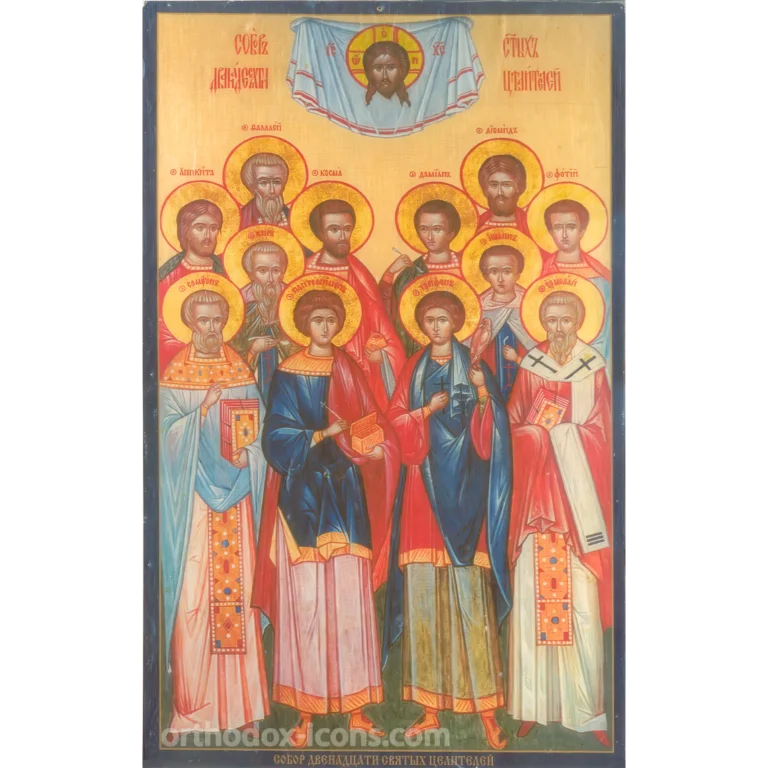
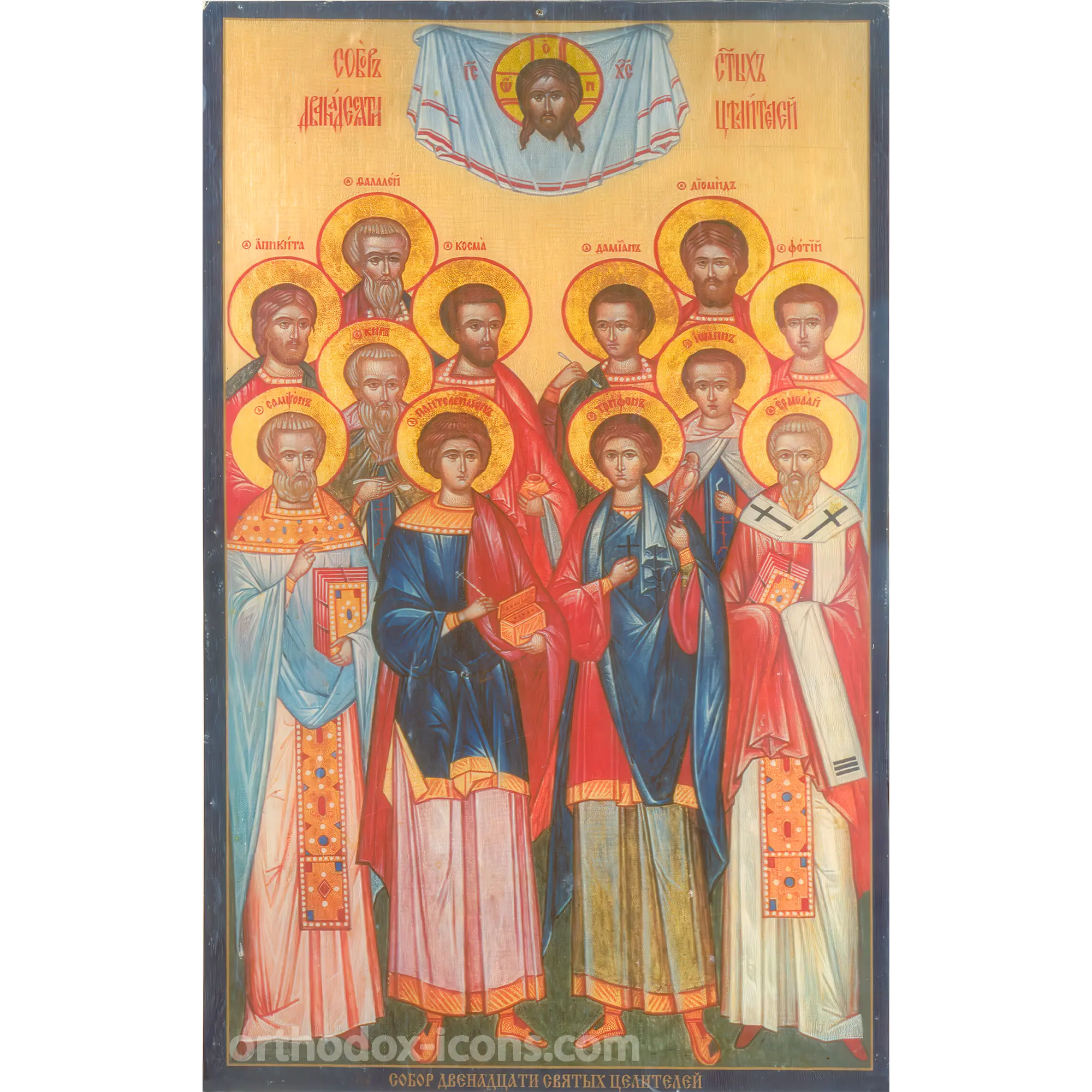
Assembly of Holy Healers Icon is a hand-painted multi-figure Orthodox icon of twelve holy healers, unmercenary physicians, martyrs, and hierarchs invoked in prayer for the sick. The Image Not Made by Hands of Christ is shown at the top, revealing Christ as the true source of all healing.
- Prayer focus: health of soul and body, strength during illness, blessing of medical treatment, support for doctors, patience, mercy, and hope in difficult circumstances.
- Materials: linden board, oak splines, chalk gesso, egg tempera, mineral pigments, gold leaf, and protective finish.
- For whom it is suitable: home icon corner, church, hospital chapel, Orthodox clinic, medical office, doctors, nurses, caregivers, and families praying for sick loved ones.
- Iconographic features: twelve holy healers, Image Not Made by Hands above, gold background, many halos, martyr crosses, medical vessels, books, and hierarchal vestments.
It is possible to paint an image in any size to order
Free shipping worldwide
Hand-painted Assembly of Holy Healers Icon is a solemn Orthodox multi-figure image that gathers twelve holy healers, unmercenary physicians, martyrs, and hierarchs before Christ. This is not a single patron saint icon, but a conciliar image of the saints whom Orthodox Christians invoke in prayer for the sick, for strength during illness, for doctors, and for consolation in difficult circumstances.
At the top of the composition is the Image Not Made by Hands of the Lord Jesus Christ. Below Him stands the assembly of holy healers with golden halos, martyr crosses, medical vessels, books, and hierarchal vestments. This arrangement shows the main theological meaning of the icon: every true healing comes from Christ, while the saints intercede before Him as helpers and prayerful advocates.
The indicated size is 30×50 cm (11.8×19.7 in) and larger. This large vertical format is important because the icon includes many figures, inscriptions, halos, garments, crosses, books, and medical attributes. Each saint should be readable as a holy person, not reduced to a decorative detail.
Features of This Icon
The main feature of this icon is its conciliar, multi-figure composition. The twelve holy healers are united by the common theme of mercy, healing, and service to those who suffer. In such an icon, the meaning is found not only in each individual saint, but also in the idea of the assembly itself: the Church shows many saints, glorified in different ways, united in service to Christ and to people.
The Image Not Made by Hands at the top is not an added ornament. It is the theological center of the icon. The holy healers are not treated as an independent source of power separated from God. They stand before Christ and help people by the grace of God. The image of the Savior above reminds the viewer that prayer before this icon is ultimately directed to the Lord.
The saints are arranged in several rows, with large golden halos that give the composition solemnity and unity. Some hold crosses as signs of martyrdom and confession of faith. Others hold medical vessels, small caskets, books, or the Gospel, pointing to healing, mercy, spiritual guidance, and pastoral care.
The gold background strengthens the prayerful character of the image. Against it, the red, blue, green, and white garments are clearly visible, while the many halos join the composition into one luminous standing before God. The lower inscription identifies the icon as the Assembly of the Twelve Holy Healers.
Iconography of the Assembly of Holy Healers
The iconography of the Assembly of Holy Healers brings together saints who are connected in Church tradition with healing, care for the sick, and prayerful intercession for health. Among them are unmercenary saints, physicians, martyrs, hierarchs, and righteous servants of God through whom the Lord showed mercy to those who suffered.
The different garments and attributes help the viewer understand the variety of their service. Saints with crosses remind us of martyrdom and faithfulness to Christ. Saints with medical vessels or caskets point to healing and merciful care. Hierarchs in episcopal vestments with books remind us of spiritual healing through the word of God, prayer, the sacraments, and pastoral care.
The Image Not Made by Hands unites all of them in one prayerful space. In Orthodox understanding, healing is not limited to the disappearance of physical illness. It also includes strengthening of the person, cleansing of the heart, reconciliation with God, patience during suffering, and help for the doctors and relatives who care for the sick.
Prayer Before the Assembly of Holy Healers
Orthodox Christians pray before this icon for health of soul and body, strength in illness, blessing of medical treatment, recovery after difficult sickness, and support for relatives who care for the sick. The image is especially meaningful when illness is not only a physical burden, but also a spiritual trial involving fear, uncertainty, weariness, and anxiety.
People ask the holy healers for help for sick children, parents, spouses, and loved ones; for wisdom for doctors; for the right choice of treatment; for patience, courage, and hope; for peace of heart during uncertainty; and for mercy, compassion, and Christian love toward those who suffer.
Prayer before this icon should not be treated as a replacement for medical treatment. In Orthodox life, prayer accompanies responsible medical care. It strengthens the sick person, supports the family, and helps medical treatment be received with discernment, gratitude, and hope.
Who This Icon Is For
The Assembly of Holy Healers Icon is suitable for a home icon corner, especially in a family where people pray for sick relatives or are going through a difficult treatment. It can also be placed reverently in the room of a sick person, where it serves as an image for prayer, consolation, and spiritual support.
The icon is especially appropriate for a church, chapel, hospital chapel, Orthodox clinic, hospice, medical office, or another place where prayers for health are regularly offered. It can also be given to a doctor, nurse, medical worker, caregiver, volunteer, or someone who devotes life and work to caring for the sick.
For personal prayer, this icon is close to those preparing for surgery, recovering after illness, caring for elderly parents, praying for a child, or seeking strength during a long and uncertain medical trial. It does not promise an easy removal of every sorrow, but it reminds the faithful of God’s mercy, the prayer of the Church, and Christian hope.
Holy Healers and the Meaning of Their Veneration
In Orthodox tradition, holy healers are saints through whom the Lord showed help to the suffering. Some were unmercenary physicians who treated people without payment and united medical skill with Christian compassion. Their example teaches that care for the sick should never be cold or merely formal; true healing service requires attention, mercy, prayer, and love.
Some holy healers were martyrs who themselves passed through suffering and therefore are especially close to the sick. Their crosses on the icon remind us that pain and sorrow can become a time of spiritual strengthening when a person does not despair, but turns to God.
Hierarchs included in such an assembly reveal another side of healing: the healing of the soul. Physical illness is often accompanied by fear, sadness, anger, loneliness, or spiritual exhaustion. The ministry of bishops and pastors is connected with prayer, blessing, the word of God, and care for the whole person.
Materials, Gilding, and Format
The icon is painted on a linden board prepared with traditional icon gesso. Oak splines may be used to strengthen the board. The faces, hands, garments, crosses, books, vessels, the Image Not Made by Hands, inscriptions, and other details are painted in egg tempera with mineral pigments.
Gilding plays an important role in this icon. The gold background and halos unite the many figures into a single solemn composition. Gold leaf helps emphasize the heavenly character of the saints’ intercession and gives the icon a clear liturgical presence.
For a multi-figure icon, the large size is essential. The 30×50 cm format allows the iconographer to work carefully on the faces, inscriptions, vestments, medical attributes, and small details without making the composition crowded.
Choosing the Size
For the Assembly of Holy Healers, 30×50 cm (11.8×19.7 in) and larger is the indicated format. A smaller size would make the many saints, inscriptions, halos, books, crosses, and medical attributes too compressed. A larger board allows the composition to remain calm, readable, and prayerful.
For a church, chapel, hospital prayer space, or iconostasis row, the size should be discussed individually. Height of placement, lighting, neighboring icons, and viewing distance all matter so that the Image Not Made by Hands above and the assembly of saints below read as one complete composition.
Placement, Blessing, and Care
The icon can be placed in a home icon corner near icons of Christ, the Mother of God, Saint Nicholas, the Guardian Angel, and family patron saints. It is also fitting for a room where a sick person is cared for, if the icon is placed reverently and used for prayer rather than as decoration.
The icon can be blessed in an Orthodox church before shipping. Free international shipping is included. Payment is made after you receive and approve the icon.
A hand-painted multi-figure icon should be protected from direct sunlight, dampness, overheating, soot, and sudden temperature changes. Do not clean the painted or gilded surface with water, alcohol, sprays, or household chemicals. Dust should be removed gently with a soft dry brush. A glazed wooden kiot is recommended, especially for a large icon with many fine details.
Questions and Answers
Who is shown on the Assembly of Holy Healers Icon?
The icon shows an assembly of twelve holy healers: physicians, unmercenary saints, martyrs, and hierarchs invoked in prayer for health and help during illness.
Why is the Image Not Made by Hands shown at the top?
The Image Not Made by Hands shows that the true source of every healing is the Lord Jesus Christ, while the holy healers intercede before Him.
What do Orthodox Christians pray for before this icon?
They pray for health of soul and body, help in illness, blessing of treatment, recovery, patience, peace of heart, and support for doctors and caregivers.
Is this icon suitable for a hospital chapel?
Yes. The Assembly of Holy Healers is especially appropriate for a hospital chapel, Orthodox clinic, parish chapel, or any place where prayers for the sick are offered.
Can this icon be given to a doctor?
Yes. It is a meaningful gift for a doctor, nurse, medical worker, caregiver, or anyone whose work is connected with caring for the sick.
What size is indicated for this icon?
The indicated size is 30×50 cm (11.8×19.7 in) and larger. Custom iconostasis sizes can also be discussed before painting.
Why is a larger size better for this icon?
The composition includes many saints, inscriptions, halos, crosses, books, and medical attributes, so a larger size keeps the image readable and prayerfully clear.
Can the icon be placed in a sick person room?
Yes. It can be placed in a sick person room if the place is reverent and the icon is used for prayer, consolation, and spiritual support.
Can the icon be blessed?
Yes. The icon can be blessed in an Orthodox church before shipping and then used for prayer for health and help from the holy healers.
How should a hand-painted icon be cared for?
Keep it away from moisture, direct sunlight, heat, soot, and damage. Dust should be removed with a soft dry brush; a glazed kiot is recommended.
| Dimensions | 30x50cm (11.8×19.7 in) |
|---|---|
| Name | Anicetus, Cosmas, Cyrus, Damian, Hermolaus, Joannes, John, Mocius, Panteleimon, Photius, Sampson, Thalelaeus, Tryphon |