The Filigree Icon of Saint Matrona
$950
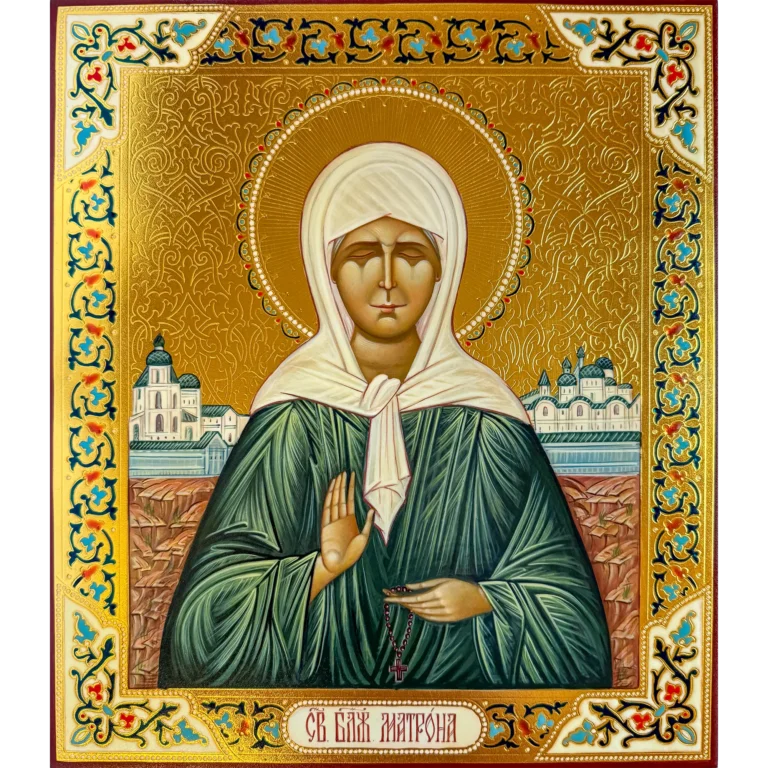
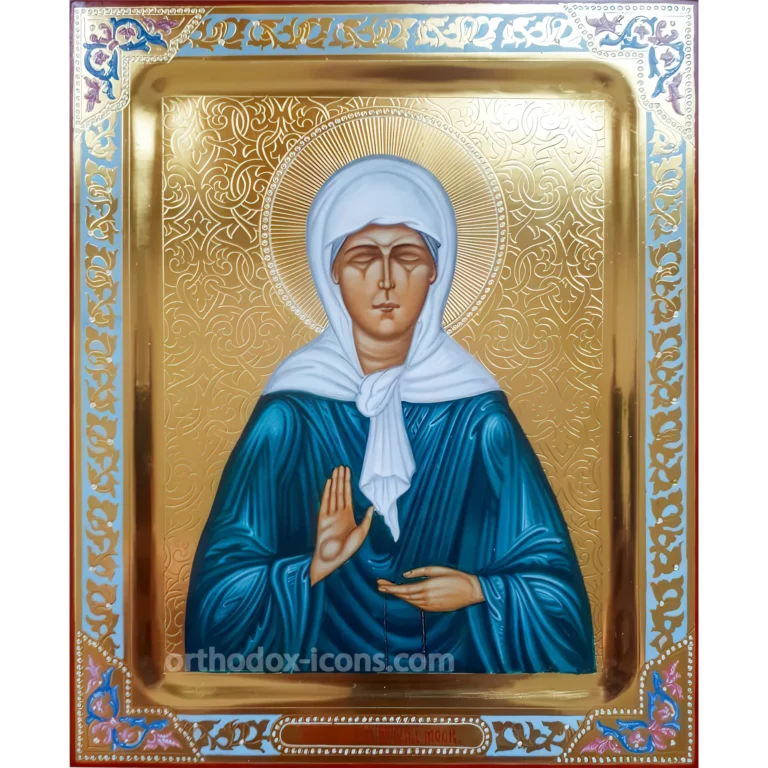
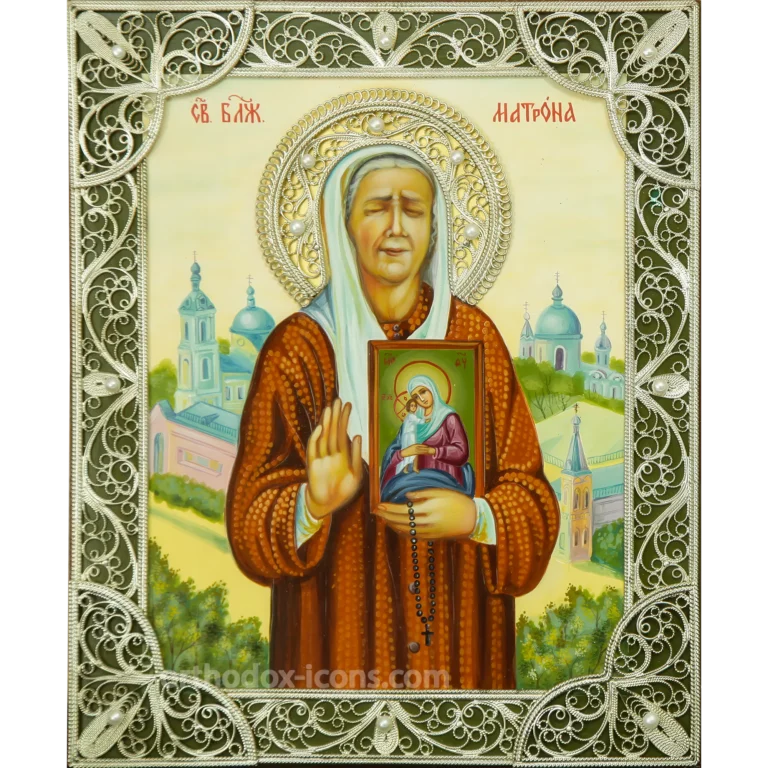
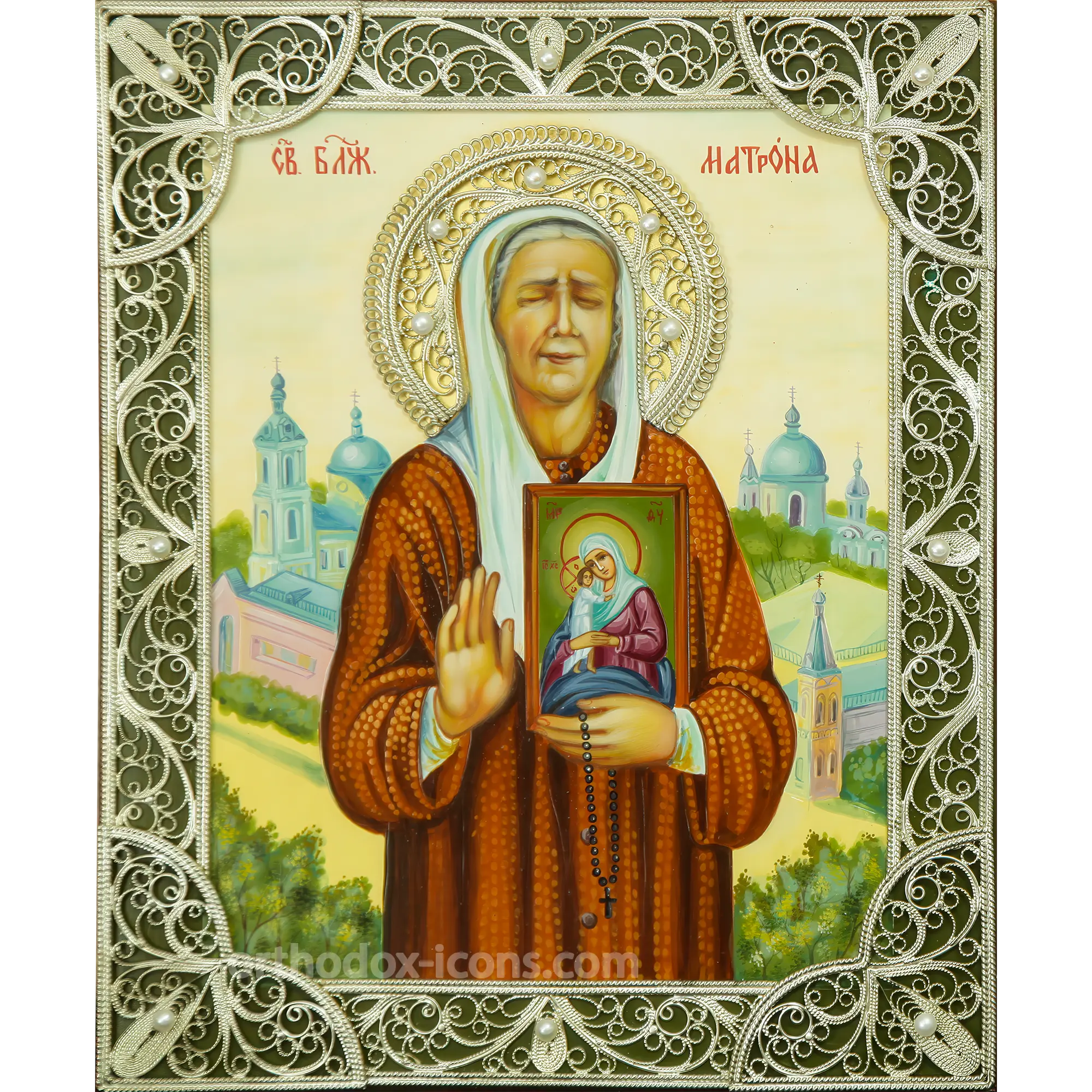
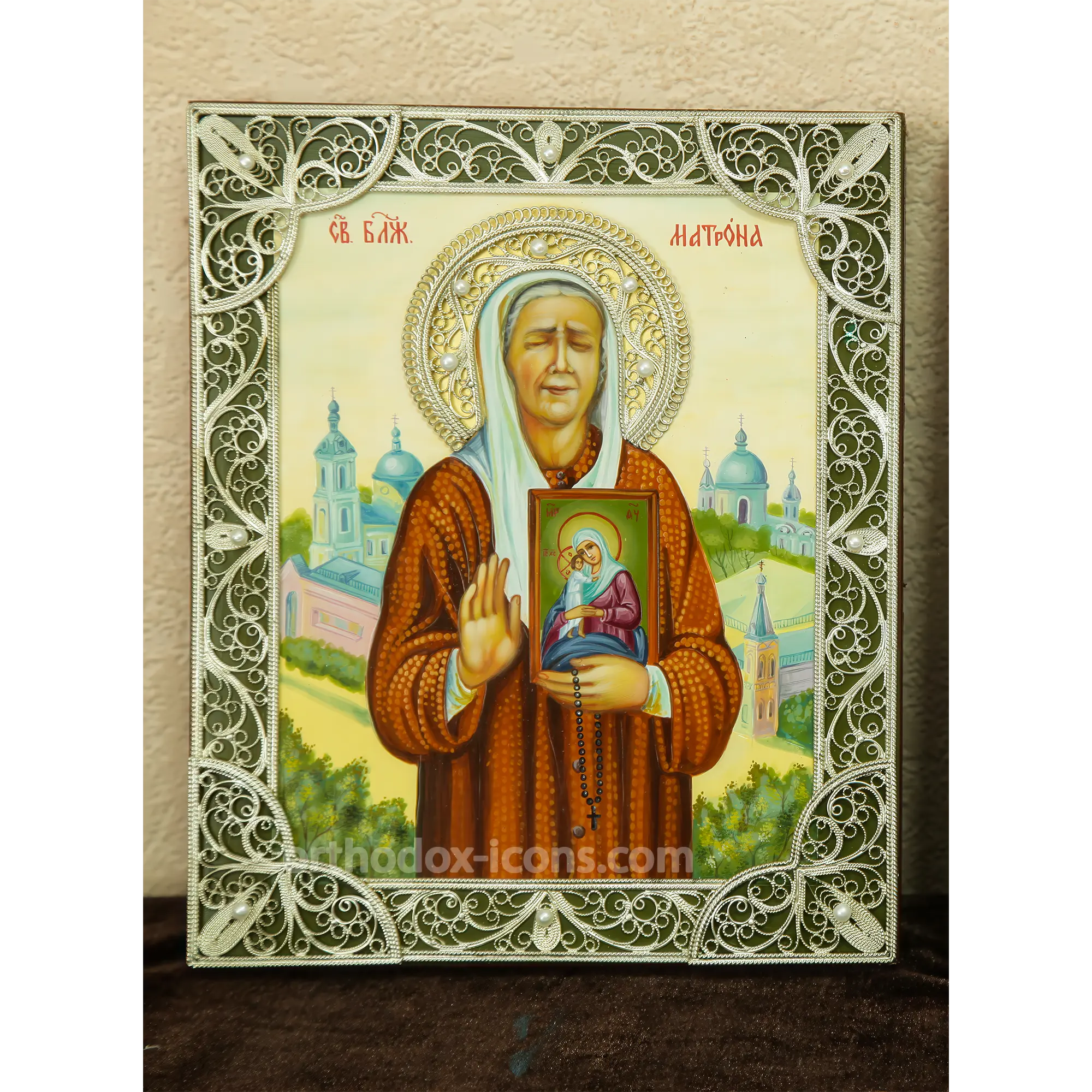
The Filigree Icon of Saint Matrona is a hand-painted Orthodox icon of Blessed Matrona of Moscow in an openwork filigree oklad. Saint Matrona is shown with closed eyes, a peaceful face, a prayer rope, and the icon of the Mother of God Seeking of the Lost in her hands, with the churches of the Protection Convent in the background.
Available size: 17×21 cm (6.7×8.3 in). Egg tempera on a linden board, natural gesso, protective linseed oil, and a handmade filigree metal oklad with pearl decoration. Free international shipping is included, with payment after you receive and approve the icon.
It is possible to paint an image in any size to order
Free shipping worldwide
The Filigree Icon of Saint Matrona is a hand-painted Orthodox icon of Blessed Matrona of Moscow, created as both a prayer image and a refined work of church art. The icon unites calm mineral painting with a richly detailed filigree oklad, so the face of the saint remains spiritually quiet while the surrounding ornament gives the image a solemn, festive presence.
Saint Matrona is painted in a soft academic manner, with closed eyes and a peaceful expression. She wears a white head covering and a brown garment with golden highlights. Behind her figure there is a gentle architectural landscape: church domes, trees, and a light sky recalling the Protection Convent in Moscow, where her relics are venerated.
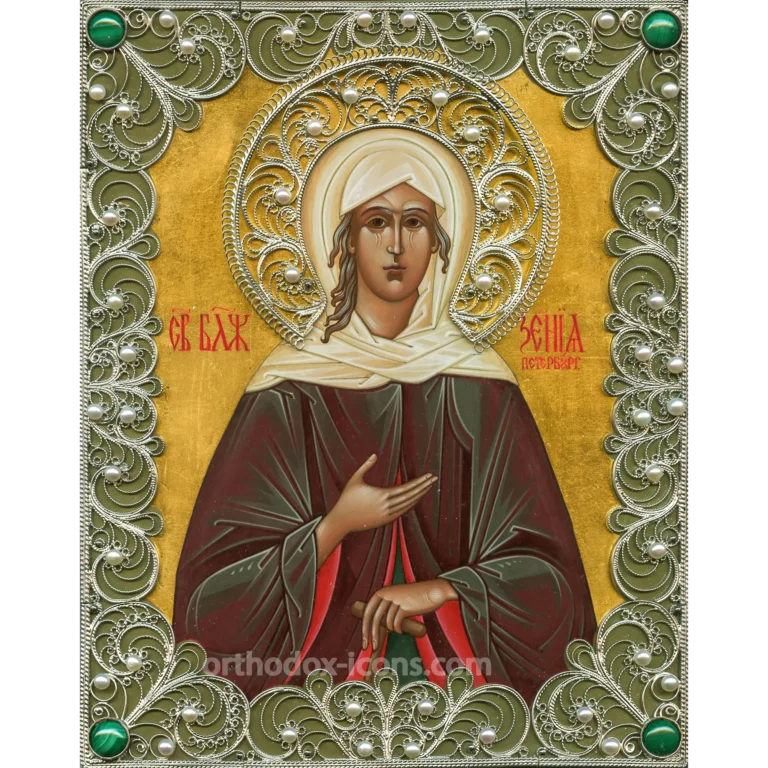
The most distinctive feature of this icon is the openwork filigree decoration. The wide borders of the board and the halo of Saint Matrona are covered with delicate metal lace made from very fine wire. Pearls are set into the ornament, especially around the corners and the halo, giving the icon a noble and ceremonial appearance without overpowering the painted face.
Blessed Matrona of Moscow, Matrona Dmitrievna Nikonova (1881-1952), bore a life of severe suffering transformed by grace. She was born blind and later lost the use of her legs, yet she became known for prayer, consolation, spiritual insight, and help to those who came to her in grief. In Orthodox devotion she remains one of the most beloved intercessors for families, the sick, the poor, and people facing desperate circumstances.
Technique: Filigree and Mineral Egg Tempera
This icon requires the work of both an icon painter and a jewelry master. The painted image is made in the tradition of hand-painted Orthodox icons, while the filigree oklad is assembled separately with great precision and then fitted to the icon.
| Icon board | Solid dried linden wood with inserted support battens on the reverse side to help protect the board from warping. |
| Painting | Natural mineral egg tempera on traditional gesso. The pigments are prepared from ground mineral colors and bound with egg yolk. |
| Filigree oklad | The borders and halo are made from many small pieces of fine twisted jewelry wire, usually nickel silver or silvered metal, arranged and soldered into an openwork pattern. |
| Pearl decoration | White pearl beads, or cultivated river pearls by agreement, are set into the filigree to give the icon a refined and festive character. |
| Protection | The painted surface is protected with natural linseed oil before the decorative metal oklad is mounted. |
| Available size | 17×21 cm (6.7×8.3 in). |
Iconography: Saint Matrona and the Icon Seeking of the Lost
This iconographic version is especially meaningful because Saint Matrona holds the icon of the Mother of God Seeking of the Lost. According to the tradition of her life, Matrona deeply venerated this image of the Theotokos. The small icon in her hands therefore is not a decorative detail, but a direct link with her prayer, her compassion, and her care for people in danger or despair.
The closed eyes of Saint Matrona show her historical blindness. At the same time, in Orthodox iconography they point to her inner vision: she did not see faces with physical sight, yet she was remembered for spiritual discernment, prayerful wisdom, and her ability to comfort those who came to her.
The black prayer rope visible near the icon of the Mother of God speaks of her constant prayer. The church architecture in the background recalls the Protection Convent, the place where many faithful come to venerate her relics. The openwork halo, made from filigree, presents sanctity not as heavy earthly luxury, but as a light-bearing ornament surrounding the saint.
Prayer Meaning of the Icon
Orthodox Christians turn to Blessed Matrona of Moscow in many difficult circumstances: illness, infertility, family conflict, poverty, lack of work, housing problems, and moments when a person feels abandoned or powerless. She is loved as a quick helper because her earthly life was full of suffering, yet she answered people with patience, compassion, and trust in God.
The presence of the Theotokos icon Seeking of the Lost gives this image an additional prayerful emphasis. It is especially appropriate for prayer for people who have fallen into addiction, despair, destructive relationships, spiritual confusion, or other forms of danger. Parents often pray to Saint Matrona for children who have lost their way, and families ask her help for those who are missing, seriously ill, or in deep sorrow.
Feast Days and Gift Meaning
The memory of Blessed Matrona of Moscow is especially celebrated on May 2, the day of her repose; March 8, the uncovering of her relics; and November 22, her name day. A hand-painted icon with a filigree oklad is not an ordinary gift. It is a family shrine and a serious devotional object intended to remain in the home for many years.
This icon may be chosen as a special gift for parents, a godmother, a spiritual mentor, newlyweds, or close family members. Because of the filigree and pearl ornament, it also has the character of an heirloom: a reverent icon made for prayer, remembrance, and long-term family use.
Placement and Care
A filigree icon should be placed in a clean and stable part of the home icon corner, away from direct sunlight, heaters, fireplaces, and high humidity. The openwork metal decoration is beautiful but delicate. It can collect dust in the small spaces of the filigree, and rough cleaning can damage the wire ornament.
For this reason, the safest way to keep such an icon is inside a glazed kiot. Glass protects the filigree, pearls, and painted surface from dust, oxidation, and accidental touch. Do not rub the filigree with cloth, and do not use liquid polish. If dust appears, it should be removed only with great care, using a very soft brush or gentle air flow.
Ordering and Shipping
The icon is made by hand, and the filigree work requires additional time. The usual production time for a filigree icon is about two months. Free international shipping is included, and payment is made after you receive and approve the icon.
Questions and Answers
What is filigree on an Orthodox icon?
Filigree is a fine jewelry technique in which very thin twisted wire is shaped by hand into an openwork lace pattern. On this icon, the filigree forms the decorative oklad and halo around Saint Matrona.
How is filigree different from chasing or basma?
Chasing and basma usually create relief on a sheet of metal. Filigree is different: it is built from separate pieces of wire, creating a transparent, lace-like metal ornament placed over and around the painted image.
Which icon does Saint Matrona hold in her hands?
Saint Matrona holds the icon of the Mother of God known as Seeking of the Lost. This detail is connected with her life and with her special veneration of this Theotokos icon.
When do Orthodox Christians pray before this icon?
People traditionally ask Saint Matrona for help in illness, family troubles, infertility, poverty, and difficult life situations. Because she holds the icon Seeking of the Lost, the image is also associated with prayer for those in addiction, despair, danger, or spiritual confusion.
Why is Saint Matrona shown with closed eyes?
Blessed Matrona was born blind. In Orthodox iconography her closed eyes point not only to this historical fact, but also to her gift of spiritual sight, compassion, and discernment.
Are the pearls on the oklad natural?
The filigree oklad may be decorated with high-quality pearl beads or, by agreement, cultivated river pearls. The exact pearl option can be discussed before the icon is made.
Will the metal filigree darken over time?
The filigree is made from jewelry metal such as nickel silver or silvered metal. Like silver, it may develop a gentle patina over time, which can make the ornament look deeper and more antique.
How should a filigree icon be cleaned?
The filigree should not be rubbed with cloth or cleaned with liquid polish. Dust may be removed very carefully with a soft brush or gentle air flow, and the safest option is to keep the icon in a glazed kiot.
What churches are shown in the background?
The background refers to the Protection Convent in Moscow, where the relics of Blessed Matrona are venerated by many Orthodox faithful.
Should the icon be blessed in church?
Yes. Even when an icon is painted according to Orthodox tradition, it is customary to bring a new icon to church so that a priest can bless it with the appointed prayer and holy water.
| Dimensions | 17x21cm (6.7×8.3 in) |
|---|---|
| Name | Matrona |