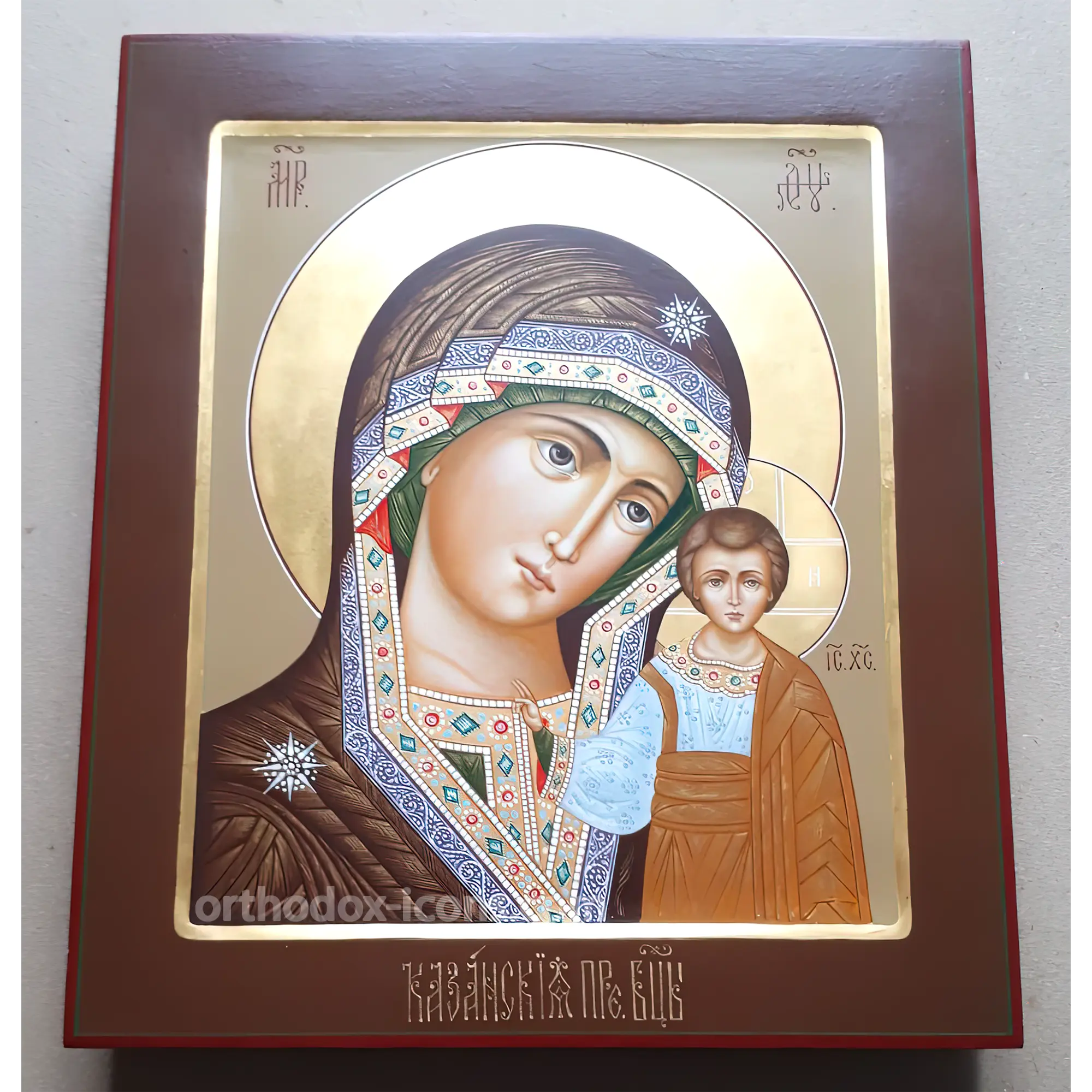
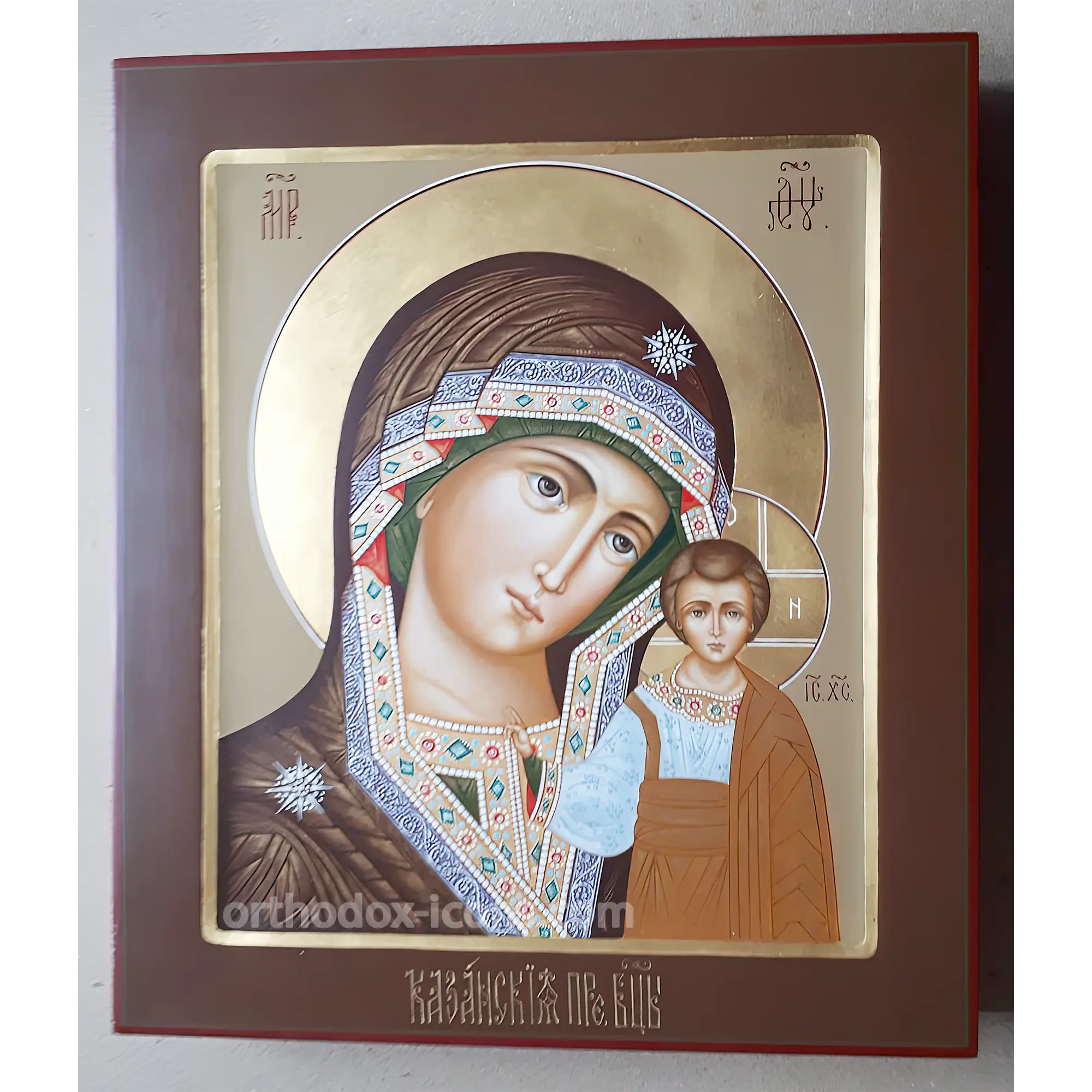
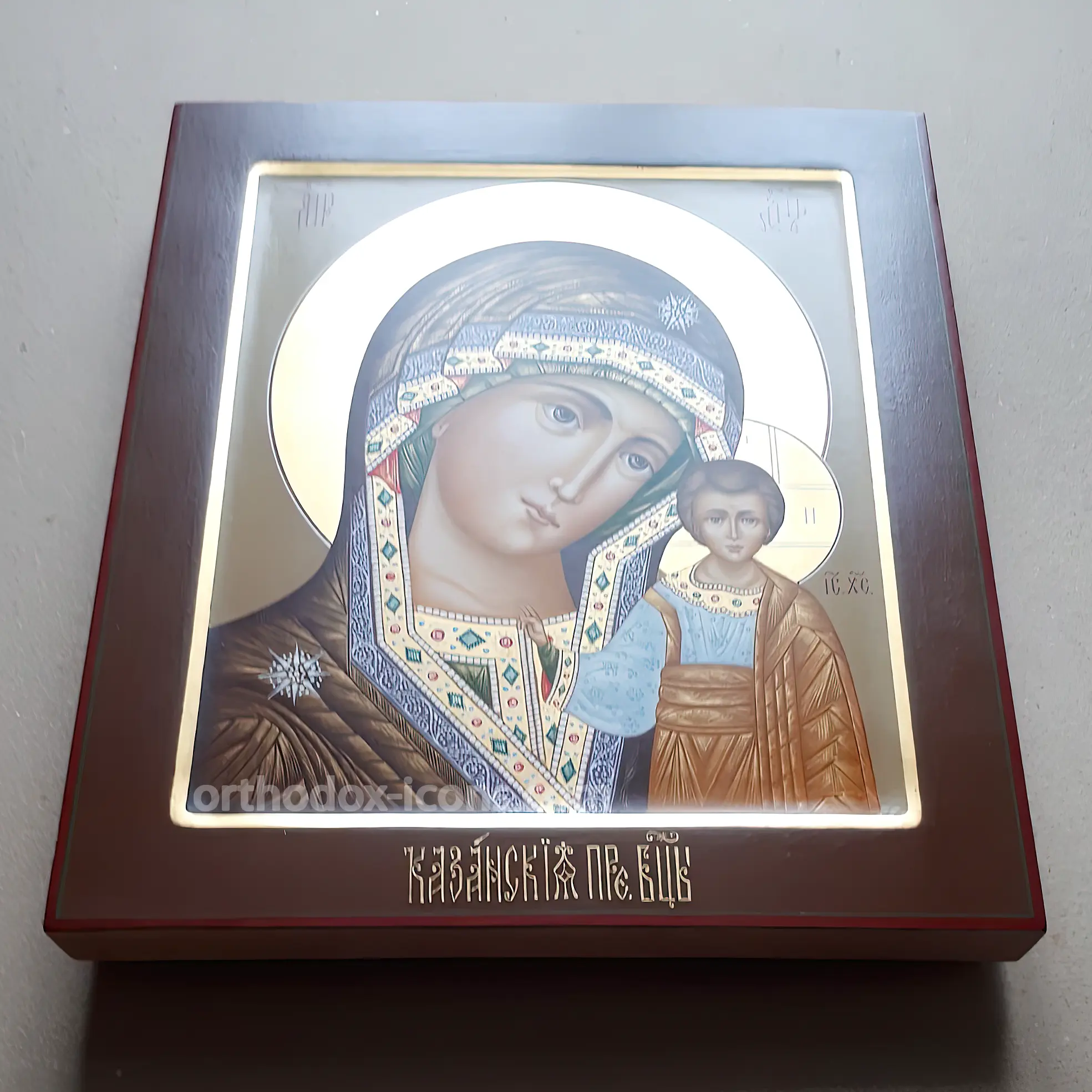
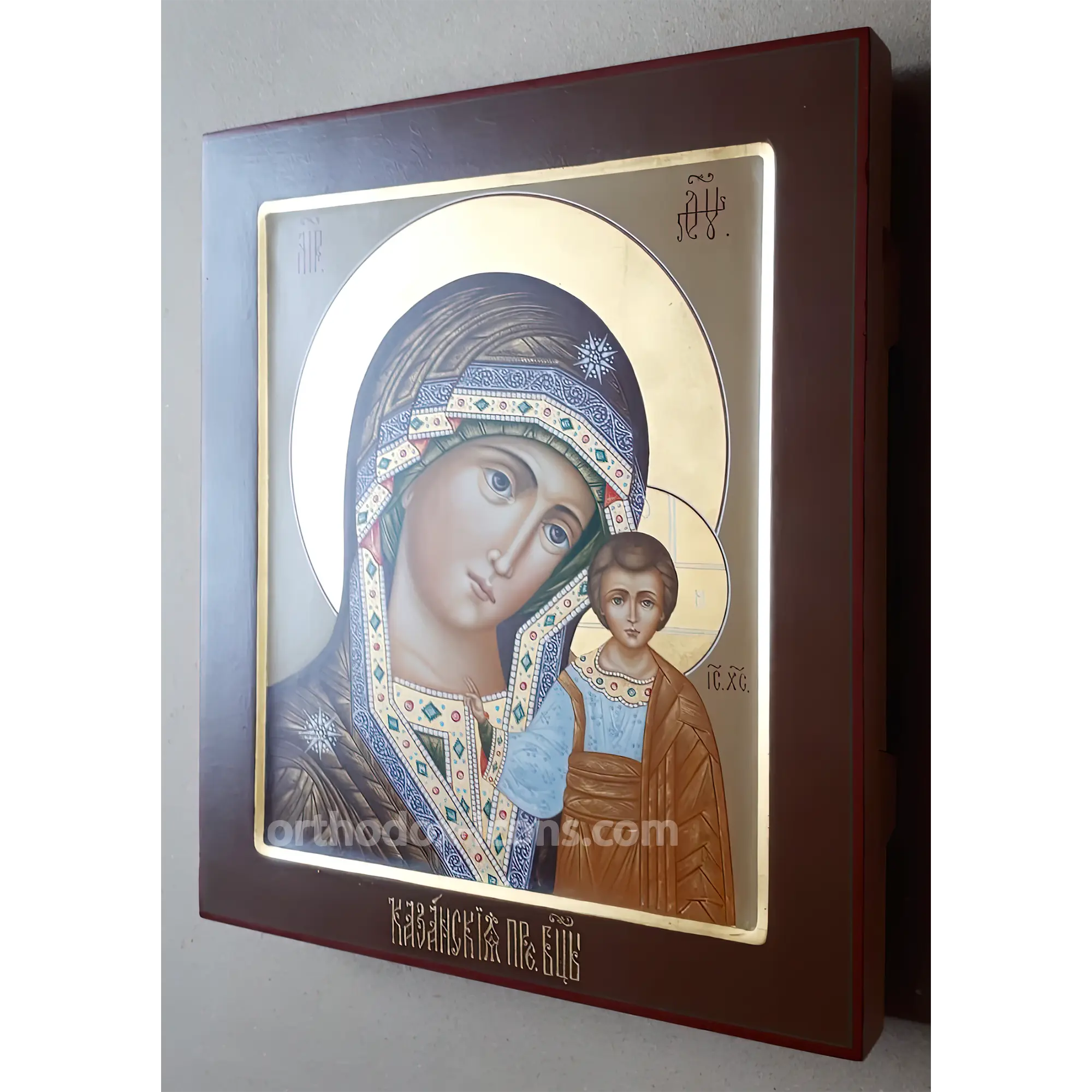
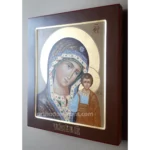
Virgin Mary Kazan Orthodox Icon
Price range: $500 through $1600
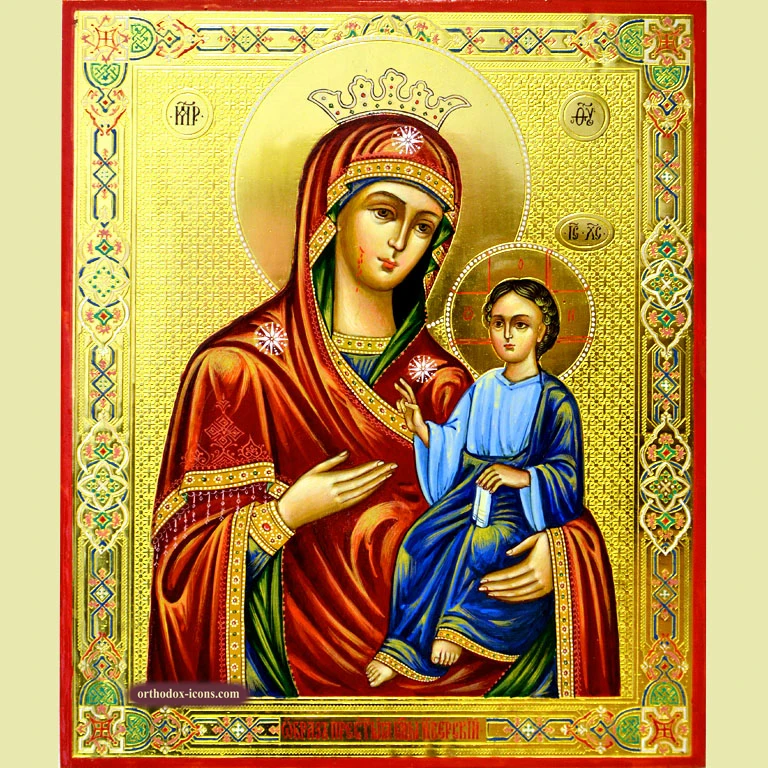
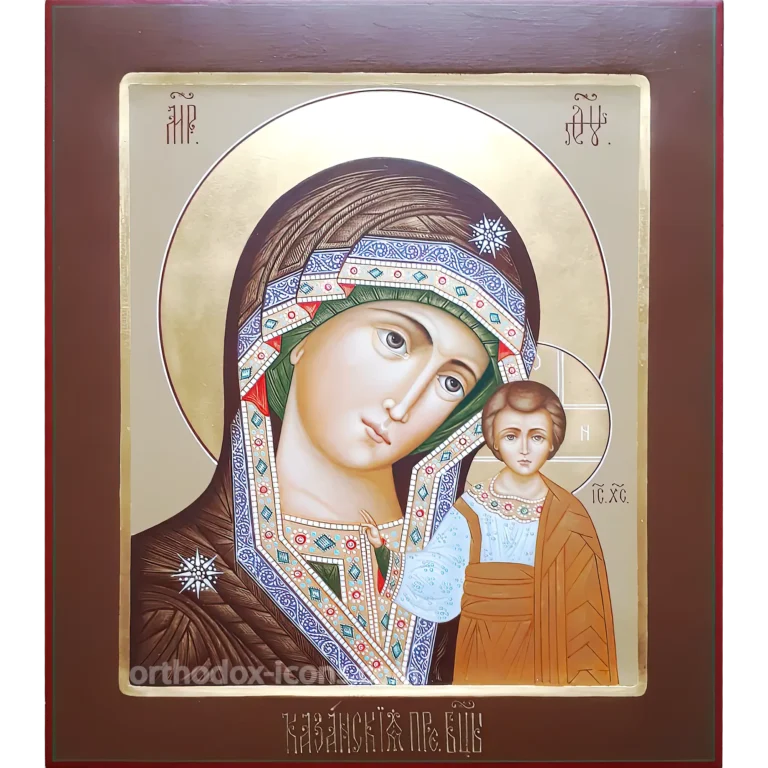
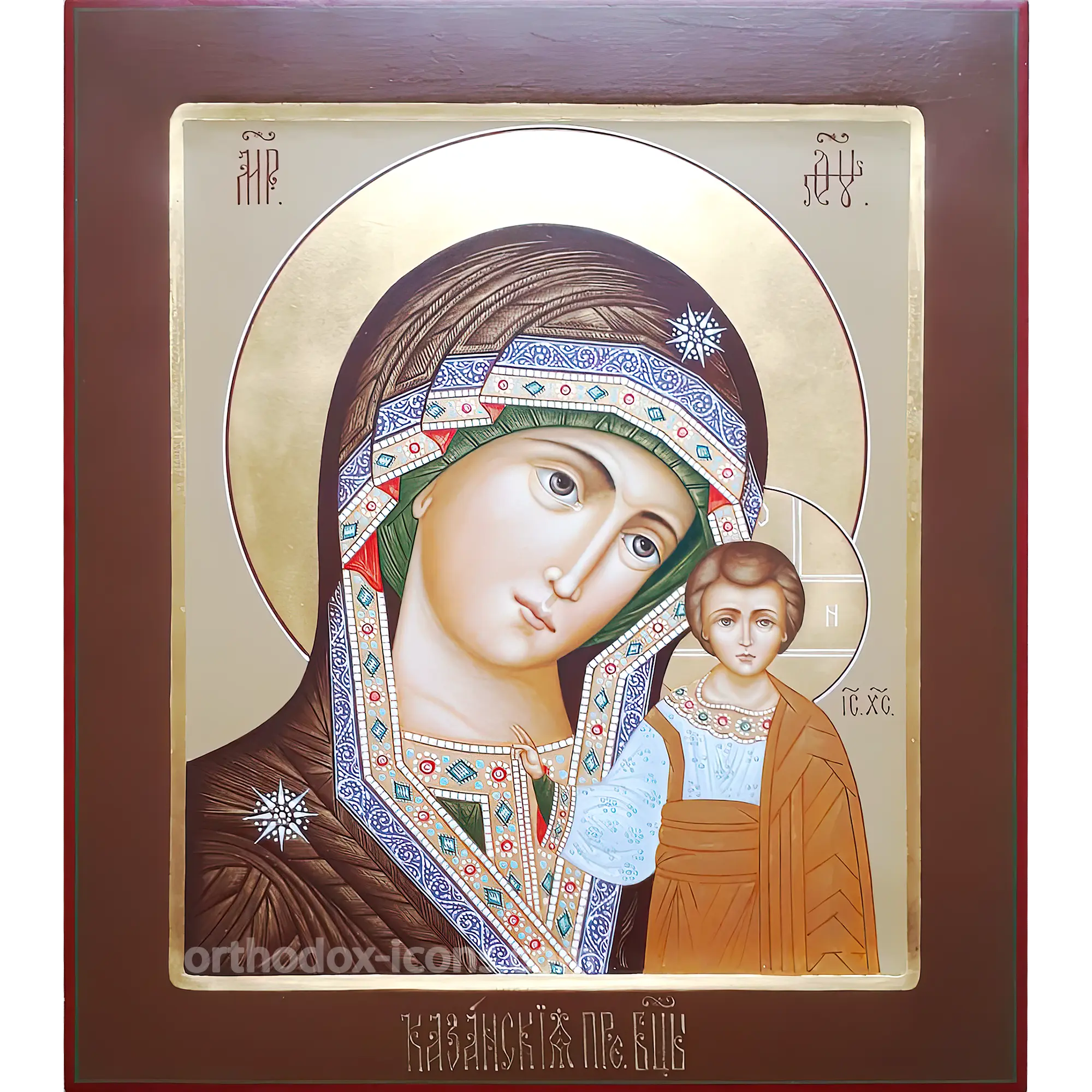
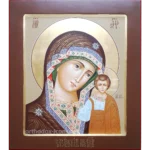
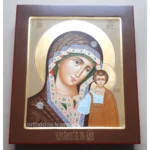
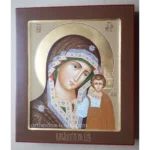
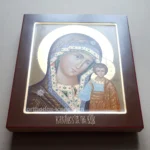
Virgin Mary Kazan Orthodox Icon is a hand-painted Kazan icon with a smooth 23K gold leaf (960 purity) kovcheg, dark chocolate margins, and red graphya halos.
Available sizes: 17×21 cm (6.7×8.3 in), 20×24 cm (7.9×9.4 in), 27×31 cm (10.6×12.2 in), 30×40 cm (11.8×15.7 in). Multicolored maforion ornament imitating pearls, rubies, and sapphires, soft plavi faces, mineral egg tempera, linden board with kovcheg, linen, chalk gesso, and oak splines. Free international shipping, with payment after delivery.
It is possible to paint an image in any size to order
Free shipping worldwide
Virgin Mary Kazan Orthodox Icon is a hand-painted Kazan icon of the Mother of God with a strong contrast between a luminous gold kovcheg and deep dark margins. The central field is covered with smooth polished 23K gold leaf (960 purity), while the wide margins are painted in a rich dark chocolate tone.
This version is strict, expressive, and deliberately focused. It does not rely on abundant floral fields or heavy relief decoration. Instead, the whole visual force comes from the meeting of light and shadow: the shining gold center seems to come forward from the dark frame, while the faces of the Theotokos and Christ remain calm, warm, and prayerfully near.
The maforion of the Mother of God is enriched with a multicolored border that recalls precious embroidery with pearls, rubies, and sapphires. This detail gives the icon a refined ceremonial accent without disturbing the sober character of the composition.
The Kazan Icon Found in 1579
The Kazan icon was found in 1579, after a great fire destroyed much of Kazan. According to Orthodox tradition, the Mother of God appeared three times in a dream to the young girl Matrona, telling her where the icon was hidden beneath the ashes of her burned home.
At first, the adults did not take the child’s dream seriously. Yet the command was repeated, and finally Matrona and her mother went to the ashes of their home and began to dig. At about a meter below the surface, they found the icon wrapped in an old cloth sleeve.
The image had not been harmed by the fire. Its colors were remembered as bright and fresh, as if the icon had only just been painted. This discovery on the ashes became a sign of hope: where a home had been destroyed, an image of the Mother of God was revealed.
The icon was carried in procession to the church, and during that first procession two blind men, Joseph and Nikita, received their sight after venerating the holy image. For this reason, the Kazan icon is approached in prayer for healing of the eyes and also for the healing of spiritual blindness.
Later, in 1612, a copy of the Kazan icon accompanied the militia of Kuzma Minin and Prince Dmitry Pozharsky during the liberation of Moscow. After fasting and prayer before the Mother of God, the city was freed from occupation. This historical memory strengthened the Kazan icon as an image of protection, repentance, endurance, and hope in times of national trial.
Shoulder-Length Hodegetria
The Kazan icon belongs to the Hodegetria type, but in a shortened shoulder-length form. The hands of the Mother of God are not visible, and the composition brings the holy faces close to the one who prays.
This close framing changes the emotional tone of the image. The viewer does not stand before a distant scene, but before a face-to-face presence. The Theotokos appears near, attentive, and compassionate, as if listening to the grief, fear, gratitude, and petitions brought before her.
Christ is shown frontally, blessing with His right hand. His direct and solemn gaze presents Him as the heavenly King and Savior, not merely as an infant. The gesture of blessing makes the icon not only an image of maternal care, but also an image of divine authority and mercy.
The halos are not decorated with raised relief. They are carefully outlined by thin red graphya lines over the smooth gold, and the cross is drawn within the halo of Christ. This restraint supports the strict character of the icon: the sacred signs are present, but they do not become ornamental excess.
Gold Kovcheg and Dark Margins
The recessed central part of the board, the kovcheg, is covered with mirror-polished 23K gold leaf (960 purity). The broad margins are painted in a dark chocolate color, creating a strong visual boundary around the sacred image.
This contrast of gold and darkness is the main artistic idea of the icon. The margins keep the composition sober and grounded, while the gold center appears to shine outward from within. The effect is dramatic without being theatrical.
The dark fields also give the icon a more monumental feeling. They work like a quiet frame, preventing the eye from wandering and guiding attention toward the center, where the faces and blessing hand are placed.
The border of the maforion is decorated with a complex geometric and multicolored ornament, imitating precious embroidery with pearls, rubies, and sapphires. The ornament is not only decorative; it marks the garment of the Theotokos as royal and sacred, while remaining within the discipline of Orthodox icon painting.
The warm, layered facial painting is made in soft plavi, with gentle transitions of light and shadow. This brings human tenderness into the otherwise strict composition and prevents the gold and dark fields from feeling cold.
Prayer and Family Use
The Kazan Mother of God is traditionally approached in prayer for marriage, peace in the family, protection of children, healing, and support in grief or difficult decisions. It is one of the most familiar Orthodox icons for domestic prayer because its meaning is closely tied to family life.
In Orthodox custom, the Kazan icon is often used to bless a bride before marriage. Together with an icon of Christ, it can form a wedding icon pair, asking God’s blessing on the new family and the intercession of the Mother of God for fidelity, patience, and peace.
Parents pray before the Kazan icon for the birth and protection of children, for safe pregnancy, for the health of infants, and for teenagers to be guarded from harmful influences. The icon is also approached in times of illness, especially in prayers connected with eye diseases and the need for inner clarity.
This particular icon is suitable for a home iconostasis, a wedding blessing, or as a strict Orthodox gift for someone who prefers a strong, canonical image with restrained decoration. Its dark margins and shining kovcheg give it a serious, contemplative presence.
Technique and Materials
The icon is painted on a solid linden board with a traditional kovcheg. Linen is applied to the surface, followed by natural chalk gesso. Oak splines are inserted into the back of the board to help protect the wood from warping as temperature and humidity change.
The central kovcheg is gilded with 23K gold leaf (960 purity) and polished to a smooth mirror-like shine. This gold is not imitation metal leaf; genuine high-purity gold does not oxidize, blacken, or turn green over time.
The painting is made in natural mineral egg tempera. Pigments such as earth colors and mineral blues or greens are ground finely and mixed with egg medium. This traditional technique gives the icon a calm, matte depth and long-lasting color.
The dark chocolate margins, the warm facial painting, and the multicolored garment detail are all part of one balanced design. The icon is strict, but not plain; ornament is concentrated where it serves the image.
Icon Characteristics
| Name | Virgin Mary Kazan Orthodox Icon |
| Iconographic type | Hodegetria, Kazan shoulder-length type |
| Composition | The Kazan Mother of God with Christ blessing frontally |
| Available sizes | 17×21 cm (6.7×8.3 in), 20×24 cm (7.9×9.4 in), 27×31 cm (10.6×12.2 in), 30×40 cm (11.8×15.7 in); church formats by agreement |
| Central field | Smooth polished 23K gold leaf (960 purity) in the kovcheg |
| Margins | Deep dark chocolate painted margins |
| Halos | Red graphya outlines over smooth gold |
| Garment detail | Multicolored ornament imitating jeweled embroidery with pearls, rubies, and sapphires |
| Painting | Natural mineral egg tempera with soft plavi faces |
| Board | Linden board with kovcheg, linen, chalk gesso, and inserted oak splines |
| Purpose | Wedding blessing, home iconostasis, family prayer, healing prayer, or strict Orthodox gift |
Materials and Care
The icon is painted with natural mineral egg tempera on a linden board prepared with linen and chalk gesso. Oak splines are inserted into the back of the board to help keep the wooden base stable.
The smooth gold in the kovcheg is sensitive to scratches. Do not wash the icon, wipe it with damp cloths, or use cleaning products. Dust may be removed only with a very soft dry brush. For long-term protection, especially in a home with changing humidity or dust, a glazed kiot is recommended.
Ordering, Shipping, and Payment
The icon is available in several sizes, from small home formats to larger versions suitable for a prominent prayer corner. Free international shipping is included, with payment after delivery.
Questions and Answers
What is the Virgin Mary Kazan Orthodox Icon?
It is a hand-painted Kazan icon of the Mother of God in the shoulder-length Hodegetria type, made for family prayer, home veneration, and Orthodox blessing.
What is distinctive about this version?
This version has a smooth gold kovcheg, dark chocolate margins, red graphya halos, and rich painted garment ornament imitating jeweled embroidery.
Why is only the center gold while the margins are dark?
The dark margins work like a strict visual frame. They make the smooth gold kovcheg appear brighter and draw the prayerful gaze toward the holy faces.
What is graphya on the halos?
Graphya is a fine contour line; here the halos are outlined in red over the smooth gold rather than made with raised relief.
What does the garment ornament imitate?
The border of the maforion imitates precious embroidery with pearls, rubies, and sapphires through multicolored decorative painting and enamel-like detail.
Is this icon suitable for a wedding blessing?
Yes. The Kazan icon is traditionally used to bless marriage, especially the bride, and is a meaningful icon for a wedding pair or home icon corner.
What sizes are available?
Available sizes are 17×21 cm (6.7×8.3 in), 20×24 cm (7.9×9.4 in), 27×31 cm (10.6×12.2 in), and 30×40 cm (11.8×15.7 in).
What materials are used?
The icon is painted with natural mineral egg tempera on a linden board with kovcheg, linen, chalk gesso, oak splines, and 23K gold leaf (960 purity).
How should this icon be cared for?
Smooth gold is sensitive to scratches. Do not wash or wipe it with damp cloths; dust may be removed only with a very soft dry brush.
How are shipping and payment arranged?
Free international shipping is included, with payment after delivery.
| Dimensions | 17x21cm (6.7×8.3 in), 20x24cm (7.9×9.4 in), 27x31cm (10.6×12.2 in), 30x40cm (11.8×15.7 in) |
|---|---|
| Name | Mary |