Iveron Icon of the Mother Mary
$1500
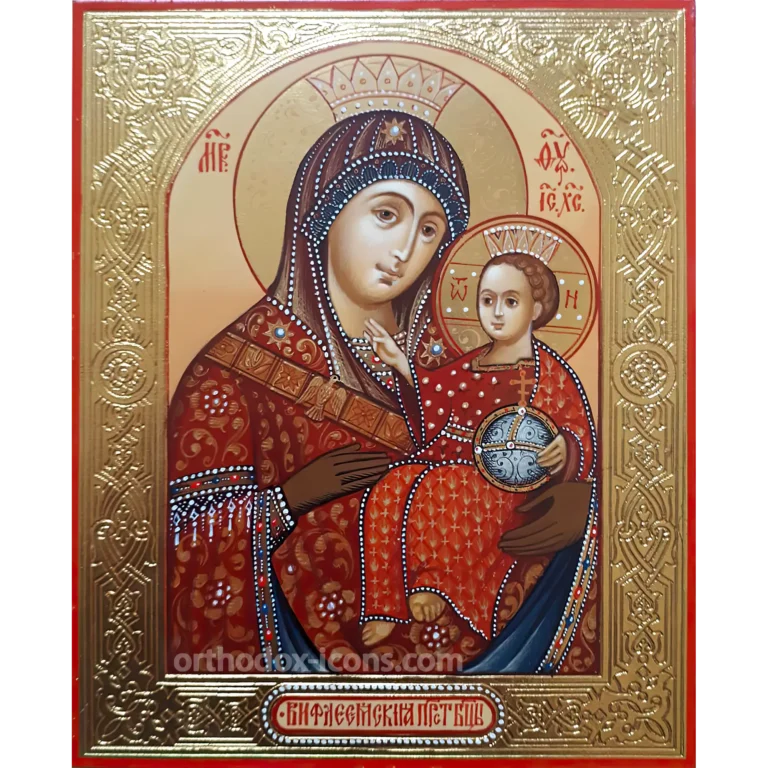
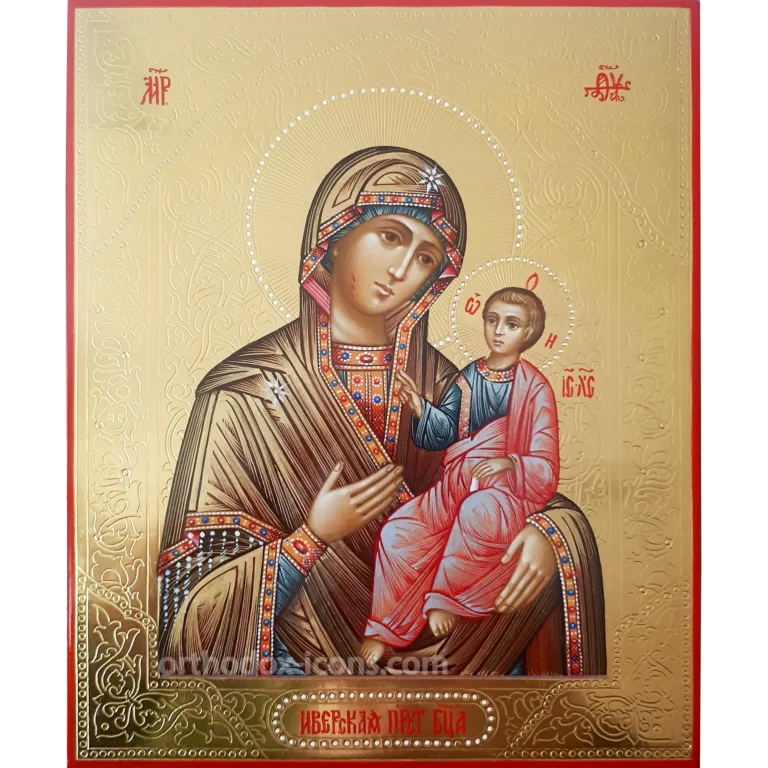
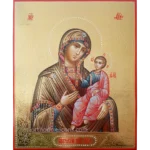
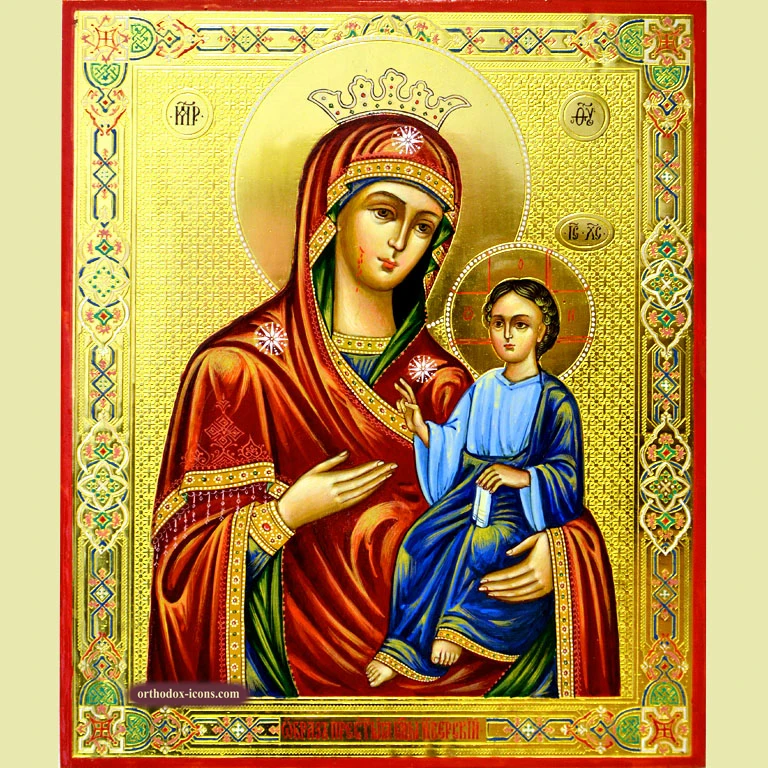
Iveron Icon of the Mother Mary is a crowned Portaitissa, the Gatekeeper, with the traditional wound on the cheek of the Theotokos.
Available size: 27×31 cm (10.6×12.2 in); larger church formats by agreement. 23K gold leaf (960 purity), fine hand engraving, multicolored cold enamel margins, gold assist, and egg tempera. Free international shipping, with payment after delivery.
It is possible to paint an image in any size to order
Free shipping worldwide
Iveron Icon of the Mother Mary is a hand-painted Iveron icon of the Theotokos, known in Orthodox tradition as the Portaitissa, or Gatekeeper. This 27×31 cm (10.6×12.2 in) version is not a plain copy: it is made as a richly ornamented shrine, with a crowned Mother of God, engraved gold, enamel margins, and a deep ceremonial color palette.
The Iveron image is loved as a protector of the home and family. It is often placed near the entrance, where the faithful ask the Mother of God to guard the household from harm, evil intentions, fire, theft, and spiritual danger.
The Iveron Icon and Its Athonite History
According to Orthodox tradition, the earliest Iveron image was painted by the holy Evangelist Luke. Its most famous history begins during the ninth-century iconoclastic persecutions in Byzantium, when sacred images were being destroyed.
The icon was kept in the house of a pious widow near Nicaea. When armed iconoclasts entered her home, one soldier struck the face of the Mother of God with a spear. Blood flowed from the wound on the icon, and this miraculous sign became one of the defining marks of the Iveron image.
To save the holy image, the widow placed it into the sea. The icon did not sink, but stood upright on the water and moved westward. Later, the monks of the Iveron Monastery on Mount Athos saw a pillar of fire rising from the sea, and the icon was found at its base.
After the elder Gabriel received the icon, the monks placed it in the main church. Yet each morning it was found above the monastery gates. The Mother of God revealed that she wished to guard the monastery herself, and the icon became known as Portaitissa, the Gatekeeper.
A Crowned Iveron Image
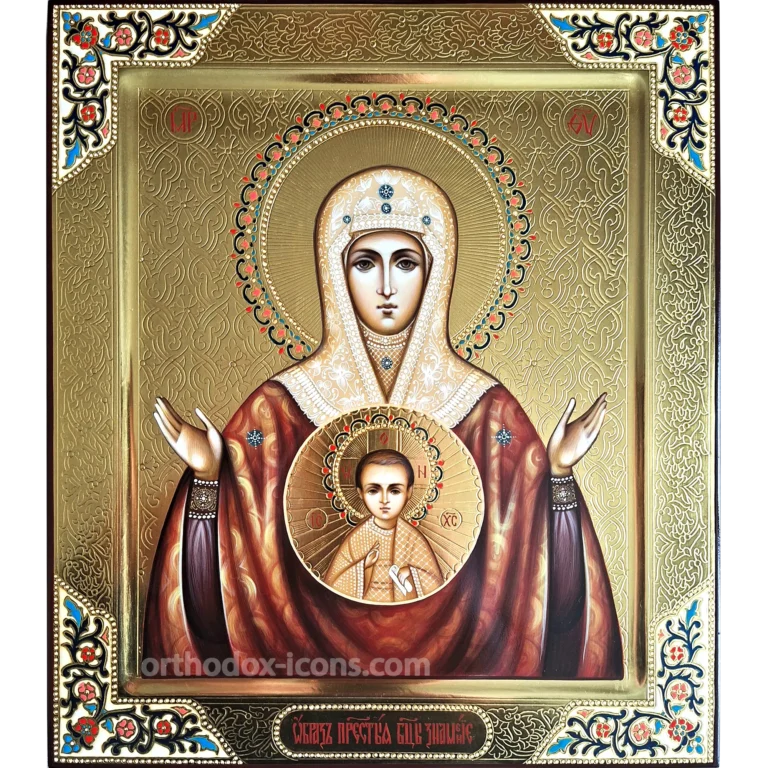
The main iconographic structure is Hodegetria: the Mother of God directs the faithful toward Christ, who blesses and holds the scroll of divine teaching. Her gaze is frontal and sober, meeting the viewer with both majesty and compassion.
This particular version includes a crown on the head of the Theotokos. The crown emphasizes her royal dignity as Queen of Heaven and gives the image a solemn, festive character. The deep red maforion, gold edging, and stars of ever-virginity strengthen this royal impression.
The wound on the cheek remains the key canonical sign of the Iveron icon. It is a memory of the spear blow and a witness that the holy image is not merely ornament, but part of the living Orthodox tradition of veneration.
Prayer and Placement in the Home
The Iveron Mother of God is prayed to as a guardian of the threshold. Many Orthodox faithful place this icon above the entrance door or on a wall opposite the entrance, asking the Theotokos to bless those who enter and protect the home from evil.
The icon is also approached in prayer for healing from serious illness, comfort in grief, deliverance from slander or persecution, help in difficult circumstances, and blessing for the household. In Athonite memory, the Iveron image is also connected with providential care and protection from want.
Engraved Gold and Enamel Margins
The inner background is covered with 23K gold leaf (960 purity) and worked by hand with fine engraving, also called tsirovka. The engraved geometric pattern with floral elements catches the light and gives the gold surface a refined, jewel-like shimmer.
The wide margins are covered with a dense multicolored enamel pattern. Green, blue, red, and other tones create the impression of precious stones set into the border of the icon.
The garments of Christ and the borders of the Theotokos’ maforion are painted with gold assist, thin lines of gold that express divine light within the traditional language of Orthodox iconography.
Icon Characteristics
| Name | Iveron Icon of the Mother Mary |
| Other name | Portaitissa, the Gatekeeper |
| Iconographic type | Hodegetria with crown |
| Visible features | Wound on the cheek, crowned Theotokos, Christ with scroll and blessing gesture |
| Available size | 27×31 cm (10.6×12.2 in); larger church and iconostasis sizes by agreement |
| Background | 23K gold leaf (960 purity) with fine hand engraving |
| Margins | Dense multicolored cold enamel ornament |
| Painting | Hand-painted egg tempera with natural mineral pigments and gold assist |
| Board | Solid linden board with linen, chalk gesso, and inserted oak splines |
| Purpose | Home protection, family shrine, house blessing, wedding gift, or distinguished Orthodox gift |
Materials and Care
The icon is painted on a solid linden board prepared with linen and multiple layers of chalk gesso. Oak splines are inserted into the back to help the board remain stable as indoor humidity changes.
The painting is made with egg tempera and natural mineral pigments. Because the icon includes gold leaf, engraving, and cold enamel, it should be kept away from moisture and cleaning chemicals. A glazed kiot is the best protection for long-term preservation.
Ordering, Shipping, and Payment
The listed size is 27×31 cm (10.6×12.2 in). Larger church and iconostasis formats can be discussed individually. Free international shipping is included, with payment after delivery.
Questions and Answers
What makes this Iveron icon different from a simpler version?
This version includes a crown on the Mother of God, engraved gold background, multicolored enamel margins, and rich gold assist on the garments.
Why is the Iveron Icon called the Gatekeeper?
On Mount Athos the icon became known as Portaitissa, the Gatekeeper, because the Mother of God revealed that she wished to guard the monastery herself.
What does the wound on the cheek of the Theotokos mean?
The wound recalls the iconoclastic miracle, when a soldier struck the icon with a spear and blood flowed from the face of the Mother of God.
Why is the Mother of God shown with a crown?
The crown expresses the royal dignity of the Theotokos as Queen of Heaven. It is often found in solemn, richly ornamented later copies of the Iveron icon.
What is the iconographic type of this image?
The Iveron Icon belongs to the Hodegetria type, where the Mother of God directs the faithful toward Christ as the true Savior.
What is gold engraving on the icon background?
After the surface is gilded, fine geometric and floral lines are engraved by hand into the gold, creating a shimmering relief effect.
What size is available?
This icon is listed in 27×31 cm (10.6×12.2 in). Larger church and iconostasis sizes may be discussed individually.
What do Orthodox Christians pray for before the Iveron icon?
They pray for protection of the home, healing, comfort in sorrow, help in danger, family peace, and blessing in good works.
How should an icon with gold and enamel be cared for?
It should not be washed or wiped with damp cloths. Dust may be removed only with a very soft dry brush; a glazed kiot is ideal.
How are shipping and payment arranged?
Free international shipping is included, with payment after delivery.
| Name | Mary |
|---|---|
| Dimensions | 27x31cm (10.6×12.2 in) |