Saint Seraphim of Sarov Orthodox Icon: Meaning and How to Choose
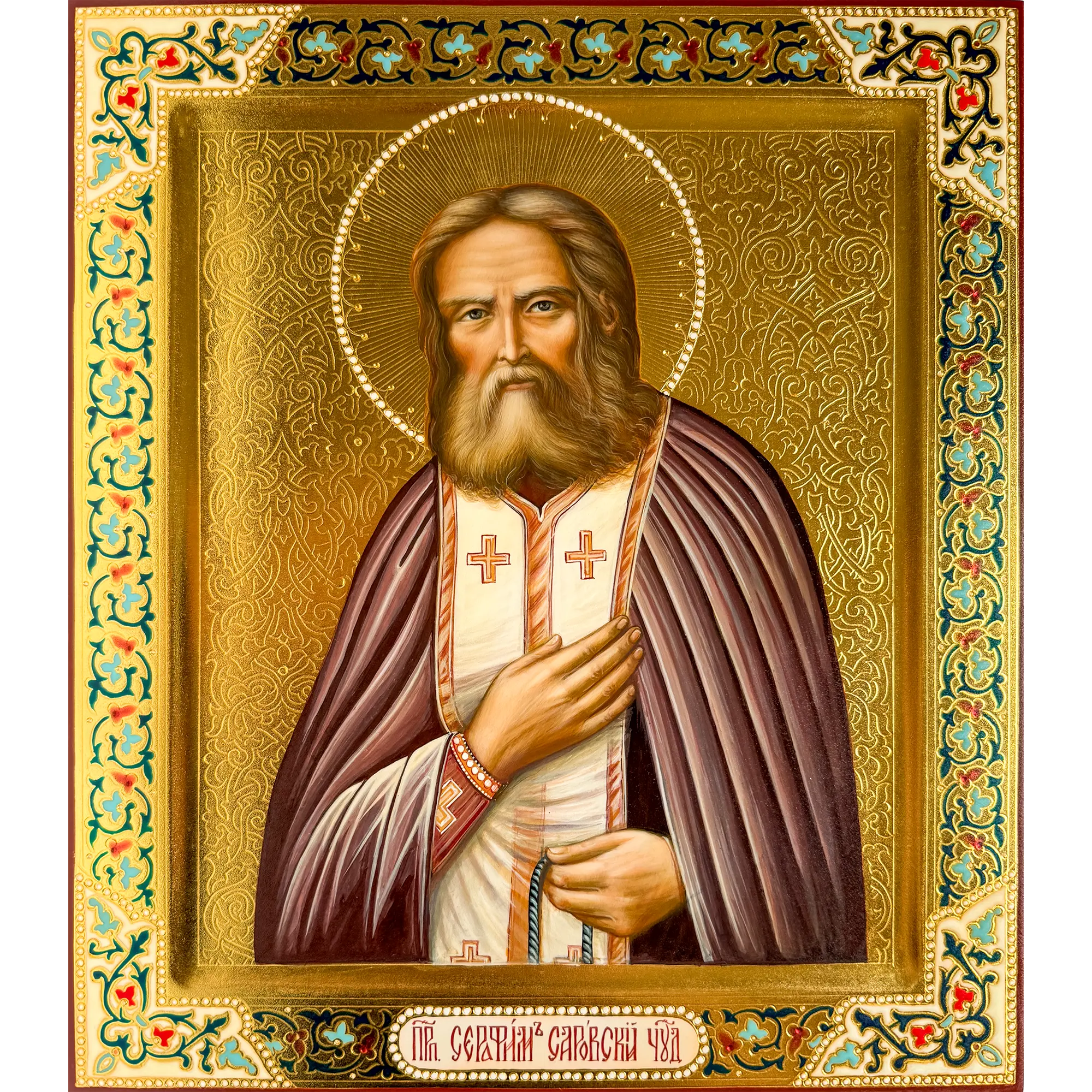
Saint Seraphim of Sarov is one of the most beloved Russian Orthodox saints, known for humility, prayer, mercy, and the words often associated with him: “Acquire the Spirit of Peace, and thousands around you will be saved.” His icon is usually calm and tender, showing an elderly monastic elder with a bowed posture and a merciful expression.
A Saint Seraphim of Sarov Orthodox icon is often chosen for home prayer, people seeking spiritual peace, those enduring illness or discouragement, families, monastics, and church interiors. The icon is not a promise of instant relief. It is a holy image of a saint whose life teaches repentance, forgiveness, inner stillness, and love for every person.
Who Saint Seraphim of Sarov is
Saint Seraphim was born Prokhor Moshnin in 1754 in Kursk. As a young man, he entered the Sarov monastery and later received the monastic name Seraphim. His life was marked by solitude, prayer, ascetic struggle, and extraordinary compassion for those who came to him.
One of the best-known stories from his life is his prayer on a stone for a thousand days and nights. He is also remembered for forgiving the men who attacked him in the forest, leaving him permanently bent and physically weakened. His mercy became one of the strongest witnesses of his holiness.
What a Saint Seraphim icon depicts
Saint Seraphim is often shown as an elderly monk in simple monastic clothing, sometimes leaning on a staff or hoe. His body may appear slightly bent, recalling the wounds he suffered and the humility of his life. His face is usually kind, attentive, and filled with spiritual warmth.
Some icons show him blessing, holding a prayer rope, or standing in the forest. Others include scenes from his life, such as the prayer on the stone. A life-scenes icon can be especially meaningful for a church, chapel, or larger family icon.
Saint Seraphim and the Tenderness icon
Saint Seraphim is closely connected with the Seraphim-Diveyevo icon of the Mother of God Tenderness, which he called Joy of All Joys. This does not make the two icons the same subject. An icon of Saint Seraphim focuses on the saint himself, while the Tenderness icon is an image of the Theotokos.
For a prayer corner, the two icons can be placed near each other if a family has special devotion to Saint Seraphim and the Diveyevo tradition.
When this icon is chosen as a gift
A Saint Seraphim icon is often chosen for people seeking spiritual consolation, for someone facing illness or discouragement, for monastics, for people named Seraphim, for families, and for those who value the Russian Orthodox spiritual tradition.
It can also be a thoughtful gift for a person beginning a serious spiritual path, a person who needs encouragement in prayer, or someone who appreciates saints known for gentleness and forgiveness.
How to choose a Saint Seraphim icon
For home prayer or a personal gift, sizes such as 17×21 cm or 20×24 cm are often practical. For a family prayer corner, 27×31 cm or 30×40 cm gives the face, monastic clothing, and blessing gesture more presence.
If you want a more complex icon with scenes from the life of Saint Seraphim, a larger size is usually better. For a church, chapel, monastery, or public space, a protective kiot can help preserve the icon.
Materials and hand-painted work
A traditional hand-painted Saint Seraphim icon is made on a prepared wooden board with gesso ground, egg tempera, mineral pigments, and gold leaf. The face is especially important because the icon should convey humility, warmth, and spiritual attention.
In the Mstyora tradition, the icon is painted with fine drawing, restrained color, and careful highlights so that the image remains prayerful and humanly tender without becoming sentimental.
Hand-painted Saint Seraphim icons from Mstyora
Our workshop paints Saint Seraphim of Sarov Orthodox icons in the traditional Mstyora manner, using prepared wooden boards, egg tempera, gold leaf, and careful canonical drawing. You can view available works in the Saint Seraphim of Sarov Orthodox icons catalog or browse the wider collection of icons of the saints.
Frequently asked questions
Who was Saint Seraphim of Sarov?
He was a Russian Orthodox monastic elder known for prayer, humility, forgiveness, spiritual counsel, and deep love for those who came to him.
Why is he shown bent or leaning on a staff?
This often recalls the injuries he suffered after being attacked in the forest, as well as the humility and ascetic struggle of his life.
What is the connection with the Tenderness icon?
The Tenderness icon of the Mother of God was especially beloved by Saint Seraphim, who called it Joy of All Joys. It is related to his life, but it is a separate icon of the Theotokos.
Is this icon suitable for someone who is ill?
Yes. It can be a prayerful and consoling gift, but it should be offered as spiritual support, not as a replacement for medical care.
Can this icon include scenes from his life?
Yes. A life-scenes icon can include the prayer on the stone, forest hermitage, or other episodes, usually in a larger custom size.
Can the icon be ordered with a kiot?
Yes. A protective kiot, carved frame, gold leaf, ornament, or filigree decoration can be added on request.
FAQ about Saint Seraphim of Sarov icons
What is Saint Seraphim of Sarov known for?
He is remembered for prayer, humility, ascetic life, spiritual joy, and the famous greeting connected with the Resurrection of Christ.
Is this icon suitable for home prayer?
Yes. Saint Seraphim icons are often chosen for home prayer corners, monastic spaces, and personal devotion.
How is Saint Seraphim connected with the Mother of God?
His life and prayer are closely connected with devotion to the Mother of God, especially the Tenderness icon.
Can the icon be custom painted?
Yes. The icon can be painted in a personal or church format with a selected background and inscription.