Saint Alexander Nevsky Orthodox Icon: Meaning and How to Choose
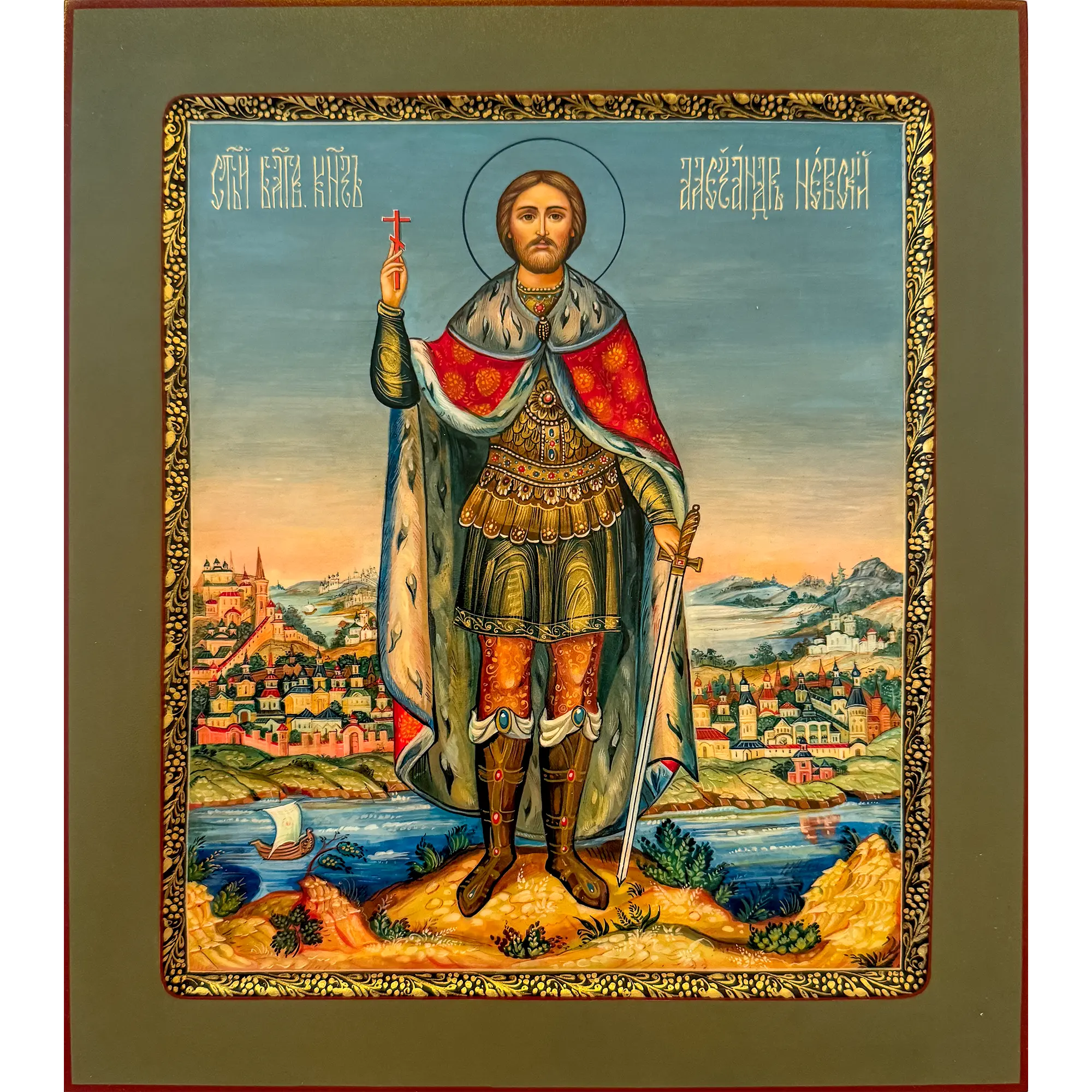
Saint Alexander Nevsky is venerated in the Orthodox Church as a Right-Believing Prince, a ruler who used earthly authority in service to faith, responsibility, and his people. His icon is often chosen by people named Alexander, military service members, leaders, families, and those who seek wisdom and courage in difficult decisions.
The icon of Saint Alexander Nevsky should not be reduced to a symbol of military success. In Orthodox tradition, his holiness is connected not only with courage in battle, but also with self-restraint, diplomacy, responsibility, and the monastic humility he accepted near the end of his life.
Who Saint Alexander Nevsky is
Alexander Nevsky lived in the thirteenth century and became known as a prince, military leader, and defender of Orthodox Rus during a difficult historical period. His name is connected with the Battle of the Neva in 1240 and the Battle on the Ice at Lake Peipus in 1242.
Yet the Church honors him not simply as a commander, but as a Right-Believing Prince. This title points to a ruler whose public life was understood as service before God, marked by responsibility, restraint, and care for the people entrusted to him.
Warrior and monk: two iconographic versions
Saint Alexander Nevsky can be painted in princely or military clothing, with armor, cloak, sword, or other signs of authority. This version emphasizes his public service and historical role as a defender.
He can also be shown in monastic clothing. Before his repose, Alexander accepted monastic tonsure with the name Alexius. This version emphasizes repentance, humility, and the spiritual end of his earthly life. Both iconographic versions are used in Orthodox tradition.
What the icon means
The icon of Saint Alexander Nevsky is often connected with courage, wisdom, leadership, and moral responsibility. People pray before his icon when they need steadiness in difficult choices, strength without cruelty, and firmness without pride.
This is especially important for anyone in authority: military service members, civil servants, managers, parents, and people responsible for others. The icon points not to domination, but to accountable service before God.
When this icon is chosen as a gift
A Saint Alexander Nevsky icon is often chosen as a patron saint icon for a man or boy named Alexander. It can also be given to military service members, leaders, public servants, students of history, or families who value Russian Orthodox saints.
For a personal name-day or baptism gift, a smaller icon may be enough. For a formal gift, office, chapel, military memorial space, or church interior, a larger icon with gold leaf and a protective kiot may be more appropriate.
How to choose a Saint Alexander Nevsky icon
First decide which iconographic version is appropriate: princely warrior, monastic elder, or a more formal full-length image. For home prayer or a personal gift, sizes such as 17×21 cm or 20×24 cm may be practical. For a family icon corner or formal gift, 27×31 cm or 30×40 cm gives the figure more presence.
If the icon is intended for a church, chapel, office, or public setting, a larger custom size and protective kiot may be useful. Gold leaf, ornament, a carved frame, or filigree decoration can be added depending on the purpose and style of the icon.
Materials and hand-painted work
A traditional hand-painted Saint Alexander Nevsky icon is made on a prepared wooden board with gesso ground, egg tempera, mineral pigments, and gold leaf. The details of armor, cloak, monastic garments, face, and halo require careful drawing and balanced color.
In the Mstyora tradition, the icon is painted with restraint so that the image remains prayerful rather than theatrical. The goal is to show a saintly prince, not a decorative historical portrait.
Hand-painted Alexander Nevsky icons from Mstyora
Our workshop paints Saint Alexander Nevsky Orthodox icons in the traditional Mstyora manner, using prepared wooden boards, egg tempera, gold leaf, and careful canonical drawing. You can view available works in the Saint Alexander Nevsky Orthodox icons catalog or browse the wider collection of icons of the saints.
Frequently asked questions
Why is Alexander Nevsky called Right-Believing?
This title is given to rulers whose authority and public life are remembered by the Church as service to God, faith, and the people.
Why is he sometimes shown as a monk?
Before his repose, Alexander accepted monastic tonsure with the name Alexius. Monastic iconography emphasizes humility and repentance.
Is this icon suitable for someone named Alexander?
Yes. It is often chosen as a patron saint icon for men and boys named Alexander.
Is this icon suitable for military service members?
Yes. It can be a meaningful prayerful gift, especially when understood as an icon of courage, restraint, and responsibility before God.
Which version should I choose: warrior or monk?
The warrior version emphasizes public service and defense. The monastic version emphasizes repentance and spiritual humility. Both are canonical.
Can the icon be ordered with a kiot?
Yes. A protective kiot, carved frame, gold leaf, ornament, or filigree decoration can be added on request.
FAQ about Saint Alexander Nevsky icons
What is Saint Alexander Nevsky known for?
He is remembered as a right-believing prince, defender of his people, and later a monastic figure connected with humility and Christian duty.
Is this icon suitable for men named Alexander?
Yes. It is a traditional patron saint or nameday gift for someone named Alexander.
Can the icon show him as a monk?
Yes. Saint Alexander Nevsky may be shown in princely or monastic iconography, including the monastic name Alexius.
Can it be custom painted?
Yes. The icon can be painted in a selected size, composition, inscription, and finish.