The Winged St. John the Precursor
$1750
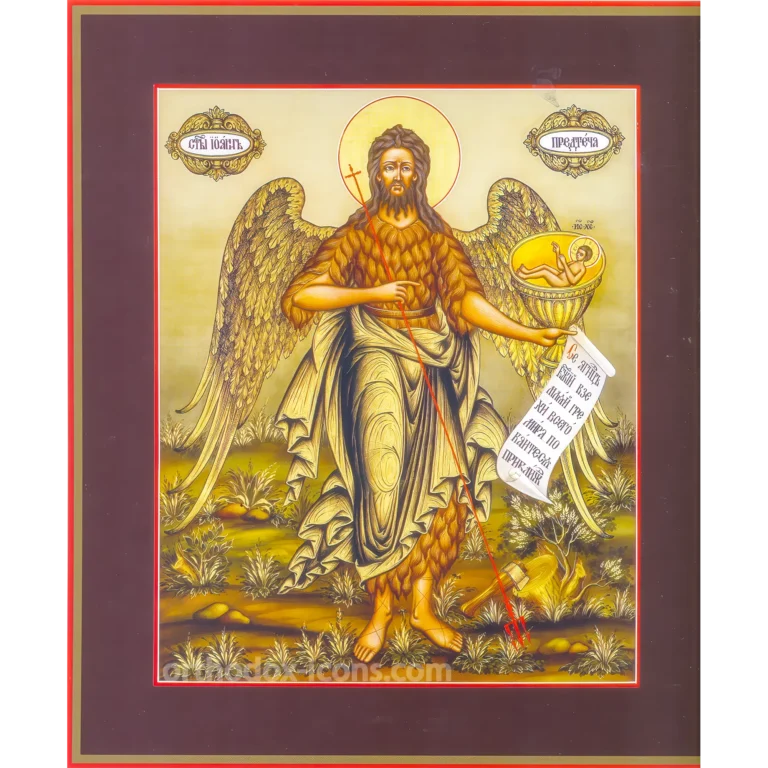
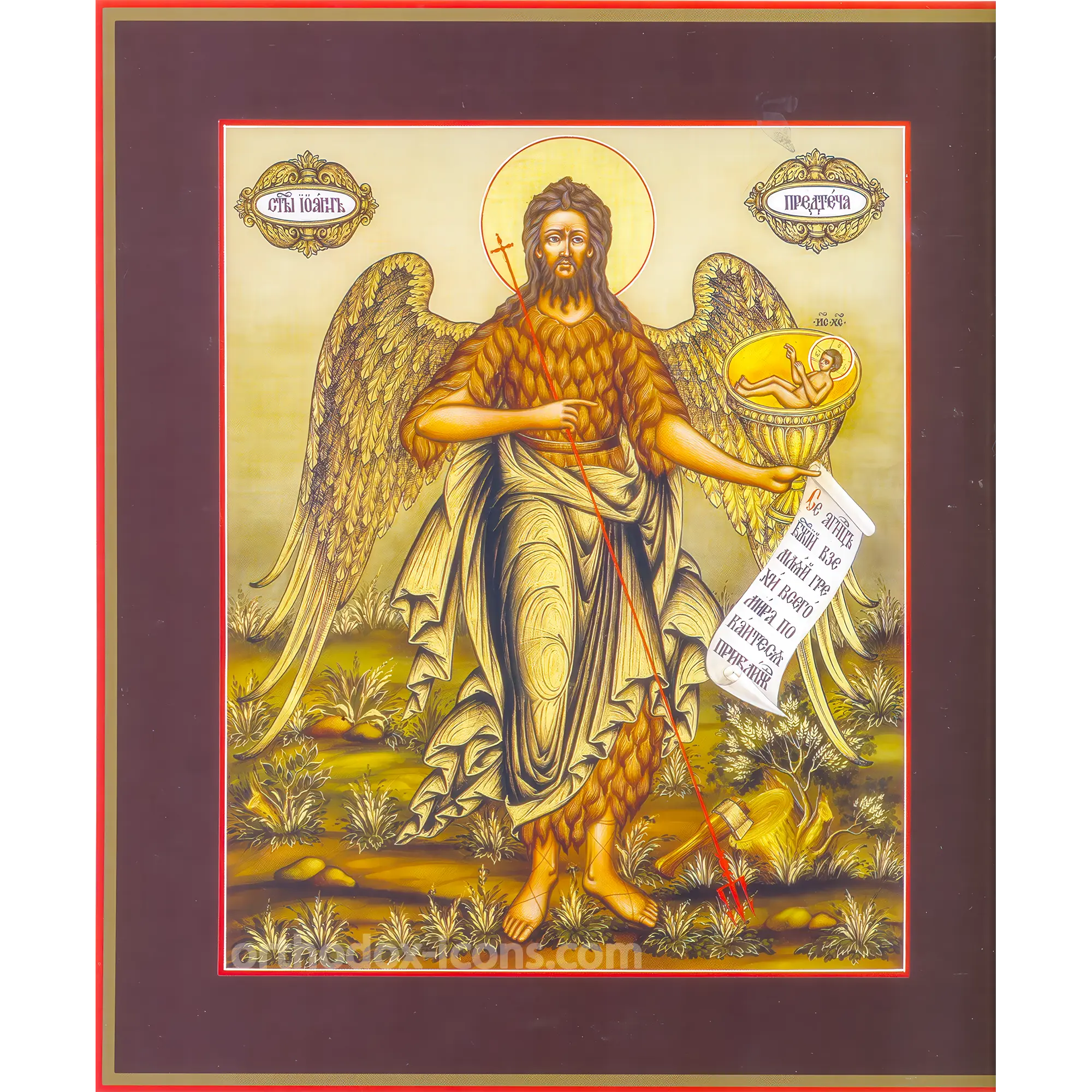
Available size: 27×31 cm (10.6×12.2 in). Larger and iconostasis sizes can be made by agreement. This hand-painted icon of Saint John the Forerunner in the Angel of the Desert iconography is a theologically rich image of the Holy Prophet, Forerunner, and Baptist of the Lord. Saint John is shown with angelic wings, clothed in camel hair, standing in the desert, with a cup or paten containing the image of the Divine Infant, symbolizing Christ the Lamb of God, a scroll of prophetic witness, a cross-topped staff, and an axe at the root of the tree. The icon is painted on a linden wood board with oak braces, gesso, egg tempera, mineral pigments, 23K gold leaf (960 purity), and a protective finish. It is suitable for a home iconostasis, church, chapel, or as a patron saint gift for someone named John or Ivan. Free international shipping is included. Payment is made after you receive and approve the icon.
It is possible to paint an image in any size to order
Free shipping worldwide
This hand-painted icon of Saint John the Forerunner in the Angel of the Desert iconography is one of the most profound and expressive images in the Orthodox tradition. The Holy Prophet, Forerunner, and Baptist John has a unique place in the Church: he was the last prophet of the Old Testament, the first preacher of repentance before the manifestation of the Savior, and the one who pointed to Christ with the words, “Behold, the Lamb of God.” In this icon Saint John is shown not only as an ascetic of the desert and a preacher, but also as a heavenly messenger. For this reason, angelic wings are spread behind him. The image is especially suited to prayer for repentance, inner concentration, spiritual sobriety, strengthening of faith, and freedom from everything that draws the person away from God. The icon is made in a solemn vertical format. The central image is placed within wide dark borders with a red edging, so the luminous inner composition appears especially focused and expressive. Saint John the Forerunner is shown full-length in a desert landscape, clothed in camel hair and a light mantle. His countenance is austere and prayerful: long hair, beard, deep gaze, ascetic face, and bare feet all recall the life of the prophet who lived in the wilderness, preached repentance, and prepared the people to meet Christ. The available size is 27×31 cm (10.6×12.2 in). Larger and iconostasis sizes can be made by agreement. This size is appropriate because the icon contains many important theological details: wings, camel-hair garment, scroll, cup or paten with the Divine Infant, axe at the root of the tree, desert ground, gilded halo, inscriptions, and decorative cartouches. In a larger size, the face, wings, folds of the garments, plants, stones, and scroll can be painted with greater detail.
Features of This Icon
The main feature of this icon is the image of Saint John the Forerunner in the Angel of the Desert type. The saint is shown frontally, yet the composition does not feel static. The extended wings, diagonal scroll, movement of the cross-topped staff, and desert landscape create a sense of prophetic mission. Saint John stands before the viewer as the one who points to Christ, calls to repentance, and reminds each person of spiritual responsibility before God. The wings occupy a significant part of the composition and are painted with numerous fine lines in light and dark tones. In Orthodox iconography, the wings of the Forerunner are connected with his ministry as messenger. He proclaimed the coming of the Savior, rebuked sin, baptized people in the Jordan, and did not fear to speak the truth even before the powerful. The wings therefore signify spiritual purity, swift obedience to God, and prophetic service. The clothing of the saint also carries important meaning. The camel-hair garment recalls his desert asceticism, self-restraint, poverty, and life wholly dedicated to God. The light mantle softens the severity of the image and shows that the preaching of the Forerunner was not only a rebuke, but also a path toward salvation. Red lines and the cross-topped staff emphasize his prophetic witness to Christ and his future martyrdom. In his hand Saint John holds a cup or paten in which Christ is shown as the Divine Infant, symbolizing the Lamb of God. This detail makes the icon especially rich theologically. It recalls the words of the Forerunner at the appearance of the Lord: “Behold, the Lamb of God, who takes away the sin of the world.” The image of the Divine Infant in the cup or paten is connected with sacrifice and the Eucharistic meaning of the icon: John points not to himself, but to the Savior who bears the sin of the world and leads the person to eternal life. The scroll in the hand of the saint reveals his preaching and prophetic witness. It typically bears the words, “Repent, for the Kingdom of Heaven is at hand,” echoing the Gospel call of Matthew 3:2. The text on the scroll draws the person praying toward the main theme of the image: repentance and encounter with Christ. The scroll is not a decorative detail; it is the voice of the Forerunner, his call to leave sin, straighten the path, and bring forth fruits worthy of repentance. At the lower part of the composition is the axe at the root of the tree. This sign is connected with Saint John’s Gospel words that even now the axe is laid to the root of the trees. In iconography this detail reminds the viewer of the seriousness of spiritual life: faith must not remain outward, but must bear fruit in repentance, mercy, truth, sobriety, and faithfulness to God.
The Angel of the Desert Iconography
The Angel of the Desert iconography is among the deepest images of Saint John the Forerunner. It joins several aspects of his ministry: prophecy, asceticism, angelic purity, witness to Christ, and martyrdom. The saint is shown with wings because, in the Church’s understanding, he was God’s messenger who prepared the way of the Lord. His life was severe, but filled with light: he did not seek earthly glory, wealth, or comfort, and he submitted himself completely to the will of God. The desert landscape recalls the place of the Forerunner’s spiritual labor. The desert is not only a geographical setting; it is an image of renunciation, purification of the heart, and encounter with God. Stones, grasses, dry plants, and open ground help express the strict character of his ascetic life. Before such an icon, prayer for inward silence, freedom from distractions, victory over scattered thoughts, and the ability to hear the voice of conscience feels especially natural. The cup or paten with the image of the Divine Infant makes the composition not only prophetic, but Christ-centered. Saint John does not draw attention to himself. His hand, scroll, gaze, and the whole iconography direct the person toward Christ. This is essential to the meaning of the image: the saint helps the believer seek not merely earthly assistance, but the ultimate goal of spiritual life, turning toward the Savior. The cross-topped staff and the axe at the root of the tree reveal two sides of the Forerunner’s preaching. The cross recalls the saving sacrifice of Christ and the martyr’s witness of Saint John himself. The axe speaks of repentance, the cutting away of sin, and responsibility for spiritual fruit. For this reason, the Angel of the Desert icon is especially appropriate for those who want to strengthen prayer, begin spiritual correction, overcome addiction, despondency, fear, inner division, or the habit of postponing repentance.
Prayer Before the Icon of Saint John the Forerunner
Before an icon of Saint John the Forerunner, Orthodox Christians pray above all for repentance, guidance, spiritual sobriety, and strengthening of the will. Saint John called people to change their lives, purify the heart, and prepare to meet Christ. His image is especially close to those who feel the need for an inner turning, want to leave sinful habits, return to church life, strengthen prayer, or make an important spiritual decision. People may pray to Saint John the Forerunner for repentance and amendment of life; strengthening of faith and spiritual concentration; help in the struggle with passions and addictions; sobriety, inner discipline, and strength of will; protection from temptation, falsehood, and spiritual confusion; guidance for children and loved ones; healing of spiritual and bodily illnesses; endurance under injustice and pressure; help for those who teach, guide, preach, or bear responsibility for words; and heavenly protection for men named John or Ivan. This icon is especially fitting for a home where serious spiritual life is valued. It does not merely console; it awakens conscience. It reminds the person that prayer cannot be separated from change of heart, and that faith must be expressed in real actions.
Who This Icon Is For
An icon of Saint John the Forerunner is suitable for a home iconostasis, church, chapel, monastery space, prayer room, or personal prayer corner. It is a strict, deep, and theologically rich image, often chosen by people who value not only the beauty of an icon, but also its spiritual meaning. The Angel of the Desert type reveals repentance, asceticism, prophetic witness, and inner sobriety with exceptional clarity. This icon may be given to a man or boy named John or Ivan for baptism, name day, birthday, the beginning of independent life, entrance into studies, a spiritual date, or an important life stage. Saint John the Forerunner is one of the most honored heavenly patrons for the name John, so a personal patron saint icon with his image has special meaning. The icon is also appropriate for a priest, monastic, spiritual mentor, teacher, godfather, or someone walking the path of repentance and seeking spiritual concentration. It can be placed in a church or chapel, and it may also be painted in an iconostasis format by agreement.
Brief Life of Saint John the Forerunner
Saint John the Forerunner was the son of the priest Zacharias and the righteous Elizabeth. From his youth he lived in the wilderness, preparing for the ministry given to him by God. He preached repentance, baptized in the Jordan, and called people to prepare the way of the Lord. When Christ came to the Jordan, John recognized Him and bore witness to Him as the Lamb of God. The Forerunner’s life was marked by truth, asceticism, courage, and humility. He did not present himself as the center of attention, but pointed to Christ. He also rebuked sin without fear, and for this he suffered martyrdom. In the Orthodox Church, Saint John the Forerunner is honored immediately after the Mother of God among the saints, which shows the exceptional place of his ministry.
Materials and Technique
The icon is hand-painted on a linden wood board with oak braces. The surface is prepared with gesso, and the image is painted in egg tempera with mineral pigments. 23K gold leaf (960 purity) is used for the halo and sacred accents, and a protective finish is applied after painting. The wide dark borders, red edging, desert landscape, wings, scroll, cup or paten, and figure of the Divine Infant all require careful, detailed work. Because this is a hand-painted icon, small differences in color tone, inscriptions, gold work, and fine details are natural. They do not change the iconographic meaning of the image. They show that the icon is a painted devotional work rather than a printed reproduction.
Choosing the Size
The listed size, 27×31 cm (10.6×12.2 in), gives enough space for the key features of the Angel of the Desert composition: the wings, face, scroll, cup or paten with the Divine Infant, cross-topped staff, axe at the tree root, and desert ground. Larger sizes may be discussed for a church, chapel, prayer room, or large family iconostasis.
Placement and Care
The icon should be placed in a clean and dignified area, away from moisture, direct sunlight, overheating, soot, and mechanical damage. Dust should be removed only with a soft dry brush, without pressure. For additional protection, an icon case is recommended. Free international shipping is included. Payment is made after you receive and approve the icon.
Questions and Answers
Who is shown in this icon of Saint John the Forerunner?
The icon shows the Holy Prophet, Forerunner, and Baptist John in the Angel of the Desert iconography.
Why is Saint John the Forerunner shown with wings?
The wings do not mean that Saint John was an angel by nature. They point to his angelic way of life, purity, obedience to God, and mission as the messenger who prepared the way of the Lord.
What does the cup in Saint John’s hand mean?
The cup or paten with the Divine Infant recalls Saint John’s witness: “Behold, the Lamb of God.” It symbolizes Christ the Lamb of God and gives the icon a sacrificial and Eucharistic meaning.
What does the scroll mean in this icon?
The scroll represents the prophetic preaching of Saint John, his call to repentance, and his witness to Christ.
Why is there an axe at the root of the tree?
The axe recalls the Gospel words of Saint John about the axe laid at the root of the trees. It points to repentance and the need for faith to bear good spiritual fruit.
What do people pray for before this icon?
People may pray for repentance, strengthening of faith, spiritual sobriety, help in the struggle against passions and addictions, guidance, healing, and protection from temptation.
Who is this icon suitable for as a gift?
It is especially suitable for a man or boy named John or Ivan, a godson, a priest, a spiritual mentor, or someone seeking repentance and spiritual renewal.
What size is available for this icon?
The listed size is 27×31 cm. Larger sizes and iconostasis formats can be discussed before the icon is painted.
Is this icon suitable for a church or chapel?
Yes. The Angel of the Desert image of Saint John the Forerunner can be made in an iconostasis size for a church, chapel, or prayer space.
How should a hand-painted icon be cared for?
Keep the icon away from moisture, direct sunlight, overheating, soot, and mechanical damage. Dust it only with a soft dry brush, and use an icon case if extra protection is needed.
| Dimensions | 27x31cm (10.6×12.2 in) |
|---|---|
| Name | Joannes, John |