Guardian Angel Orthodox Icon: Meaning and How to Choose
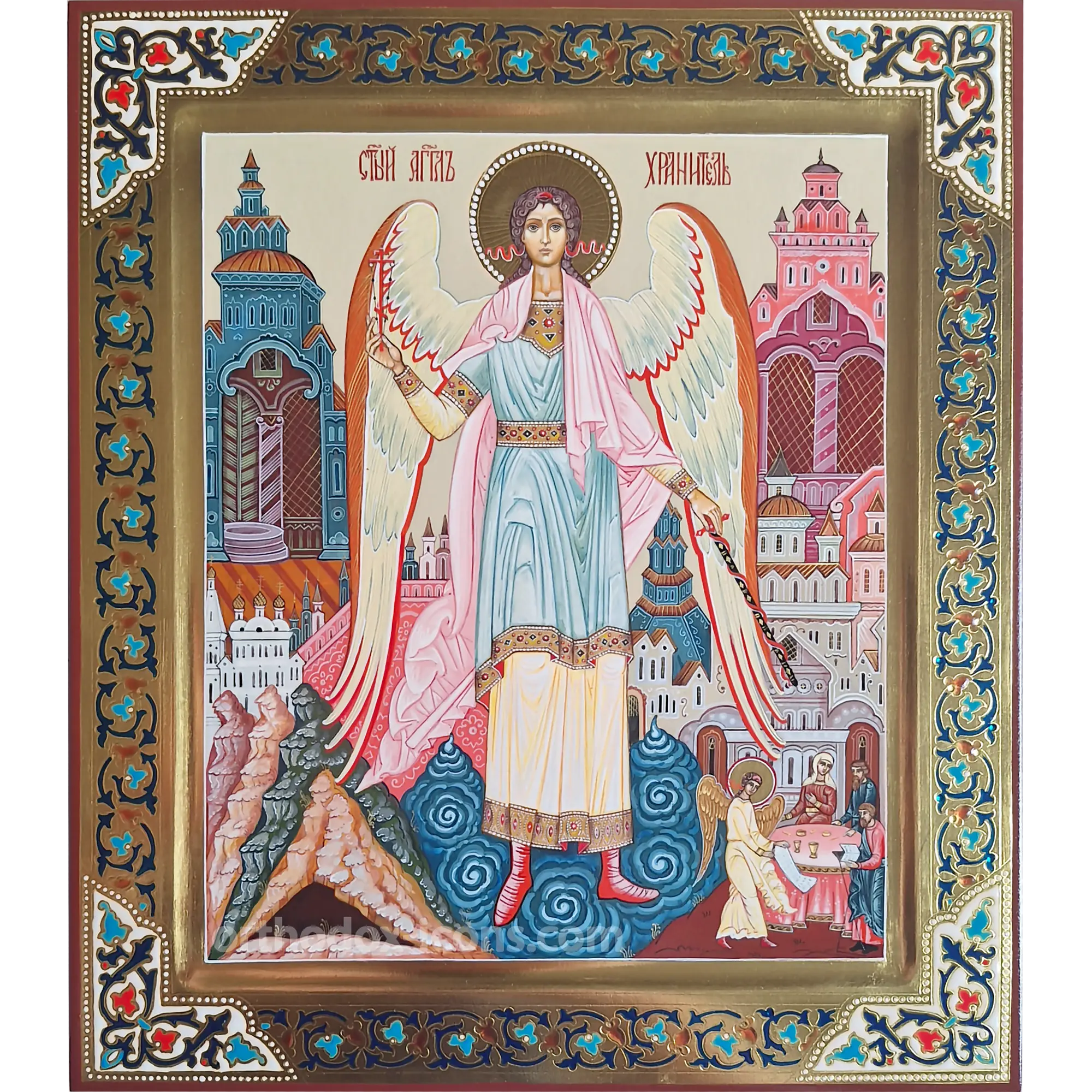
In Orthodox tradition, the Guardian Angel has a very personal place in the life of a believer. An icon of the Guardian Angel is often given at baptism, for a child, before a journey, during a difficult season of life, or as a reminder of God’s care and protection.
This guide explains who the Guardian Angel is in Orthodox teaching, how a Guardian Angel icon differs from a patron saint icon, when this image is commonly given, and how to choose a hand-painted Orthodox icon for home prayer or a meaningful gift.
Who is the Guardian Angel in Orthodox tradition?
The Guardian Angel is an angelic servant of God who accompanies and protects a person. In Orthodox understanding, the Guardian Angel is not a human saint and does not have a personal human name. He is depicted symbolically in iconography, usually as a radiant angelic figure with wings, often holding a cross, a sword, or another traditional attribute.
The icon does not replace prayer to God. It helps the believer remember the invisible spiritual care given by God and encourages prayer, vigilance, gratitude, and repentance.
Guardian Angel icon or patron saint icon?
These two images are often confused, but they are different.
Guardian Angel icon
A Guardian Angel icon depicts an angelic protector. It can be given to any baptized Orthodox Christian, regardless of the person’s baptismal name. This makes it a common gift for baptism, children, travel, or times when a person needs spiritual encouragement.
Patron saint icon
A patron saint icon depicts a saint whose name is connected with a person’s baptismal name or family tradition. If you want an icon tied to a specific Christian name, choose an icon from the Icons of the Saints category or read our guide on how to choose an Orthodox icon of a patron saint.
When is a Guardian Angel icon given?
A Guardian Angel icon is often chosen for baptism, a child’s room, a first prayer corner, a journey, military service, illness, or a period of serious life change. It can also be given simply as a quiet sign of prayerful care for a loved one.
For a child, families sometimes order a measured icon, painted according to the child’s height at birth. In such cases, the icon may depict either the Guardian Angel or the child’s patron saint, depending on family tradition.
How Guardian Angel icons are painted
Guardian Angel icons may be painted in different canonical compositions. Some show the angel with a sword and cross, symbolizing spiritual protection and blessing. Others show the angel in prayer or with a lamp, emphasizing watchfulness and service to God.
When ordering a custom icon, you can discuss the size, composition, color palette, gilding, inscription, and whether the icon should be full-length or smaller for a home prayer corner.
Frequently asked questions
Where should a Guardian Angel icon be placed at home?
It can be placed in a home prayer corner together with icons of Christ, the Mother of God, and family patron saints. If it is given to a child, families sometimes place it in the child’s room or near the prayer corner.
Is a Guardian Angel icon suitable for baptism?
Yes. A Guardian Angel icon is a traditional and meaningful baptism gift, especially from godparents or close family members.
Does every Guardian Angel icon have to show a sword?
No. There are several traditional compositions. Some icons show a sword as a symbol of spiritual protection, while others emphasize prayer, blessing, or angelic service.
Hand-painted Guardian Angel icons from Mstyora
Mstyora Icons paints Guardian Angel Orthodox icons by hand using prepared wooden boards, levkas/gesso, egg tempera, natural pigments, gold leaf, and filigree when requested. You can choose a finished icon from the catalog or order a custom Orthodox icon in the size and style you need.
FAQ about Guardian Angel Orthodox icons
What does a Guardian Angel icon mean?
It reminds the believer of God
Can this icon be custom painted?
Yes. The icon can be painted in different sizes and finishes for a child, adult, home, chapel, or church.