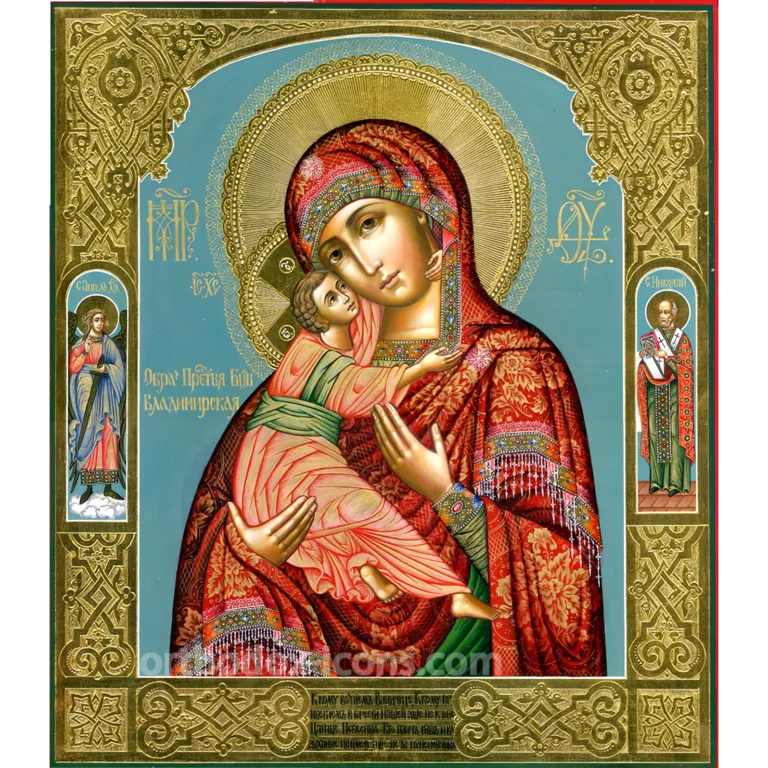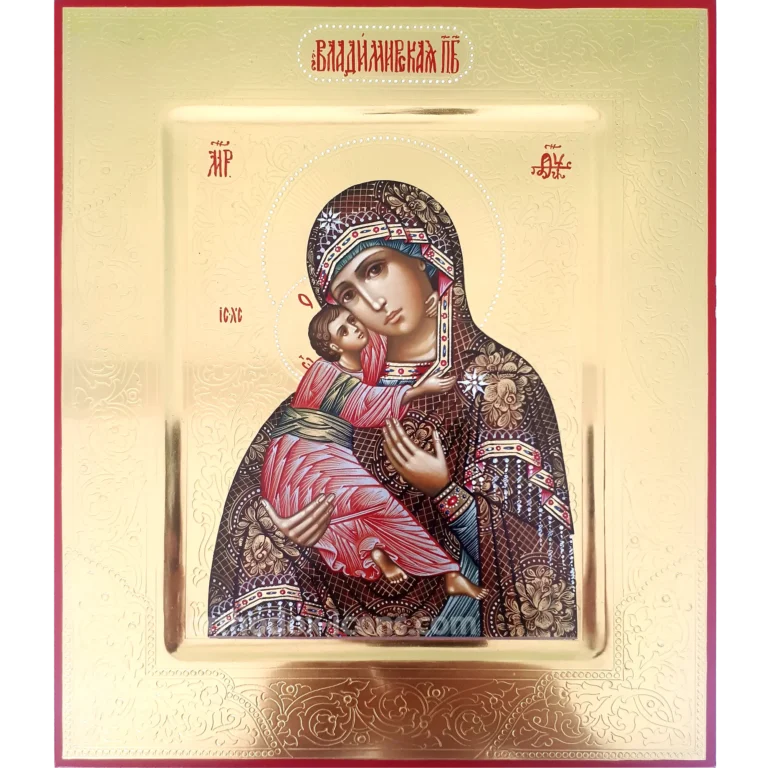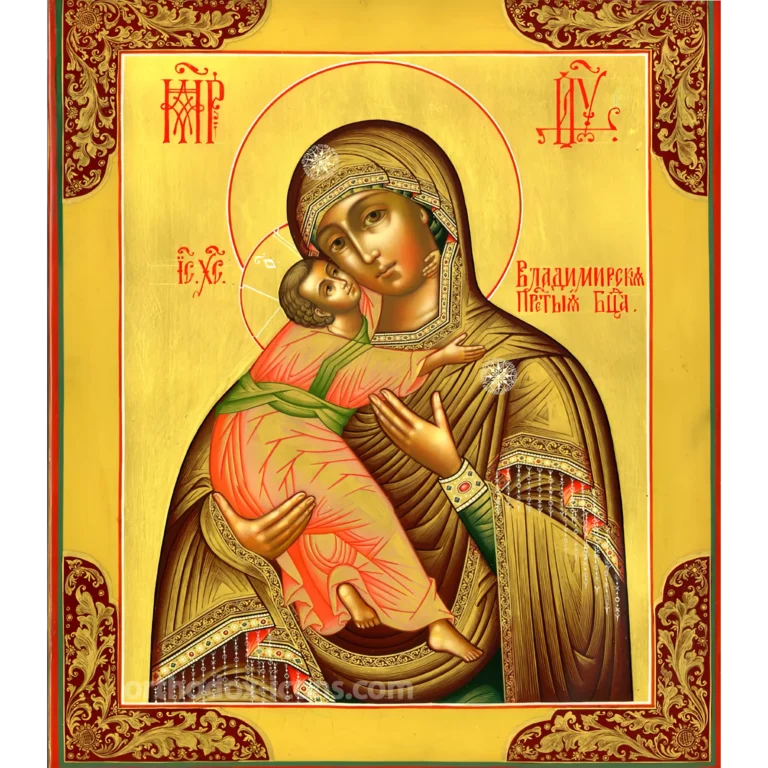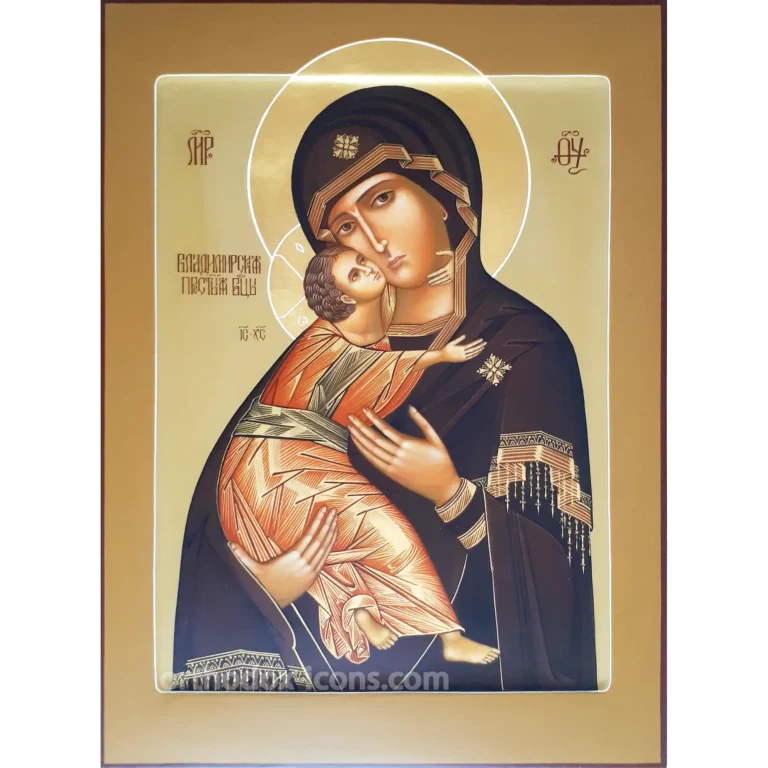
Filigree Icon of Kazan Virgin Mary
$950
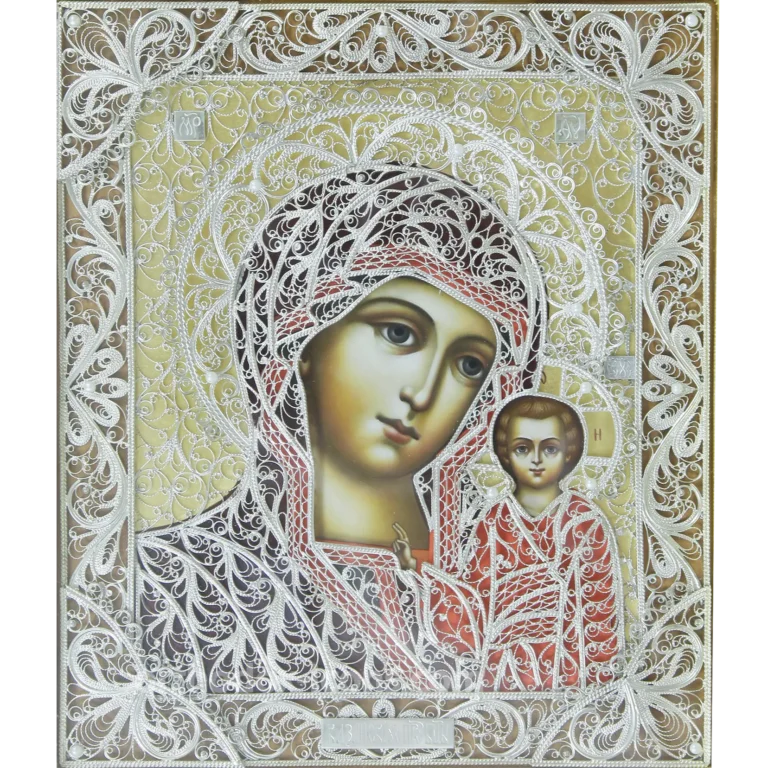
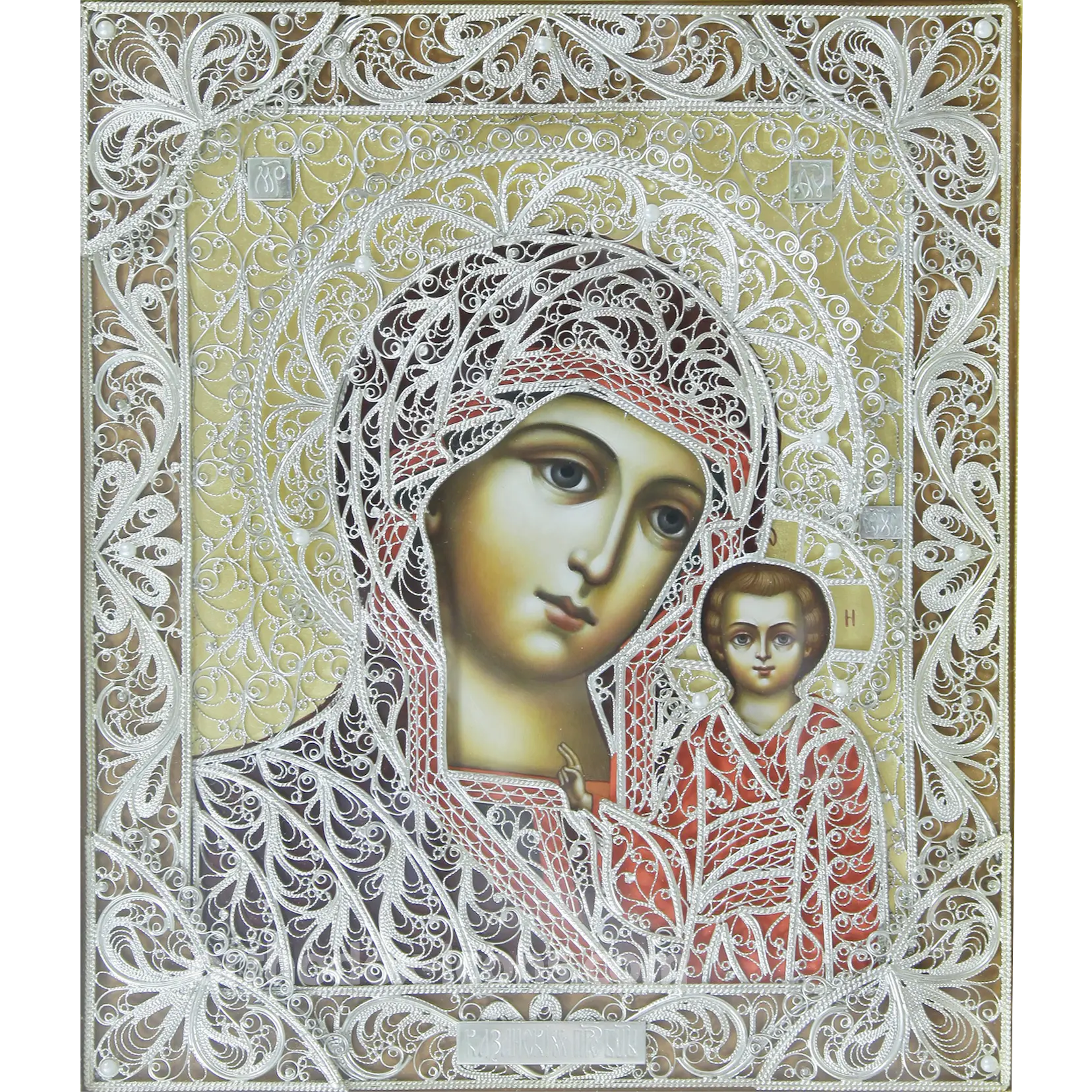
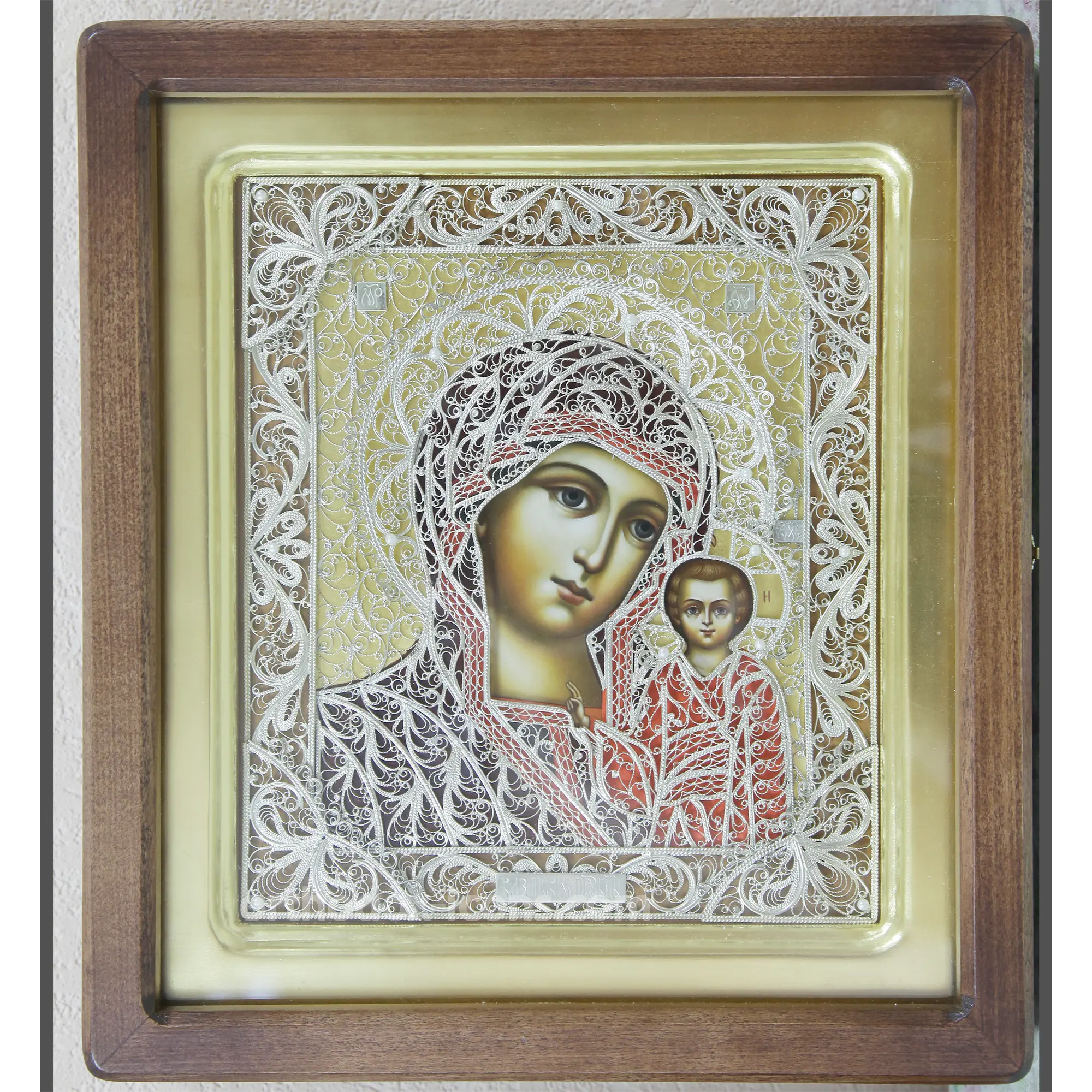
Filigree Icon of Kazan Virgin Mary is a hand-painted Kazan Mother of God icon in a precious filigree oklad, made with cupronickel ornament and faux pearls.
Available size: 17×21 cm (6.7×8.3 in). Larger home, church, and iconostasis sizes may be discussed before painting.
Materials: linden board with oak braces, pavoloka, chalk levkas, 960 gold leaf, mineral egg tempera, cupronickel filigree, faux pearls, protective lacquer.
Technique: fully hand-painted Orthodox icon on wood with Kazan shoulder-length composition, gold background, filigree oklad, and pearl ornament.
It is possible to paint an image in any size to order
Free shipping worldwide
Filigree Icon of Kazan Virgin Mary is a hand-painted Kazan Icon of the Mother of God in a richly crafted filigree oklad. The painted holy image is set into a precious decorative covering made in the skan, or filigree, technique with silver-tone cupronickel ornament and pearl-like inlays.
The Kazan Icon is one of the most loved and venerated Mother of God images in Orthodox life. Its history is connected with a great miracle, and its later veneration is bound to family prayer, wedding blessing, protection of the home, and prayer in times of trial.
This icon is painted on a linden board with oak braces, pavoloka, chalk levkas, natural mineral egg tempera, genuine 960 gold leaf, cupronickel filigree, faux pearls, and protective lacquer. The listed size is 17×21 cm (6.7×8.3 in), with larger home, church, and iconostasis sizes available by agreement. The usual production time for a filigree icon is about 2 months.
The Kazan Icon: A Miracle on the Ashes
The history of the Kazan Icon begins in 1579, not long after the conquest of Kazan by Tsar Ivan the Terrible. A terrible fire destroyed many homes in the city. After the fire, the Most Holy Theotokos appeared three times in a dream to a nine-year-old girl named Matrona and showed her where the icon lay hidden.
When the child’s words were finally believed and the place was searched, the icon was found beneath ash and earth, shining with fresh and unharmed colors. The solemn transfer of the discovered icon to church was accompanied by the first miracles, including the healing of the blind.
For this reason, the Kazan Icon became a beloved holy image for prayer in both personal and communal need. It is venerated as a guide in the darkness of life, a sign of maternal intercession, and an image before which the faithful ask for clarity, protection, and help.
Prayer Before the Kazan Icon
The Kazan Mother of God is known as a guide who points the faithful toward the true way amid the storms of life. People bring before this icon some of the most personal and important prayers of the home.
- Blessing of marriage: the Kazan Icon is a traditional wedding icon. Parents bless newly married couples with this image for a long, faithful, and peaceful family life.
- Help in family needs: the faithful pray for peace between spouses, resolution of conflict, the gift of children, and help in raising children.
- Healing: because the first miracles of the icon included the healing of the blind, the Mother of God is especially asked for help in eye diseases and for the return of spiritual sight to those who have gone astray.
- Protection of country and soldiers: the Kazan Icon has been linked with the protection of the Russian land and the liberation of Moscow in 1612. Prayer is also offered for soldiers and those in danger.
Iconography: A Shoulder-Length Hodegetria
From the iconographic point of view, the Kazan image belongs to the Hodegetria type, meaning She Who Shows the Way, but in a shortened shoulder-length form. This concise composition creates a special feeling of closeness and trust in prayer.
The Mother of God and the Christ Child are brought close to one another. The Theotokos inclines her head slightly toward her divine Son, expressing both tenderness and obedience to the will of the Father. Christ is shown beside her, with only the upper part of His figure visible, raising His right hand in blessing.
Unlike in the full classical Hodegetria type, the hands of the Mother of God are hidden beneath the oklad in this icon. The main emphasis is placed on her penetrating, compassionate gaze and on the blessing presence of the Christ Child. The dark cherry and purple tones of the maphorion symbolize royal dignity and suffering, while the golden assist on Christ’s garments points to His divine nature.
Precious Filigree Oklad and Pearls
The principal artistic feature of this icon is its remarkable oklad. The use of skan, or filigree, refers to the old Russian tradition of adorning holy images with the finest work available, offering the best materials and craftsmanship to the service of the Church.
The word skan comes from the old Russian verb meaning to twist. The master craftsman twists fine cupronickel wires by hand and forms them into a complex lace-like ornament. The openwork metal decoration is soldered and fixed over the icon, creating a rich silver-tone frame for the holy image.
Pearl-like inlays are set into the nodes of the filigree ornament, around the halos, and along the oklad. In Christian symbolism, pearls suggest spiritual purity, holiness, the precious pearl of the Kingdom of Heaven, and the tears of the Mother of God. The union of silver-tone lace, gold background, and pearls gives this icon a ceremonial and deeply reverent appearance.
Mstyora School: Natural Materials and Technique
Although the icon has rich decoration, the sacred image itself is created in strict agreement with Orthodox icon-painting tradition. The base is a solid, well-dried linden board. Linden is a traditional icon wood, valued for its stability and resistance to cracking.
Oak braces are set into the back of the board to help prevent deformation over time. The front is covered with pavoloka and chalk levkas, making a smooth and stable ground for icon painting. The gold areas are gilded with genuine 960 gold leaf.
The faces and hands are painted in traditional egg tempera made from natural mineral pigments mixed with egg yolk. The icon painter builds the faces in fine translucent layers, giving the image inner light, depth, and a living prayerful expression.
Icon Characteristics
| Name | Filigree Icon of Kazan Virgin Mary |
|---|---|
| Traditional title | Kazan Icon of the Mother of God in a filigree oklad |
| Iconographic type | Kazan Mother of God, shoulder-length Hodegetria |
| Main meaning | Family blessing, maternal intercession, healing, guidance, and protection |
| Board | Solid linden board with oak braces, pavoloka, and chalk levkas |
| Painting | Natural mineral egg tempera |
| Gilding | Genuine 960 gold leaf |
| Oklad | Handmade cupronickel filigree |
| Inlay | Faux pearls in the filigree ornament |
| Available size | 17×21 cm (6.7×8.3 in) |
| Other formats | Larger home, church, and iconostasis sizes may be discussed before painting |
| Production time | Approximately 2 months |
| Shipping | Free international shipping is included; payment is due upon delivery. |
A Family Holy Image in a Filigree Oklad
The Kazan Icon of the Mother of God in a filigree oklad is not merely an art object. It is a holy image before which children and grandchildren may pray. The precious setting gives the icon the character of a family heirloom, while the painted faces preserve its central purpose: prayer before the Mother of God and Christ.
The 17×21 cm (6.7×8.3 in) size is suitable for a home icon corner or a significant gift. Larger sizes, including church and iconostasis formats, may be discussed for chapels, parishes, and larger prayer spaces.
Questions and Answers
What is unique about this Kazan icon in filigree?
Its distinctive feature is the jewelry-style oklad. The filigree is made as hand-formed lace from thin twisted metal threads, creating an airy and radiant frame around the painted image.
Can this icon be ordered in a larger church size?
Yes. The listed size is 17×21 cm, and larger home, analogion, church, and iconostasis sizes may be discussed before painting.
Is this icon suitable for a wedding blessing?
Yes. The Kazan Icon is a traditional Orthodox wedding and family blessing image. The filigree oklad with pearls makes this version especially meaningful as a wedding gift.
What wood is used for the icon?
The icon is painted on selected solid linden wood. Oak braces are set into the back of the board to help protect it from deformation over time.
What do the pearls on the oklad symbolize?
In Orthodox symbolism, pearls suggest purity, innocence, the Kingdom of Heaven, and also the tears of the Mother of God. They complete the silver-tone filigree setting.
What paints are used for the faces?
The faces of the Mother of God and Christ are painted in natural mineral egg tempera. Mineral pigments are mixed with egg yolk, allowing transparency, depth, and durability.
How should an icon with a relief filigree oklad be cared for?
An icon with filigree is best kept in a closed kiot with glass. This protects the openwork metal from dust, candle soot, and accidental mechanical damage.
Why are the hands of the Mother of God not visible?
This is a feature of the Kazan iconographic type, a shortened shoulder-length form of Hodegetria. The praying person’s attention is concentrated on the face of the Theotokos and the blessing Christ Child.
Is this a printed reproduction?
No. This is not a printed reproduction; the holy faces are painted by hand in egg tempera, and the filigree oklad is crafted separately and fitted to the icon.
Is free international shipping included?
Yes. Free international shipping is included; payment is due upon delivery. The icon is painted and crafted to order and packed carefully after completion.
| Dimensions | 17x21cm (6.7×8.3 in) |
|---|---|
| Name | Mary |